Best Korean Treatments for Glass Skin: What Actually Works?
Best Korean Treatments for Glass Skin: What Actually Works?
“Glass skin” describes a complexion that looks smooth, hydrated, clear, even-toned, and naturally radiant. In Korea, this appearance is not created by one specific procedure. Instead, dermatology clinics often combine treatments that address different factors such as hydration, skin texture, pigmentation, pores, and elasticity. For international visitors, the most practical approach is to choose treatments based on your actual skin concerns rather than simply booking a package labeled “glass skin.”
1. Rejuran for Skin Quality and Hydration
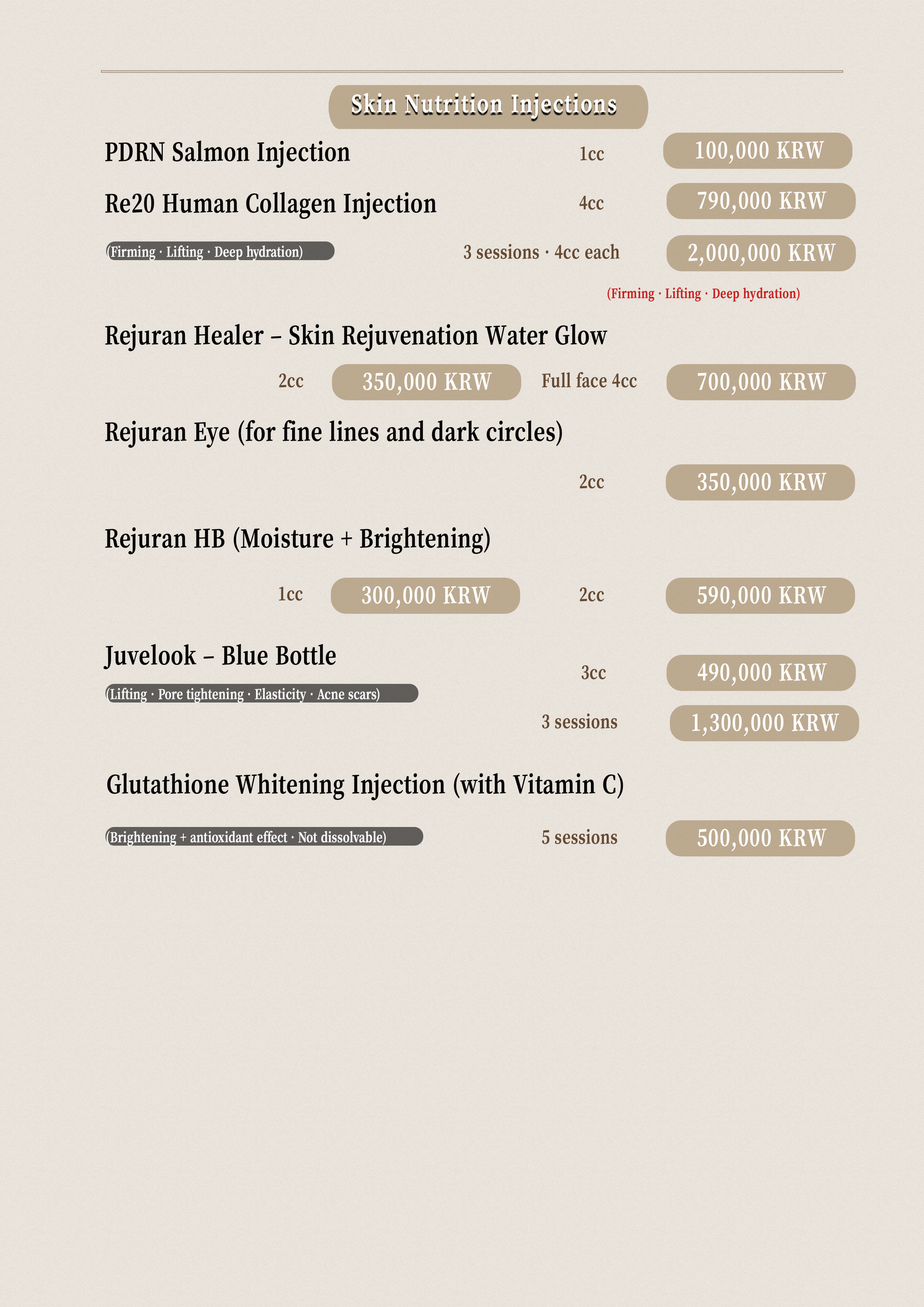
Rejuran is one of the most widely discussed Korean skin boosters for improving overall skin quality. It uses polynucleotides (PN) and is injected into the skin rather than being used as a traditional volumizing filler.
It may be considered for:
- Fine lines
- Dehydrated skin
- Reduced elasticity
- Rough texture
- Thin or fragile-looking skin
- Overall skin rejuvenation
Rejuran is designed to support skin quality rather than dramatically change facial shape. Results generally develop gradually, so it should not be viewed as an instant glass-skin solution after one appointment.
Treatment process
A typical session involves:
- Consultation and skin assessment
- Cleansing and preparation
- Topical or other pain-control measures
- Multiple small injections
- Cooling or soothing care afterward
Temporary bumps, redness, tenderness, or swelling can occur after treatment.
Approximate 2026 price: ₩200,000–₩600,000+ per session depending on the product, amount, treatment area, and clinic.
For international visitors, Rejuran is usually better scheduled before the final day if you want time for injection marks to settle.
2. Juvelook for Texture, Pores and Collagen Support
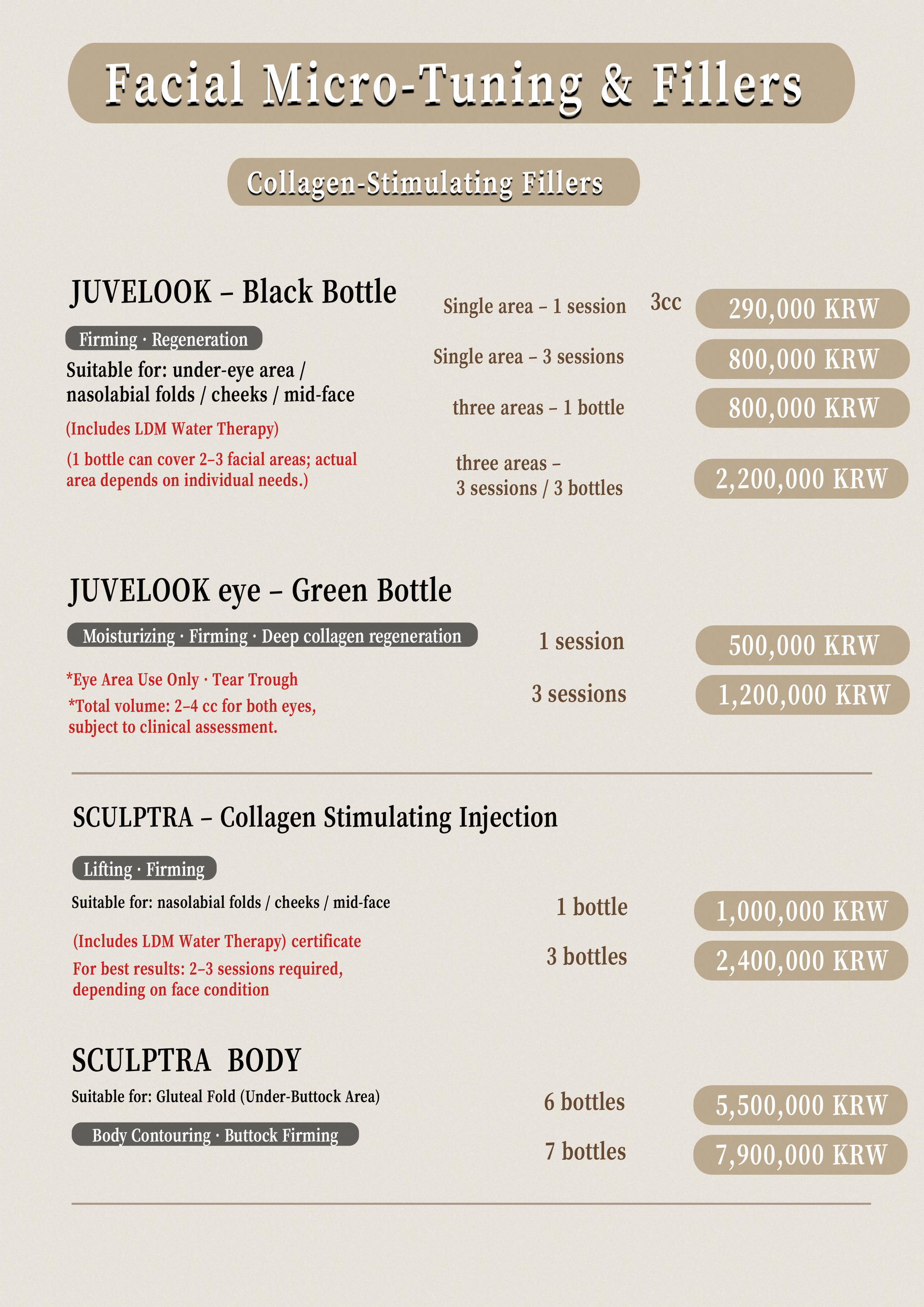
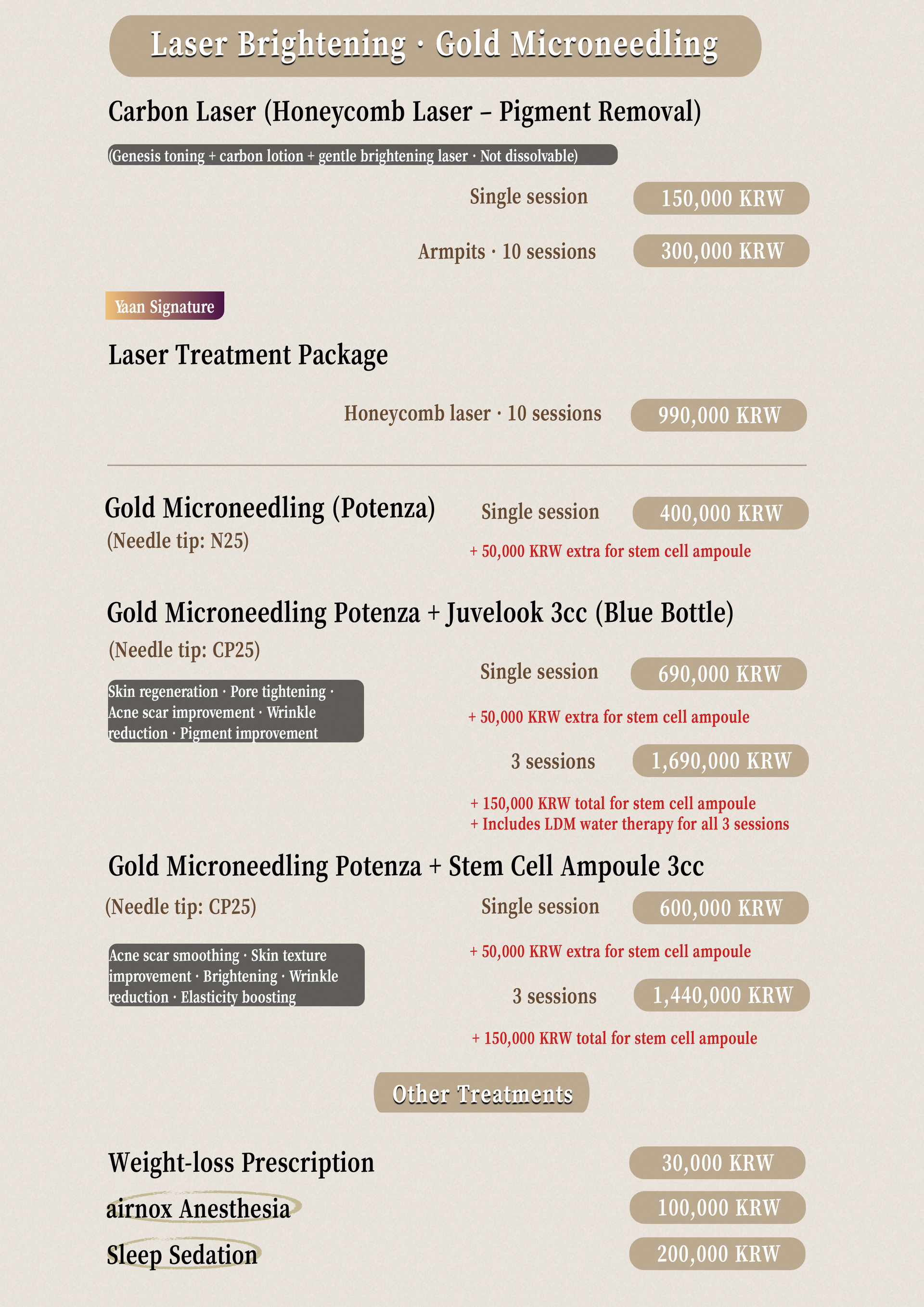
Juvelook is another injectable treatment commonly discussed in Korean skin-quality programs. It combines PDLLA with hyaluronic acid and is intended to support hydration and collagen production.
It may be considered for:
- Fine lines
- Enlarged pores
- Uneven texture
- Reduced elasticity
- Early skin aging
- Dull-looking skin
Compared with a traditional dermal filler, Juvelook is generally positioned as a skin-quality and collagen-stimulating treatment rather than a procedure designed to create immediate facial volume.
Results develop over time, so it is more appropriate for travelers who want a longer-term improvement rather than an instant change before a flight.
Approximate 2026 price: ₩200,000–₩600,000+ depending on the amount, treatment area, and clinic.
Juvelook may sometimes be combined with other procedures, but multiple injectable treatments can increase temporary swelling or injection marks.
3. Pico Laser and Laser Toning for a Clearer, More Even Tone
Hydration alone does not create the appearance associated with glass skin. Even skin tone and reduced visible pigmentation are also important.
Pico Laser
Pico Laser uses extremely short laser pulses and may be selected for:
- Dark spots
- Post-acne pigmentation
- Uneven skin tone
- Selected pigmentation concerns
Laser Toning
Laser Toning generally uses low-fluence laser treatment for gradual improvement in pigmentation and overall brightness.
These treatments can be useful when the skin is hydrated but still looks uneven or dull.
Approximate 2026 price: ₩80,000–₩400,000+ per session.
However, one treatment should not be expected to completely remove pigmentation. Melasma and other pigmentary conditions can be particularly difficult to treat and may require a carefully controlled treatment plan.
People who are prone to post-inflammatory pigmentation should also discuss laser settings and expected recovery with a qualified provider before treatment.
4. Potenza and RF Microneedling for Texture and Pores
If your skin looks hydrated but has noticeable pores or uneven texture, RF microneedling may be considered.
Potenza combines microneedling with radiofrequency energy. The treatment creates controlled micro-injuries while delivering RF energy into the skin.
It may be considered for:
- Enlarged pores
- Uneven texture
- Fine lines
- Mild acne scars
- Reduced skin firmness
- Collagen remodeling
Compared with a simple facial, RF microneedling is a more intensive medical procedure and can cause temporary redness, swelling, or sensitivity.
Approximate 2026 price: ₩250,000–₩650,000+ per session.
Because recovery can be more noticeable than with Aqua Peel or LDM, it is usually better scheduled earlier during a Seoul trip rather than immediately before flying home.
5. Aqua Peel and LDM for Immediate Hydration and Glow
Not every glass-skin treatment needs to be intensive. Aqua Peel and LDM can be useful when your main goal is a cleaner, smoother, more hydrated appearance with minimal downtime.
Aqua Peel
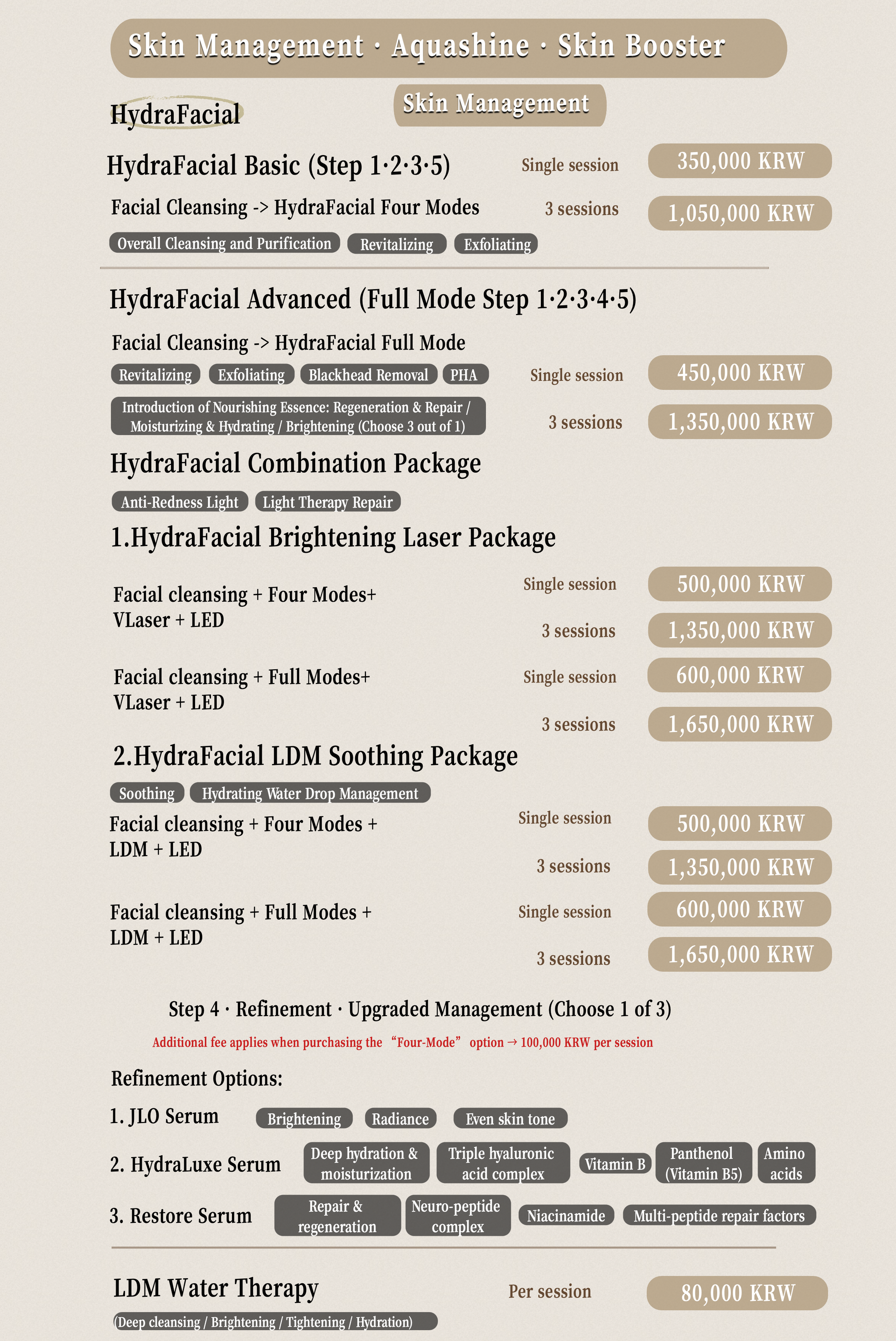
Aqua Peel generally combines cleansing, exfoliation, pore care, and hydration.
It may be suitable for:
- Congested pores
- Excess oil
- Rough texture
- Dull skin
- Mild dehydration
Approximate 2026 price: ₩50,000–₩150,000
LDM
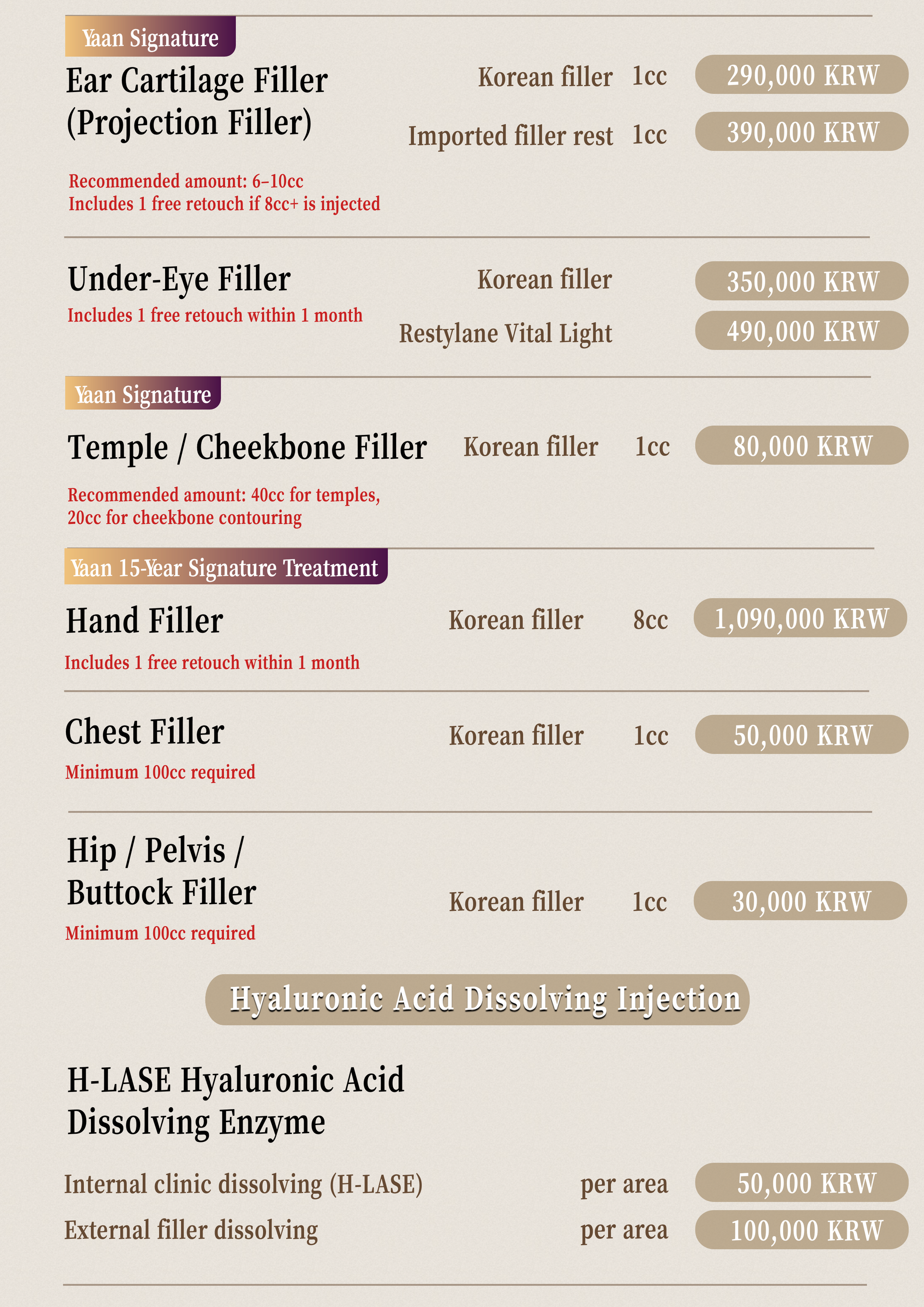
LDM is a non-invasive ultrasound-based treatment commonly used for hydration and calming.
It may be considered for:
- Dehydrated skin
- Tight-feeling skin
- Temporary redness
- Dullness
- Skin conditioning
Approximate 2026 price: ₩50,000–₩150,000
These treatments can create a more immediately refreshed appearance, but their effects should be understood as supportive rather than equivalent to long-term collagen remodeling treatments.
For tourists, they can be particularly convenient before photos, events, or a flight because they generally involve less recovery than injections or resurfacing procedures.
6. How to Build a Glass-Skin Treatment Plan in Korea
There is no single treatment that creates every characteristic associated with glass skin. A practical plan should identify the main reason your skin does not currently have the appearance you want.
If your skin is mainly dehydrated
Consider discussing:
- Rejuran
- Hyaluronic-acid-based skin boosters
- LDM
- Hydration-focused care
If your main concern is pigmentation
Possible options include:
- Pico Laser
- Laser Toning
- Other pigment-focused laser treatments
If pores and texture are the priority
A provider may discuss:
- Potenza
- Other RF microneedling treatments
- Juvelook
- Gentle exfoliation or pore care
If your skin lacks firmness
Possible options include:
- Ultherapy
- Thermage FLX
- Oligio
- Other HIFU or RF treatments
These procedures have different mechanisms and recovery requirements, so they should not automatically be combined.
A practical combination approach
For a multi-day Seoul trip, a treatment plan might look like:
Day 1: Consultation + Aqua Peel or LDM
Day 2: Main laser, lifting, or RF treatment
Day 3–4: Recovery
Day 5: Rejuran or Juvelook if appropriate
Day 6: LDM or hydration care
Day 7: Final consultation and travel preparation
This is only an example. Your provider may recommend a completely different sequence depending on your skin.
Frequently Asked Questions
What is the best Korean treatment for glass skin?
There is no single best treatment for everyone. Rejuran and Juvelook may be considered for skin quality, while lasers can address pigmentation and RF microneedling can target texture and pores.
Can I get glass skin after one treatment?
A single treatment may temporarily improve hydration, brightness, or skin texture, but the overall glass-skin appearance usually involves multiple factors and may require ongoing treatment and skincare.
Is Rejuran or Juvelook better for glass skin?
They have different formulations and treatment goals. Rejuran is commonly used for overall skin quality, while Juvelook is often considered when texture, fine lines, pores, and collagen support are priorities.
Can I combine Rejuran with Pico Laser?
They may be included in the same overall treatment plan, but whether they should be performed on the same day depends on the laser, settings, treatment areas, and your skin condition.
How long does a Korean glass-skin treatment take?
A simple Aqua Peel or LDM session may take less than an hour, while injectable or combination treatments can take longer because of consultation, preparation, numbing, and aftercare.
How much does a glass-skin treatment cost in Korea?
There is no fixed price because “glass skin” is not a single procedure. A basic hydration-focused treatment may cost around ₩50,000–₩150,000, while combination plans involving lasers, skin boosters, or lifting treatments can cost several hundred thousand won or more.
Final Thoughts
Glass skin is less about one “miracle” treatment and more about improving hydration, texture, skin tone, pores, and overall skin quality according to your individual needs. Rejuran, Juvelook, Pico Laser, Laser Toning, RF microneedling, Aqua Peel, and LDM can each play different roles.
For international visitors, the most practical plan is one that matches your skin concerns and available recovery time, rather than choosing the largest combination package.