If You Could Choose Only One Anti-Aging Treatment in Seoul After Age 40, What Would It Be?
After age 40, many people begin noticing changes that seem difficult to address with skincare alone. The jawline may look less defined, the cheeks may appear lower, fine lines may become more noticeable, and the skin may gradually lose some firmness. When visiting Seoul for anti-aging treatment, it is tempting to choose the most popular lifting procedure at a Gangnam clinic.
But if you could choose only one treatment, which would make the most sense?
The most suitable single treatment depends on your main concern. If mild-to-moderate skin laxity is your primary issue, a carefully selected energy-based treatment, such as radiofrequency or focused ultrasound, may be worth discussing with a qualified doctor. If your main concern is pigmentation, deep wrinkles, or volume loss, a lifting treatment may not address the problem you notice most.
The goal is not to choose the most expensive or heavily advertised procedure. It is to identify the change that matters most to you and select a treatment that realistically targets it.
Why Anti-Aging Needs Often Change After 40
Aging does not happen in exactly the same way for everyone. Genetics, sun exposure, smoking, hormonal changes, weight fluctuations, skincare habits, and facial anatomy can all influence how the face changes over time.
Some people mainly notice fine lines around their eyes. Others see more pronounced nasolabial folds, reduced cheek fullness, a softer jawline, or uneven skin tone.
These concerns may involve different structures:
- Skin texture: Fine lines, roughness, and uneven surface quality.
- Skin laxity: A gradual loss of firmness or definition.
- Facial volume: Changes in the fullness of the cheeks, temples, or other areas.
- Dynamic wrinkles: Lines that appear or deepen when making facial expressions.
- Pigmentation and sun damage: Dark spots, uneven tone, and visible signs of cumulative sun exposure.
One treatment cannot reliably address every category. Understanding which change is most noticeable helps prevent disappointment and unnecessary procedures.
If I Could Choose One Treatment, What Would I Consider First?
If the main goal were to improve mild-to-moderate skin laxity without surgery, I would first discuss whether a suitable energy-based tightening treatment fits the individual's facial anatomy and goals.
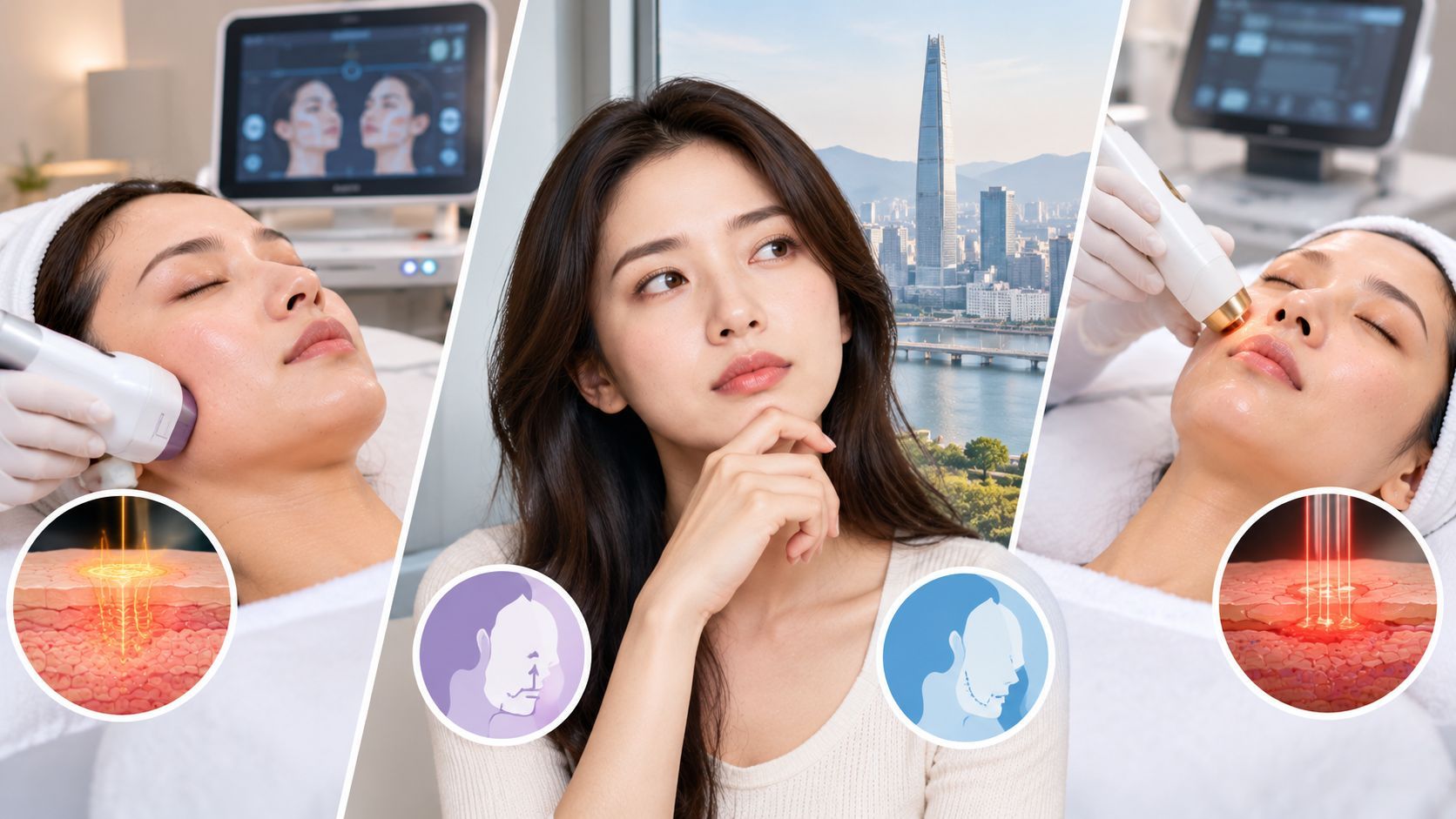
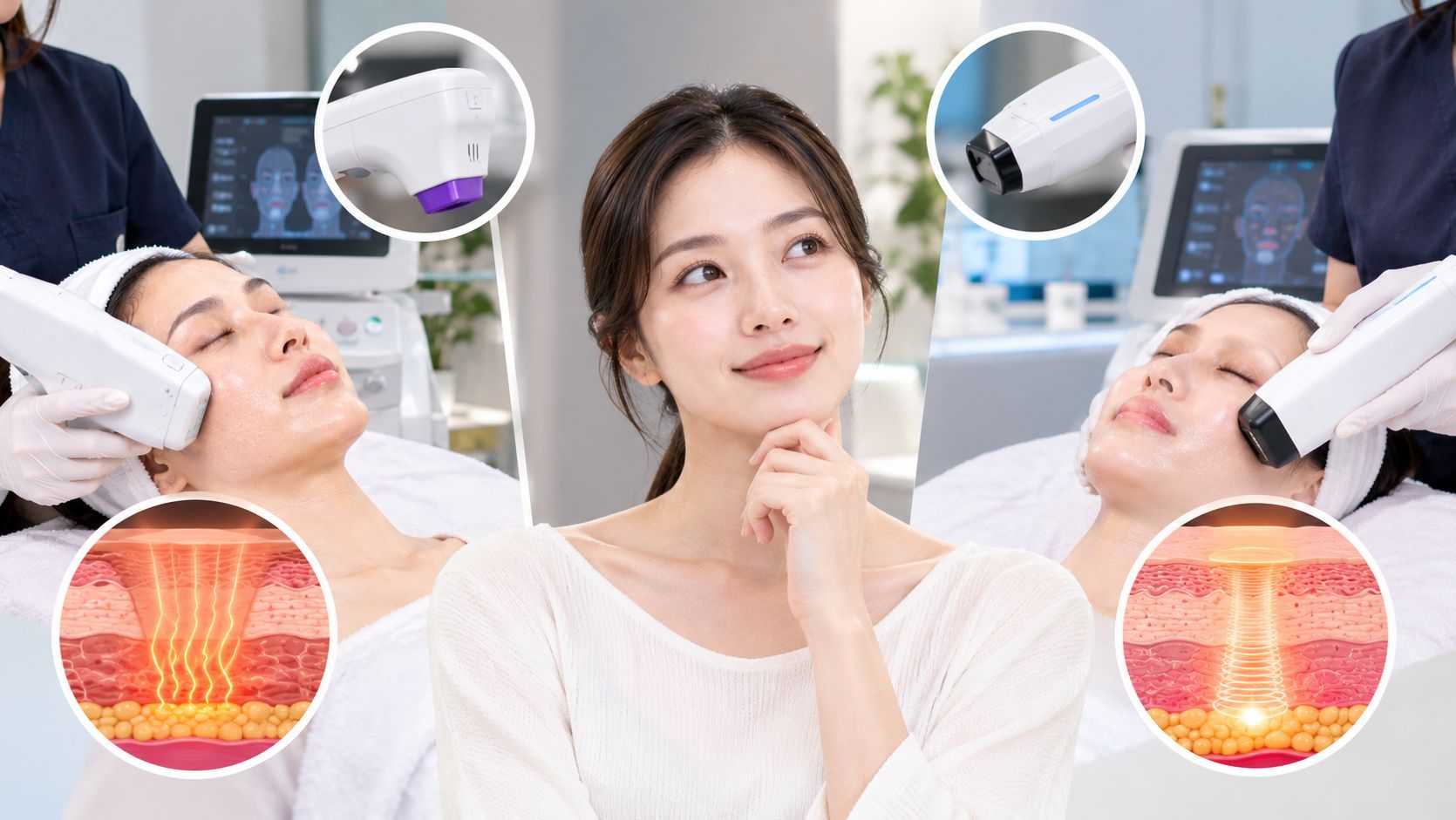
Two broad categories commonly considered in Seoul are radiofrequency (RF) and microfocused ultrasound (MFU).
1. Radiofrequency Treatments for Skin Firmness
Radiofrequency devices deliver controlled energy into tissue to create heating that can stimulate collagen remodeling. Depending on the device, treatment settings, and individual anatomy, the intended outcome may include gradual improvement in skin firmness and contour.
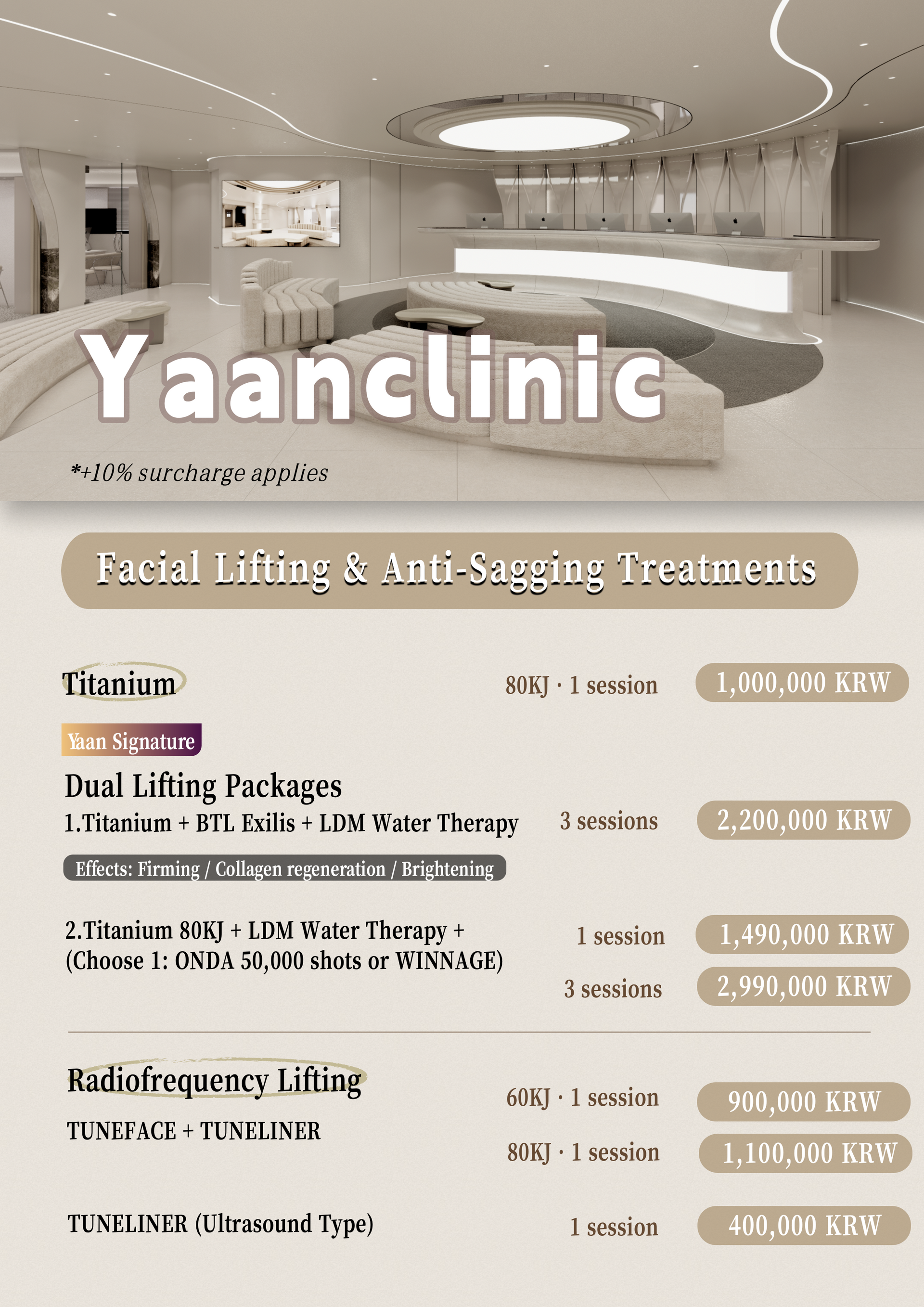
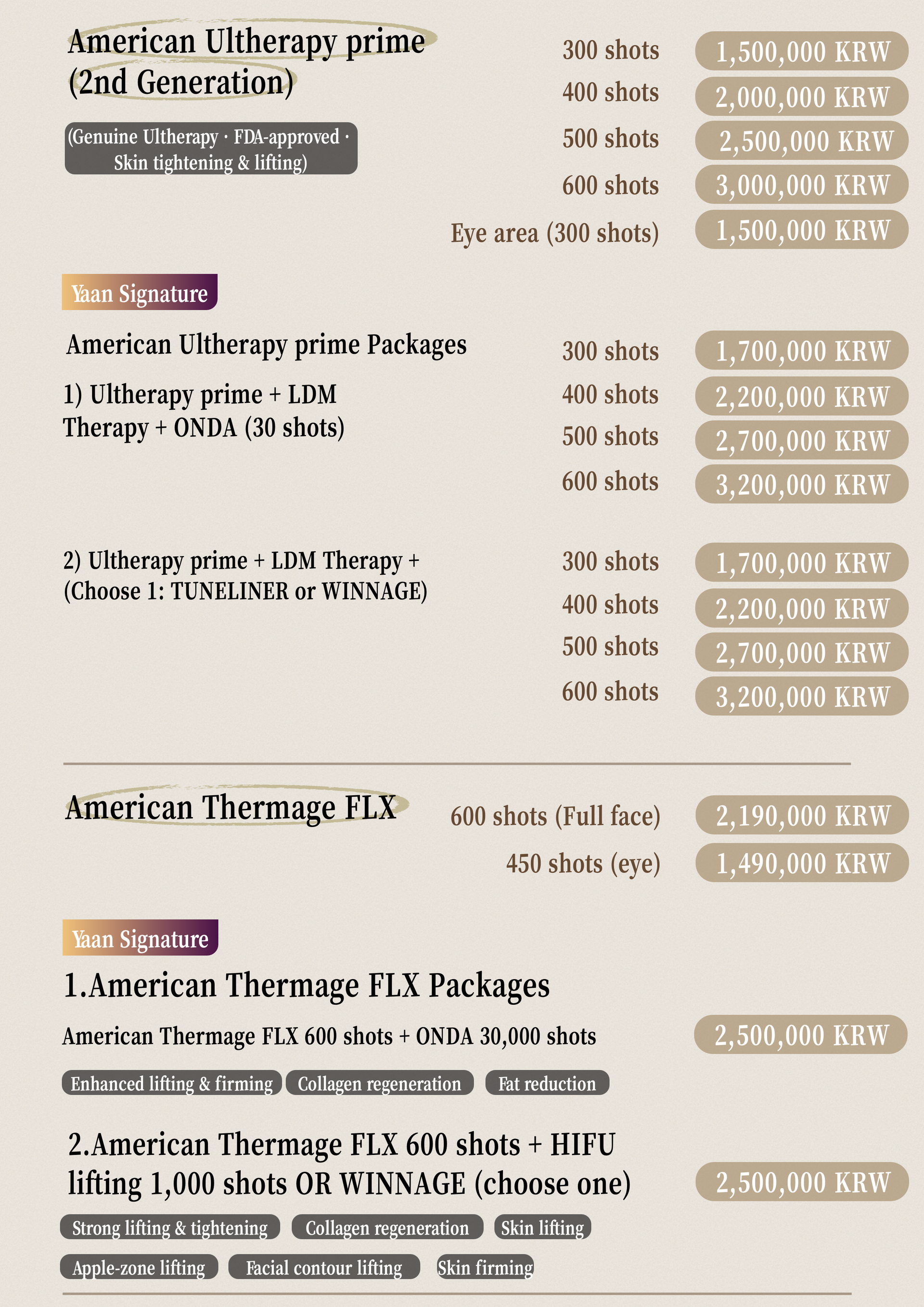
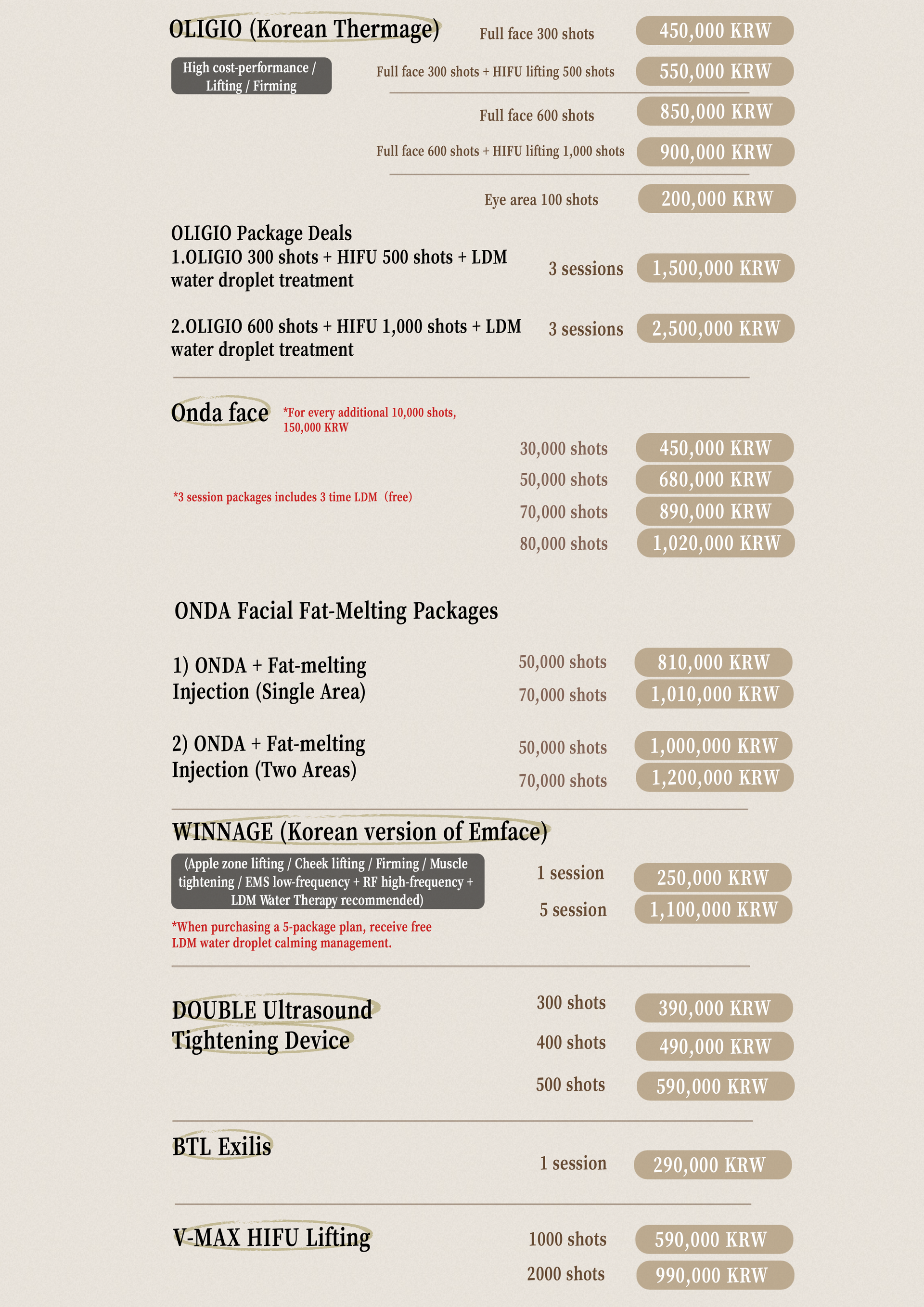
Thermage and Oligio are examples of monopolar radiofrequency treatments offered by some aesthetic clinics. Other RF devices, including certain InMode technologies, work differently and may be intended for different treatment goals.
RF may be worth discussing if your main concern is mild laxity or a less defined facial contour. However, results vary, and the procedure does not reproduce the effects of a surgical facelift. Some people experience temporary redness, swelling, tenderness, or other side effects. Burns, unwanted contour changes, and other complications are possible, particularly when treatment is inappropriate or poorly performed.
2. Focused Ultrasound for Selected Lifting Concerns
Microfocused ultrasound treatments, including Ultherapy, deliver focused energy at selected tissue depths. They may be considered for certain patients who want a nonsurgical approach to improving the appearance of laxity.
Suitability depends on factors such as tissue thickness, facial structure, the degree of laxity, and the treatment area. Focused ultrasound is not automatically better than RF, and greater energy or more treatment points do not necessarily mean a better result.
Possible adverse effects include pain, swelling, temporary sensory changes, and, less commonly, burns or nerve-related complications.
What About Sofwave?
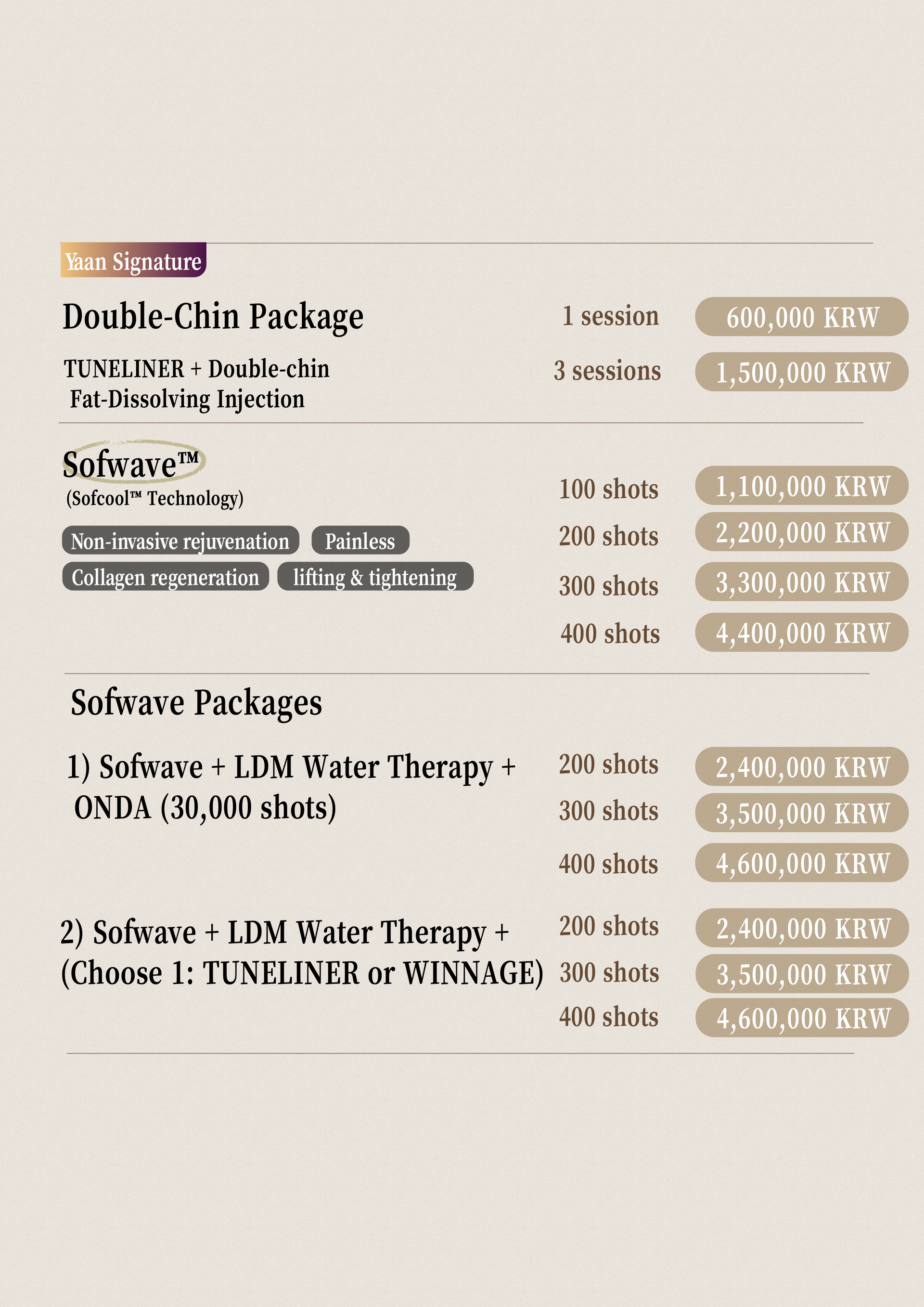
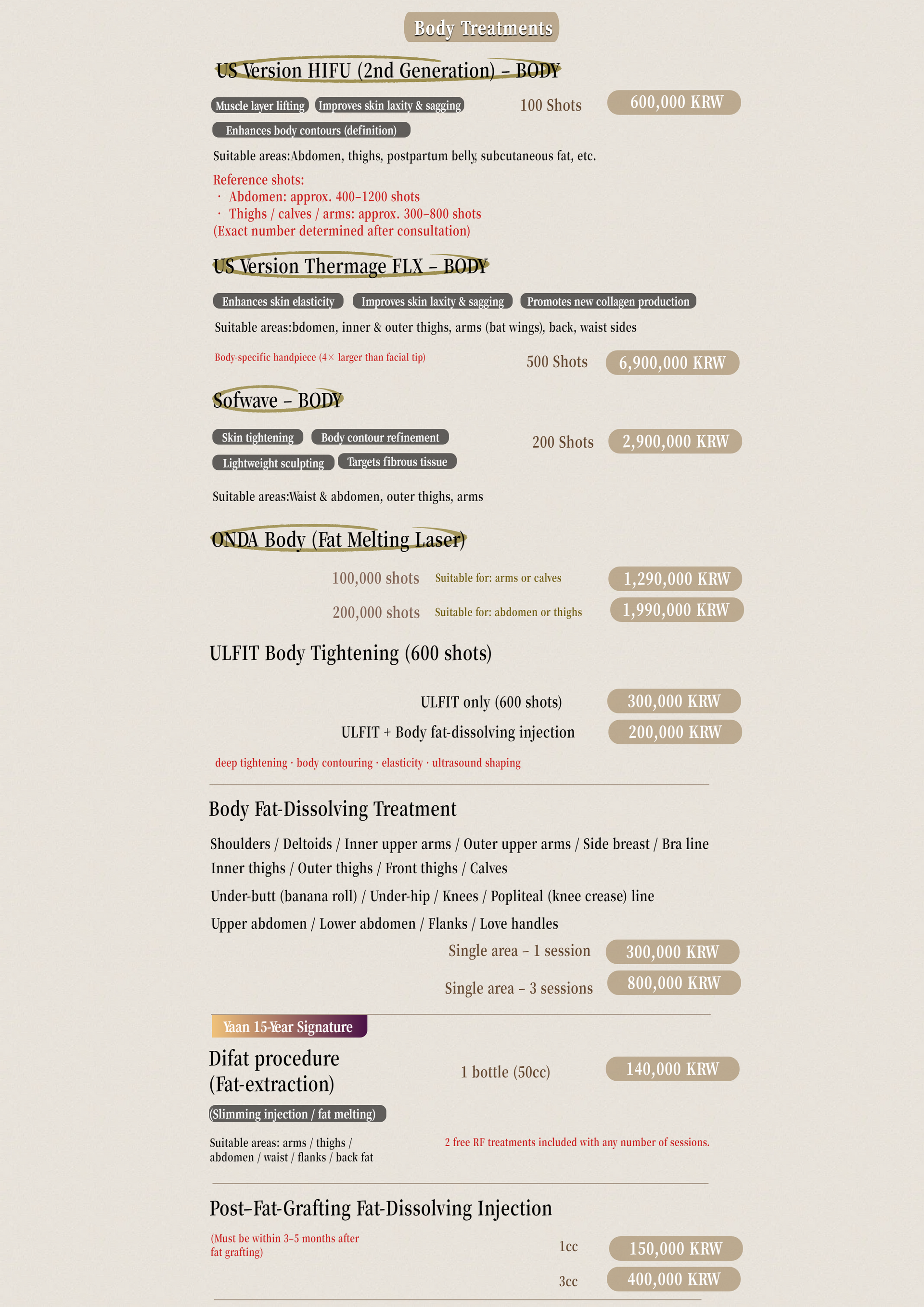
Sofwave uses a different ultrasound technology and treatment approach from microfocused ultrasound systems. It may be considered for selected skin-laxity concerns, but it should not be assumed to produce the same effects as Ultherapy.
The right comparison is not simply which machine is newest or most popular. It is which technology is appropriate for the tissue and concern being treated.
Why the Most Popular Treatment May Not Be the Right One
A clinic may frequently advertise a particular device, but popularity does not establish that it is the best option for every face.
Consider these examples:
- If your jawline has become less defined: An energy-based tightening treatment may be worth evaluating, although substantial sagging may require a different approach.
- If your skin looks dull or has sunspots: A lifting procedure may do little to correct pigmentation. A suitable pigment-focused treatment or topical skincare plan may be more relevant.
- If expression lines are your main concern: A doctor may discuss whether a neuromodulator is appropriate, taking your medical history and facial movement into account.
- If your face looks hollow after weight loss: Tightening alone may not restore lost volume and could be an unsuitable choice for some facial types.
- If deep folds or substantial sagging are present: One nonsurgical procedure may not provide the degree of change you expect.
A good consultation should explain what a treatment can improve, what it cannot improve, and which alternatives are reasonable for your particular concern.
How to Choose One Treatment During a Seoul Visit
When your time in Korea is limited, it can be tempting to book a procedure based on an online promotion. A more reliable approach is to begin with a medical assessment.
Step 1: Identify Your Main Concern
Before visiting a clinic, identify the one change you most want to improve. For example, you might say, “My lower face looks less firm than it used to,” rather than simply asking for an anti-aging treatment.
This gives the doctor a clearer starting point.
Step 2: Ask Why the Treatment Fits Your Face
Ask the doctor to explain which tissue or concern the recommended treatment targets. If RF is suggested, ask why that approach is more appropriate than focused ultrasound or a non-energy-based option.
The explanation should relate to your facial anatomy and goals, not just a device's marketing claims.
Step 3: Discuss Risks and Recovery
Even nonsurgical procedures can cause side effects. Ask about expected redness, swelling, tenderness, bruising, the possibility of rare complications, and how long you should wait before important events or air travel.
Do not assume that every lifting procedure has no downtime simply because it does not involve surgery.
Step 4: Understand the Expected Result
Ask when improvement may become visible, how long results may take to develop, how variable the outcome can be, and whether maintenance sessions may be considered.
Be cautious of promises that a single session will make you look a specific number of years younger. Facial aging cannot be measured or reversed so precisely.
Step 5: Check the Total Cost
Request a clear explanation of the treatment area, device, planned settings or treatment approach, clinician performing the procedure, and total price. Ask whether follow-up visits or additional treatments are included.
You should be able to make a decision without pressure to purchase a large package immediately.
Is One Treatment Enough After Age 40?
It may be enough to address one clearly defined concern, particularly if the change is mild and your expectations are realistic. However, one procedure is unlikely to address all signs of aging.
A person who chooses an energy-based treatment for mild laxity may still have pigmentation or expression lines. Someone who treats skin texture may still notice reduced facial volume. This does not mean that more treatments are automatically necessary.
A conservative plan can be a sensible starting point. Allow enough time to assess the outcome before considering additional procedures, and avoid stacking treatments simply because you are visiting Seoul for a short period.
Who Should Be Cautious About Lifting Treatments?
Not everyone is a suitable candidate for every energy-based procedure. A clinician should review your medical history, previous cosmetic treatments, skin condition, facial anatomy, and expectations before recommending a treatment.
People with very little facial fat, significant facial hollowing, substantial laxity, active skin problems, or certain medical circumstances may need a different plan or further assessment. The risks and precautions also differ by device and treatment area.
If you have an important event shortly after your appointment, tell the clinic in advance. Even procedures marketed as low-downtime treatments can cause temporary visible changes.
Final Answer: Which One Would I Choose?
If I had to narrow the decision to one treatment for someone over 40 whose main concern is mild-to-moderate skin laxity, I would start by asking a qualified doctor whether a suitable radiofrequency or focused-ultrasound treatment fits that person's anatomy and goals.
I would not automatically choose Thermage, Ultherapy, Sofwave, Oligio, or InMode based on brand recognition alone. The technology, treatment area, practitioner experience, risk profile, and nature of the concern matter more than popularity.
If the main issue is pigmentation, expression lines, or volume loss, I would reconsider the treatment category rather than choose a lifting procedure simply because it is common in Seoul.
The best single anti-aging treatment is the one that targets your most important concern with a realistic benefit and an acceptable level of risk. A thoughtful consultation at a qualified clinic in Gangnam or elsewhere in Seoul can help you determine whether one procedure is appropriate—or whether a different approach would better match your needs.
Frequently Asked Questions
1. What is the best anti-aging treatment in Seoul after age 40?
There is no universal best treatment. Radiofrequency and focused ultrasound may be options for selected skin-laxity concerns, while pigmentation, expression lines, and volume loss may require different approaches.
2. Is Thermage better than Ultherapy after age 40?
Neither is automatically better. They use different technologies and may suit different treatment goals and facial anatomies. A qualified doctor should explain which approach, if either, is appropriate for you.
3. Can one lifting treatment make me look five years younger?
No treatment can guarantee a specific age-reversing result. Some people notice a meaningful improvement in firmness or contour, while others experience a more subtle change.
4. Is Sofwave or Oligio worth considering?
Either may be worth discussing if the treatment's intended purpose matches your concern and you are a suitable candidate. Ask about the expected benefit, risks, alternatives, and the clinician's experience with the device.
5. How long should I stay in Seoul after a lifting treatment?
There is no single recommended stay for every procedure. Recovery depends on the device, treatment intensity, individual response, and possible complications. Ask your treating clinician for specific guidance before booking flights or important activities.
6. Should I combine treatments during my first Seoul visit?
Not necessarily. If you are new to aesthetic procedures or have limited time in Korea, starting with one carefully selected treatment may make it easier to assess your response. Additional procedures should be based on clinical need, not pressure to buy a package.