Does Thermage Work After Age 50?
Yes, Thermage can still be worth considering after age 50, particularly if your main concern is mild skin laxity, a softer jawline, or a gradual loss of facial firmness. However, results vary, and Thermage is unlikely to provide a dramatic lift when you have pronounced jowls, substantial excess skin, or significant neck sagging.
Thermage is a non-invasive radiofrequency (RF) treatment designed to heat targeted tissue and stimulate collagen remodeling. It may improve the appearance of mild laxity over time, but it does not remove excess skin or reproduce the results of a surgical facelift.
Age alone does not determine whether Thermage will work for you. Your degree of sagging, skin thickness, facial anatomy, treatment technique, and expectations are more important considerations.
What Happens to Skin After Age 50?
During your 50s, changes in skin structure and facial support can make aging more noticeable. However, the pattern and severity of these changes vary from person to person.
You might notice:
- A less defined jawline.
- Jowls becoming more visible.
- Loose skin around the cheeks or neck.
- Fine lines and wrinkles becoming more prominent.
- Reduced firmness around the lower face.
- Hollowing in the cheeks or temples.
These concerns can overlap, but they do not all respond to radiofrequency treatment in the same way.
If your primary concern is mild skin laxity, Thermage may offer some improvement. If your face looks older mainly because of volume loss, adding a tightening treatment may not address the underlying issue. Likewise, substantial excess skin is unlikely to disappear with a non-invasive RF procedure.
The first step is to identify what is causing the change in your appearance.
How Does Thermage Work?
Thermage uses monopolar radiofrequency energy to heat tissue beneath the skin's surface. This controlled heating is intended to stimulate collagen remodeling and improve the appearance of skin firmness.
Unlike surgical lifting, the procedure does not involve removing excess skin or surgically repositioning facial tissues.
Depending on your anatomy and treatment plan, a clinician may consider Thermage for areas such as the cheeks, jawline, or selected regions around the eyes.
The treatment is generally performed without an incision, and routine downtime is often limited. However, temporary redness, swelling, tenderness, and discomfort can occur. Burns, contour changes, or other complications are possible, particularly if treatment is not appropriately selected or performed.
Thermage should be viewed as a treatment for selected signs of laxity—not as a guaranteed facelift alternative.
Does Thermage Work as Well After 50?
There is no universal age cutoff beyond which Thermage stops working. Some people in their 50s may be suitable candidates, while some younger patients may have too much tissue laxity to achieve the improvement they want.
A clinical study of non-invasive monopolar RF included adults aged 30–60 with mild to moderate facial and upper-neck laxity. Researchers reported improvement at six months, including in the jowl and lower-face regions. However, the study was relatively small, and its findings cannot predict the result for every patient over 50.
Research on radiofrequency treatments generally supports the possibility of modest improvement in selected cases, but the evidence varies by device, study design, treatment protocol, and outcome measured.
For this reason, a realistic consultation should focus on your individual anatomy rather than promising a particular result based on age alone.
When Is Thermage Worth Considering After Age 50?
1. Your skin has become slightly less firm
If your jawline has softened and your cheeks appear mildly less tight, Thermage may be worth discussing with a qualified dermatologist.
The expected benefit is usually gradual and subtle. You may notice a modest improvement in firmness rather than a dramatic change in facial shape.
2. You want a natural-looking improvement
Some people prefer a treatment that aims to improve skin firmness without adding facial volume or changing facial proportions significantly.
Thermage may suit this preference when mild laxity is the primary concern. However, a natural-looking outcome cannot be guaranteed, and treatment still carries risks.
3. You prefer to avoid surgery
Thermage does not require a surgical incision and typically has less downtime than a facelift. This may be attractive if you have limited time for recovery.
The trade-off is that the result is generally less substantial than surgery, especially when excess skin and tissue descent are pronounced.
4. You understand the limitations
Thermage is more likely to disappoint someone expecting a sharply defined jawline, complete removal of jowls, or a major neck lift.
If you would consider the treatment successful only if it substantially removes loose skin, discuss surgical options before committing to a non-surgical procedure.
When Might Thermage Not Be Enough?
Thermage may not be the most effective choice if your main concern is significant sagging.
Pronounced jowls
Jowls can involve tissue descent, excess skin, changes in facial fat distribution, and other structural factors. RF may improve selected aspects of skin firmness but cannot reliably reposition descended tissues.
Significant neck laxity
Loose skin beneath the chin or around the neck may not respond sufficiently to non-invasive tightening. A clinician should determine whether the issue is skin laxity, excess fat, muscle-related changes, or a combination.
Facial hollowing
If your cheeks or temples are already hollow, explain that preserving facial volume is important to you. Unwanted contour changes are possible with energy-based procedures, and the risks depend on the device, treatment settings, and anatomy.
Expectations of a surgical lift
A facelift can address selected patterns of tissue descent and excess skin more directly than non-invasive RF. It involves more recovery and surgical risks, but it may be a more appropriate option when sagging is substantial.
The American Academy of Dermatology advises that non-invasive skin-tightening treatments tend to produce modest results and may not be helpful for people with extensive sagging.
Thermage vs. Ultherapy After Age 50
Both Thermage and Ultherapy are used for selected cases of skin laxity, but they use different energy technologies.
Thermage uses radiofrequency energy, while Ultherapy uses microfocused ultrasound. Neither treatment is universally better for every person in their 50s.
Your clinician should consider:
- Whether your main concern is mild skin laxity or substantial tissue descent.
- The thickness and condition of your skin.
- Your facial structure and existing volume loss.
- The area you want to treat.
- Your tolerance for discomfort and possible downtime.
- The amount of improvement you realistically expect.
If your main concern is skin quality, pigmentation, or wrinkles rather than laxity, another treatment may be more appropriate. If you have pronounced jowls or excess skin, ask whether a surgical consultation would be more useful than choosing between two tightening devices.
How Long Does Thermage Take to Show Results?
Thermage results are not necessarily immediate. Some patients notice an early feeling of tightness, but collagen remodeling takes time.
The American Academy of Dermatology explains that radiofrequency skin-tightening results develop gradually, with the best results often becoming apparent around six months. Individual responses vary, and some patients may benefit from additional treatments.
It is important to distinguish the time required for results to develop from how long those results last. Longevity varies, and aging continues after treatment. No single schedule applies to everyone.
Ask your clinician when your outcome should be evaluated and whether additional sessions are genuinely appropriate for your needs.
What Should You Ask a Seoul Clinic Before Booking?
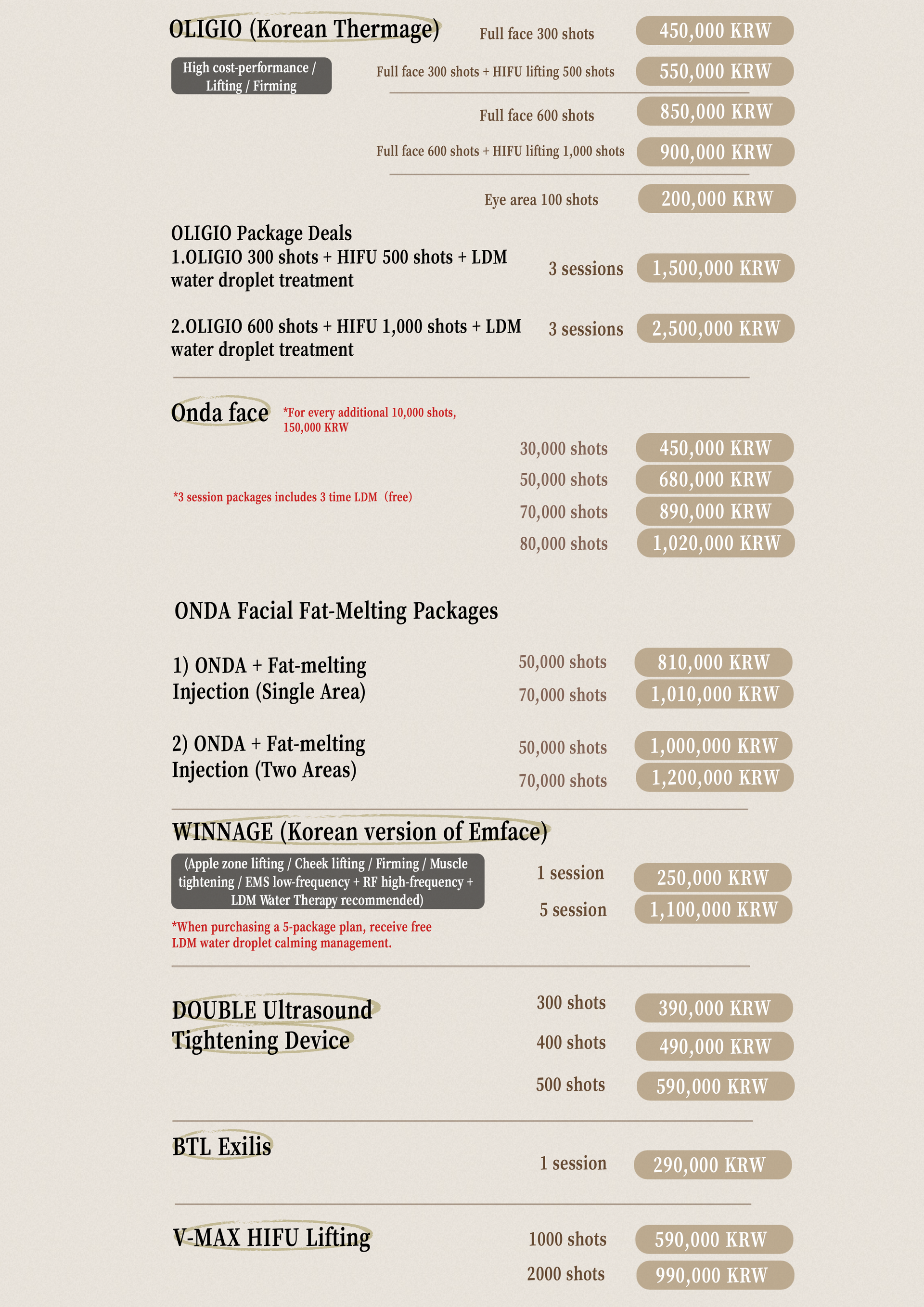
If you are considering Thermage in Gangnam or elsewhere in Seoul, arrange a consultation before selecting a package.
Ask the clinic:
- What is causing my facial sagging?
- Is Thermage likely to provide a noticeable improvement in my case?
- Which exact device and treatment tip will be used?
- Who will perform the procedure, and what relevant qualifications do they have?
- What are the risks, expected recovery, and limitations?
- What alternatives should I consider if my sagging is substantial?
- What follow-up care is available if I experience a complication?
If you are traveling to Korea, discuss your departure date and access to follow-up care. Although downtime is often limited, discomfort, swelling, or other reactions can occur after the appointment.
Be cautious of guarantees that Thermage will remove all jowls or provide the same results as surgery. A responsible clinician should explain what the procedure can realistically achieve.
How Can You Decide Whether Thermage Is Worth the Cost?
Think about the result you want and whether a modest improvement would satisfy you.
If you have mild laxity and want gradual tightening without surgery, Thermage may be a reasonable option to explore. If you have significant excess skin and want a substantial lift, the treatment may not offer sufficient value for your expectations.
Compare the total cost, likely degree of improvement, risks, recovery, and potential need for future treatments. A procedure with minimal downtime is not automatically the best investment if the expected result is too subtle for your goals.
The best decision comes from an individualized assessment rather than a promise based on your age or a device's reputation.
Conclusion
Thermage can still work after age 50, particularly for selected patients with mild skin laxity who want a gradual, non-surgical improvement. However, results vary, and the treatment is unlikely to correct pronounced jowls, significant neck sagging, or substantial excess skin.
Age is only one part of the decision. Your facial anatomy, skin condition, degree of laxity, and expectations should guide the treatment plan.
Before booking Thermage in Seoul, ask a qualified clinician to explain the likely benefit in your specific case and compare it with other options. If your sagging is substantial, a surgical consultation may help you understand whether a facelift would better match your goals.
Frequently Asked Questions
1. Is Thermage effective for women over 50?
It may help selected women over 50 who have mild skin laxity. The amount of improvement depends on the degree of sagging, skin condition, anatomy, and treatment technique.
2. Can Thermage remove jowls after age 50?
Thermage may modestly improve firmness around the lower face, but it cannot reliably remove pronounced jowls or reposition significantly descended tissue.
3. Is Thermage better than Ultherapy for mature skin?
Neither is universally better. Thermage uses radiofrequency energy, while Ultherapy uses focused ultrasound. Your anatomy, treatment goals, and clinician's assessment should determine which, if either, is appropriate.
4. How long do Thermage results take to appear?
Improvement develops gradually as collagen remodeling occurs. Results are often assessed over several months, and the timing varies between individuals.
5. Is Thermage safe after age 50?
Age alone does not determine safety. Your medical history, skin condition, anatomy, and the treatment technique matter. Possible adverse effects include discomfort, swelling, redness, burns, or unwanted contour changes.
6. Should I choose Thermage or a facelift?
Thermage may be appropriate for mild laxity when a subtle result is acceptable. A facelift may be more suitable for substantial excess skin and pronounced tissue descent, but surgery involves greater recovery and risks. A qualified clinician can help you compare the options.