Hydrafacial vs Aqua Peel Cost in Korea: Which Offers Better Value?
Hydrafacial vs Aqua Peel Cost in Korea: Which Offers Better Value?
Hydrafacial and Aqua Peel are both popular non-invasive facial treatments in Korea designed to cleanse pores, remove dead skin cells, and improve hydration. However, they are not identical treatments, and the price difference can be significant. In 2026, Aqua Peel commonly costs around ₩40,000–₩150,000 per session, while standard Hydrafacial treatments often range from ₩150,000–₩350,000 or more depending on the clinic, protocol, and added boosters. For many visitors to Seoul, Aqua Peel offers better value for routine pore care, while Hydrafacial may be worth the extra cost for a more comprehensive treatment experience.
1. What Is the Difference Between Hydrafacial and Aqua Peel?
Both treatments use suction and liquid solutions to cleanse and exfoliate the skin, but the equipment, solutions, and treatment protocols can differ.
Aqua Peel
Aqua Peel is a Korean-style hydrodermabrasion treatment that typically combines suction with multiple solutions designed to cleanse, exfoliate, and hydrate the skin.
It may help with:
- Excess sebum
- Clogged pores
- Blackheads
- Rough skin texture
- Mild congestion
- Dehydrated skin
- Dull complexion
A typical Aqua Peel uses several stages, often including AHA, BHA, and moisturizing or nourishing solutions.
Hydrafacial
Hydrafacial is a branded multi-step hydradermabrasion treatment with a standardized protocol and dedicated device and consumables.
It generally combines:
- Cleansing
- Exfoliation
- Gentle extraction
- Hydration
- Serum infusion
- Optional boosters or LED care
Because Hydrafacial is a branded treatment with dedicated solutions and protocols, it is generally more expensive than a standard Aqua Peel.
Current Seoul pricing guides place standard Hydrafacial around ₩150,000–₩250,000, while Aqua Peel is often around ₩60,000–₩150,000.
2. How Much Does Aqua Peel Cost in Korea?
Aqua Peel is one of the more affordable professional facial treatments available at Korean dermatology and aesthetic clinics.
Typical 2026 prices include:
- Basic Aqua Peel: approximately ₩40,000–₩80,000
- Full-course Aqua Peel: approximately ₩60,000–₩120,000
- Aqua Peel + soothing care: approximately ₩80,000–₩150,000
- Aqua Peel + LED or additional care: approximately ₩100,000–₩200,000
- 5-session packages: approximately ₩150,000–₩400,000
Current Seoul clinic menus show Aqua Peel promotional prices as low as ₩19,000–₩39,000, while standard full-course treatments can be around ₩60,000–₩95,000 before VAT.
Some clinics also bundle Aqua Peel with LED, LDM, calming treatments, or other procedures. These combination programs can cost considerably more than basic Aqua Peel.
For international patients, check whether the advertised price is:
- A first-visit promotion
- For only one or two Aqua Peel stages
- Before VAT
- For a specific treatment area
- Part of a package
A low promotional price can be useful, but it should not be compared directly with a full multi-step treatment without checking what is included.
3. How Much Does Hydrafacial Cost in Korea?
Hydrafacial is generally more expensive because it uses a branded treatment protocol and dedicated products.
Typical 2026 Seoul pricing is approximately:
- Standard Hydrafacial: ₩150,000–₩250,000
- Hydrafacial with booster: ₩250,000–₩380,000
- Deluxe or premium treatment: ₩280,000–₩400,000+
- Hydrafacial + additional laser or LED: ₩400,000–₩500,000+
One current Seoul pricing guide lists standard Hydrafacial at ₩150,000–₩250,000, booster treatments at ₩250,000–₩380,000, and premium protocols at ₩280,000–₩400,000.
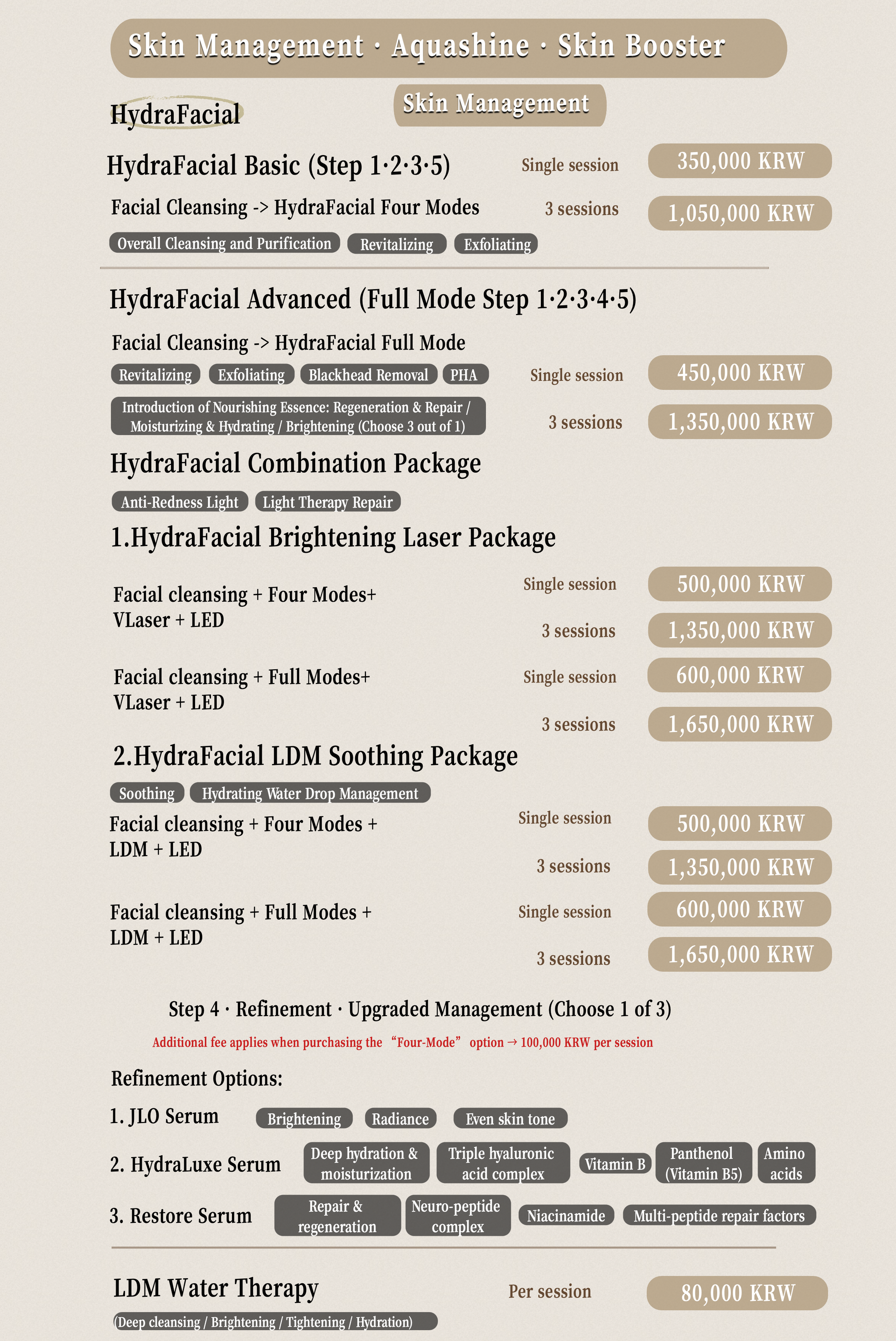
Individual clinics can charge considerably more. For example, one current Seoul clinic lists a standalone Hydrafacial at ₩350,000, while a Hydrafacial combined with LDM + LED or V Laser + LED is listed at ₩500,000.
This means the word “Hydrafacial” alone is not enough to determine the value. Ask exactly which protocol and products are included.
4. Which Treatment Is Better for Your Skin?
The better choice depends on your skin concern and how much you want to spend.
Choose Aqua Peel if:
- Your main concern is clogged pores.
- You have excess oil or sebum.
- You want basic exfoliation.
- You want regular pore maintenance.
- You are looking for an affordable facial treatment.
- You are visiting Seoul on a limited budget.
Aqua Peel is particularly attractive for tourists because it is relatively inexpensive and usually requires little to no downtime.
Choose Hydrafacial if:
- You want a more comprehensive facial.
- Hydration is a major concern.
- Your skin looks dull or dehydrated.
- You want a more standardized multi-step treatment.
- You want to add a dedicated booster.
- You prefer a premium facial experience.
Hydrafacial may offer greater value when you want hydration, exfoliation, extraction, and serum infusion in one treatment, particularly if a suitable booster is included.
However, neither treatment should be considered a replacement for medical treatment when you have significant acne, severe inflammation, melasma, or another dermatological condition.
5. Treatment Process, Results and Recovery
Both treatments are generally quick and have minimal downtime, making them convenient for international visitors.
Aqua Peel Process
A typical Aqua Peel may include:
- Cleansing
- AHA exfoliation
- BHA pore cleansing
- Suction-based extraction
- Hydrating solution
- Moisturizing or modeling mask
The treatment often takes approximately 15–40 minutes, depending on the number of steps and additional care.
You may notice:
- Cleaner-looking pores
- Smoother texture
- Reduced surface oil
- Temporary hydration
- Brighter-looking skin
Hydrafacial Process
A standard Hydrafacial generally involves:
- Cleansing
- Exfoliation
- Extraction
- Hydration
- Serum infusion
- Optional booster or LED treatment
A standard treatment generally takes around 30 minutes, although premium versions can take longer.
Possible benefits include:
- Improved hydration
- Smoother texture
- Cleaner pores
- Temporary glow
- More even-looking skin
Both treatments generally allow patients to return to normal activities immediately. Mild redness, sensitivity, or dryness can occasionally occur.
After either treatment, it is sensible to:
- Apply sunscreen.
- Keep the skin moisturized.
- Avoid aggressive exfoliation for several days.
- Avoid excessive heat if the clinic recommends it.
- Follow any product-specific aftercare instructions.
Because there is generally little recovery, either treatment can be convenient during a short Seoul trip or shortly before returning home.
6. Which Offers Better Value for Foreign Patients?
When comparing cost, Aqua Peel usually wins on price per session, while Hydrafacial can provide more value when you specifically want a premium, standardized treatment with additional hydration or boosters.
A simple comparison is:
Aqua Peel
- Lower price
- Good for pore cleansing
- Suitable for routine maintenance
- Often available as inexpensive packages
- Good choice for budget-conscious tourists
Hydrafacial
- Higher price
- More standardized branded protocol
- Stronger focus on hydration and overall facial treatment
- More options for boosters
- Better suited to patients seeking a premium facial experience
If your budget is around ₩50,000–₩100,000, Aqua Peel is generally the more practical choice.
If your budget is around ₩150,000–₩300,000+ and you want a more comprehensive facial treatment, Hydrafacial may offer better value.
Before booking, foreign patients should ask:
- Is this genuine Hydrafacial or an Aqua Peel-style treatment?
- What products and solutions are included?
- How many treatment steps are included?
- Is extraction included?
- Is a booster included?
- Is VAT included?
- Is the treatment price a first-visit promotion?
- How long does the treatment take?
- Is English consultation available?
Most importantly, do not compare the names alone. Compare the actual treatment steps and products included in the price.
Frequently Asked Questions
Is Aqua Peel cheaper than Hydrafacial in Korea?
Yes. Aqua Peel is generally much more affordable, with many Seoul clinics offering it for around ₩40,000–₩150,000, while standard Hydrafacial commonly costs around ₩150,000–₩350,000 or more.
Is Hydrafacial better than Aqua Peel?
Not necessarily. Hydrafacial offers a branded, standardized protocol and more premium treatment options, while Aqua Peel can provide effective cleansing and hydration at a much lower cost.
How much does Aqua Peel cost in Seoul?
Basic Aqua Peel can start around ₩40,000, while more complete treatments commonly cost approximately ₩60,000–₩150,000. Promotional prices can be lower.
How much does Hydrafacial cost in Seoul?
Standard Hydrafacial commonly costs around ₩150,000–₩250,000, while treatments with boosters or premium add-ons can reach ₩300,000–₩400,000 or more.
Which is better for clogged pores?
Both can help cleanse congested pores. Aqua Peel is often sufficient for routine sebum and pore care, while Hydrafacial may be preferable if you also want intensive hydration and additional serum infusion.
Can foreigners get Aqua Peel or Hydrafacial in Korea?
Yes. Both are widely available at Korean dermatology and aesthetic clinics, including clinics serving international patients. Confirm the exact treatment, price, VAT, and included steps before booking.
Final Thoughts
Aqua Peel and Hydrafacial both provide cleansing, exfoliation, extraction, and hydration, but they serve slightly different price and treatment segments.
Aqua Peel is usually the better value for affordable pore care and regular maintenance, with many treatments available below ₩100,000. Hydrafacial costs more but may be worthwhile if you want a premium, standardized facial with stronger hydration and booster options.
For most budget-conscious foreign visitors, Aqua Peel offers better value per session. If your priority is a more comprehensive facial experience rather than the lowest price, Hydrafacial may justify the additional cost.