I'm 45 With Pigmentation and Sagging. Which Should I Treat First?
If you are 45 and dealing with both facial pigmentation and sagging skin, you may be wondering whether to treat dark spots first or focus on lifting and firmness. The best approach depends on the type of pigmentation, the degree of skin laxity, your skin sensitivity, and how much downtime you can accept.
In many cases, it makes sense to stabilize pigmentation and protect the skin barrier before considering aggressive laser or energy-based treatments. However, you do not always need to complete every pigmentation treatment before starting a lifting plan. A dermatologist can determine whether the concerns can be treated in stages or whether selected treatments can safely be combined.
For many people in their 40s, a sensible starting point is daily sun protection, an appropriate pigmentation treatment, and an assessment of whether the sagging is mild, moderate, or significant.
Why Do Pigmentation and Sagging Develop Together After 40?
Pigmentation and sagging can appear at the same time, but they do not necessarily have the same cause.
Pigmentation
Dark spots, uneven skin tone, and brown patches can result from several conditions, including:
- Sun spots caused by cumulative ultraviolet exposure
- Melasma, which often appears as irregular brown patches
- Post-inflammatory hyperpigmentation following acne, irritation, or injury
- Age-related changes in pigment distribution
Identifying the type of pigmentation matters because treatments that work well for individual sun spots may be unsuitable for melasma.
Melasma is particularly important to identify before laser treatment because heat, irritation, and inflammation can sometimes worsen pigmentation, especially in darker skin tones.
Sagging skin
Skin laxity can become more noticeable in your 40s as collagen, elastin, and supporting facial structures change with age.
You may notice:
- Less definition along the jawline
- Early jowls
- Looser skin around the lower cheeks
- Reduced firmness around the neck
- A tired appearance even when your skin is otherwise healthy
Sagging can also be influenced by genetics, weight changes, facial fat distribution, and bone structure. Treating pigmentation alone will not correct these structural changes.
Should You Treat Pigmentation or Sagging First?
There is no universal sequence for every patient. The most appropriate order depends on the diagnosis and the proposed treatments.
When pigmentation should come first
Prioritizing pigmentation is often sensible if you have active melasma, recently worsening dark patches, irritation, or a history of developing dark marks after procedures.
A dermatologist may begin with:
- Broad-spectrum sunscreen and visible-light protection
- Gentle skincare that supports the skin barrier
- Appropriate topical pigment-reducing medication
- A carefully selected procedure, if indicated
Melasma treatment usually requires patience. Improvement may take several months, and recurrence is common without ongoing maintenance and sun protection.
If you have melasma, do not automatically book a strong pigment laser simply because the dark patches are visible. The correct diagnosis should guide the treatment choice.
When lifting can be the priority
If your pigmentation is mild and stable, but loose skin and early jowls are your main concern, your dermatologist may consider a lifting treatment without waiting for every dark spot to disappear.
Depending on your anatomy and goals, options may include radiofrequency treatments, ultrasound-based treatments, or other procedures designed to improve the appearance of skin laxity.
These treatments have different mechanisms, risks, and results. They cannot guarantee surgical-level lifting, and they do not directly remove pigmentation.
The clinician should also consider whether the proposed energy-based treatment could aggravate existing pigmentation or cause post-inflammatory darkening.
When a staged combination makes sense
If both problems are significant, a staged plan can make it easier to monitor your skin's response.
For example, the initial phase may focus on calming irritation and treating pigmentation. Once the skin is stable, your dermatologist can reassess whether a lifting treatment is appropriate.
In other cases, selected treatments may be performed during the same broader treatment period, provided the procedures, treatment areas, and recovery requirements are compatible.
The important point is not to combine treatments simply to finish everything in one visit.
Which Korean Treatments Can Help With Pigmentation?
Korean dermatology clinics offer several approaches to uneven skin tone. The best choice depends on whether you have sun spots, melasma, or another pigmentary condition.
1. Topical pigmentation treatment
Prescription creams and other dermatologist-recommended topical treatments are often central to melasma management.
Depending on your diagnosis and medical history, your clinician may consider ingredients such as hydroquinone, azelaic acid, or other pigment-targeting agents.
Some patients may be prescribed a combination of medications. These treatments need appropriate supervision because irritation can worsen pigmentation, and certain ingredients are unsuitable for some people.
2. Pico laser
Picosecond lasers deliver very short pulses of energy and may be used for selected pigmentary concerns. However, the suitability of a pico laser depends on the diagnosis, wavelength, treatment settings, and skin type.
It is not automatically the best option for melasma. Excessive treatment or inflammation may worsen pigmentation in susceptible skin.
3. IPL and other pigment-targeting procedures
Intense pulsed light (IPL) and other light- or laser-based procedures may be useful for selected cases of sun-related pigmentation.
However, IPL is not appropriate for every type of pigmentation, and melasma requires particular caution. The treatment plan should be based on a clinical examination rather than a generic promise of clearer skin.
Recent international consensus recommendations emphasize photoprotection and topical treatment as foundations of melasma care, with procedures considered selectively and cautiously.
Which Korean Treatments Can Help With Sagging?
Once the cause and severity of the sagging are understood, your clinician can discuss suitable options.
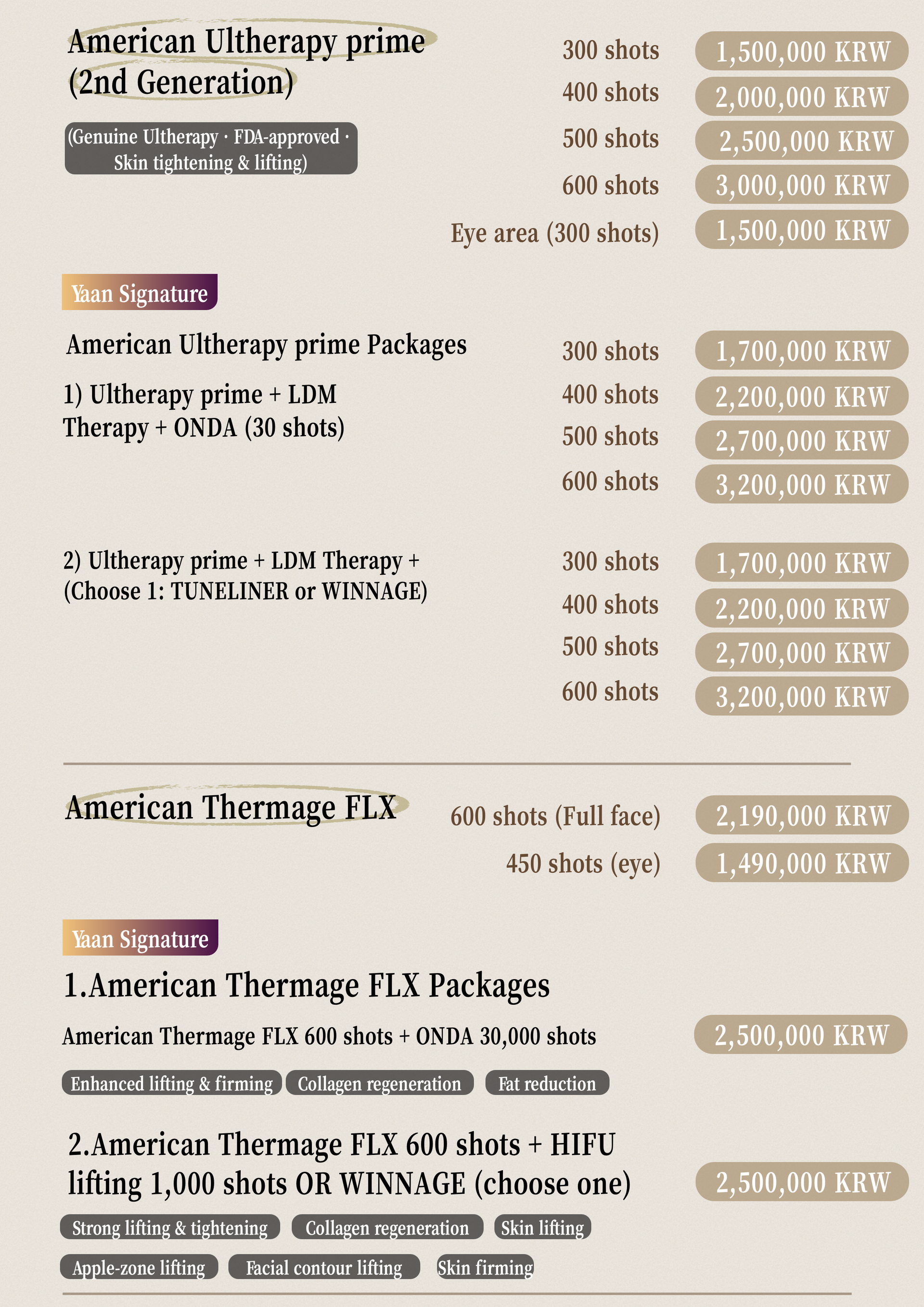
Thermage and radiofrequency treatments
Thermage is a non-invasive radiofrequency treatment used to improve the appearance of wrinkles and skin laxity.
It may be considered for selected patients with mild to moderate-looking looseness, depending on the treatment area and individual anatomy. Results vary, and improvement is not immediate or guaranteed.
Ultherapy and ultrasound-based treatments
Microfocused ultrasound treatments may be considered when the goal is to improve the appearance of skin laxity in appropriate treatment areas.
They are not suitable for everyone, and more energy or more sessions do not necessarily produce better results. People with naturally thin or hollow faces should discuss the possibility that excessive tissue reduction or changes in facial fullness could make the face look less youthful.
When sagging is more advanced
If you have substantial excess skin or pronounced jowls, non-surgical treatments may provide limited improvement. A consultation with a qualified plastic surgeon can help clarify whether surgical options are more appropriate.
It is important to understand the limitations of non-surgical lifting before investing in multiple treatments.
Can You Treat Pigmentation and Sagging During the Same Appointment?
Sometimes, but it depends on the specific procedures and your skin's condition.
For example, combining a pigment laser with an energy-based lifting procedure may increase the treatment burden and make recovery more complicated. Whether it is appropriate depends on the devices, settings, treatment areas, and clinician's protocol.
If you have active melasma or a history of post-inflammatory hyperpigmentation, ask whether staging the treatments would reduce unnecessary irritation.
Before proceeding, confirm:
- The exact type of pigmentation being treated
- The expected benefit of each procedure
- The risk of worsening pigmentation
- Whether the treatments can safely be combined
- The expected downtime and follow-up plan
A clinic should explain why a combination is appropriate for your particular skin rather than recommending multiple procedures simply because you are travelling to Seoul.
A Practical Treatment Plan for Someone Aged 45
If you have pigmentation and sagging, a practical starting plan may look like this.
First: Get the pigmentation diagnosed. Determine whether the dark areas are melasma, sun spots, or post-inflammatory pigmentation.
Second: Establish consistent photoprotection. Use broad-spectrum SPF 30 or higher, and consider a tinted sunscreen containing iron oxides if melasma or visible-light-related pigmentation is a concern. Reapply as directed, especially outdoors.
Third: Stabilize the skin. Use gentle skincare and any prescribed pigmentation treatment. Avoid aggressive procedures while the skin is irritated.
Fourth: Assess skin laxity separately. Ask your dermatologist whether radiofrequency, ultrasound-based treatment, or another approach is appropriate for your degree of sagging.
Fifth: Plan the sequence. Decide whether treatments should be staged or whether a carefully selected combination is reasonable. Allow enough time for recovery and follow-up.
If you are visiting Seoul for only a few days, avoid trying to complete every procedure during one trip. A well-planned first treatment followed by an appropriate maintenance plan may be more practical than rushing through multiple treatments.
Conclusion
If you are 45 with both pigmentation and sagging, the best treatment order depends on the diagnosis and the severity of each concern.
When pigmentation is active, particularly if melasma is suspected, stabilizing the skin and establishing reliable sun protection is often a sensible first step. If pigmentation is stable and sagging is your main concern, a lifting treatment may be considered without necessarily waiting for every dark spot to disappear.
The most important step is to distinguish the type of pigmentation from the cause of facial laxity. A dermatologist can then create a staged plan that addresses both concerns while minimizing unnecessary irritation, downtime, and the risk of worsening pigmentation.
Frequently Asked Questions
1. Should I treat melasma before Thermage?
Not everyone with melasma needs to complete all pigmentation treatment before Thermage. However, active pigmentation, skin sensitivity, and the planned treatment areas should be assessed first. Your clinician should determine whether the procedures are appropriate together or should be staged.
2. Can lifting treatments make pigmentation worse?
Some procedures can cause inflammation or post-inflammatory hyperpigmentation, particularly in darker skin tones. The risk depends on the device, settings, skin condition, and treatment technique. Discuss your pigmentation history before undergoing energy-based treatment.
3. Is pico laser the best treatment for pigmentation after 40?
No single laser is best for every patient. Pico laser may be appropriate for selected pigmentary conditions, but melasma, sun spots, and post-inflammatory pigmentation require different approaches. Correct diagnosis is essential.
4. Can I get rid of pigmentation and sagging in one week in Seoul?
You may be able to begin a treatment plan during a one-week visit, but complete correction is unlikely to be predictable in that time. Pigmentation often requires months of treatment, while lifting results can develop gradually. Allow time for recovery and follow-up.
5. Which should I prioritize if my budget is limited?
Start with a consultation to identify the main cause of your pigmentation and sagging. A dermatologist can help prioritize treatments based on your concerns, risks, and expected benefit. Daily sunscreen and suitable basic skincare are important foundations regardless of which procedures you choose.
6. Does sunscreen really matter after pigmentation treatment?
Yes. Sun exposure can worsen melasma and contribute to recurrence of pigmentation. Broad-spectrum sunscreen, shade, protective clothing, and appropriate visible-light protection are important parts of long-term management.