Thermage vs Ultherapy: Which Is Better for Skin Lifting?
Thermage vs Ultherapy: Which Is Better for Skin Lifting?
Thermage and Ultherapy are two of the most well-known non-surgical lifting treatments available in Korea. Although both stimulate collagen and improve signs of aging, they use different types of energy and target different tissue depths. Thermage uses radiofrequency (RF), while Ultherapy uses focused ultrasound with real-time imaging, making the choice largely dependent on your skin laxity, wrinkles, facial area, and desired type of lifting.
1. What Is the Difference Between Thermage and Ultherapy?
The biggest difference is the energy technology and how the treatment delivers heat.
Thermage FLX
- Uses monopolar radiofrequency energy.
- Primarily focuses on heating tissue to support collagen remodeling.
- Commonly used for overall skin tightening, firmness, and wrinkles.
- Can treat the full face, jawline, and areas around the eyes with appropriate tips.
- Typically performed as a single treatment rather than a series of frequent sessions.
Ultherapy PRIME
- Uses microfocused ultrasound energy.
- Can target deeper tissue layers associated with lifting.
- Uses real-time ultrasound visualization to help the practitioner assess tissue depth and treatment placement.
- Commonly used for the brow, under-chin, and neck areas, as well as selected facial lifting applications.
- Generally performed as a single treatment, with results developing gradually.
In simple terms, Thermage is often considered when overall tightening and skin quality are priorities, while Ultherapy is particularly focused on lifting and deeper tissue targeting.
2. Thermage vs Ultherapy: Which One Lifts More?
Neither treatment is universally “better.” Their lifting mechanisms are different, so the appropriate choice depends on the type and location of laxity.
Thermage may be suitable for:
- Mild to moderate skin laxity
- Fine lines and wrinkles
- Loss of skin firmness
- Overall facial tightening
- Skin texture concerns
- Eye-area wrinkles when the appropriate treatment tip is used
Thermage's RF energy heats tissue to support collagen remodeling. The manufacturer reports that visible improvement can continue developing over approximately 2–6 months after treatment.
Ultherapy may be suitable for:
- Sagging under the chin
- Neck laxity
- Brow-area lifting
- Mild to moderate facial laxity
- Patients specifically seeking a deeper lifting effect
Ultherapy uses ultrasound energy and real-time imaging to target selected tissue depths. Its official indications include lifting the brow and lax tissue beneath the chin and on the neck.
For someone whose main concern is overall firmness and wrinkles, Thermage may be discussed. For someone whose priority is visible lifting of lax tissue around the brow, jawline, chin, or neck, Ultherapy may be considered.
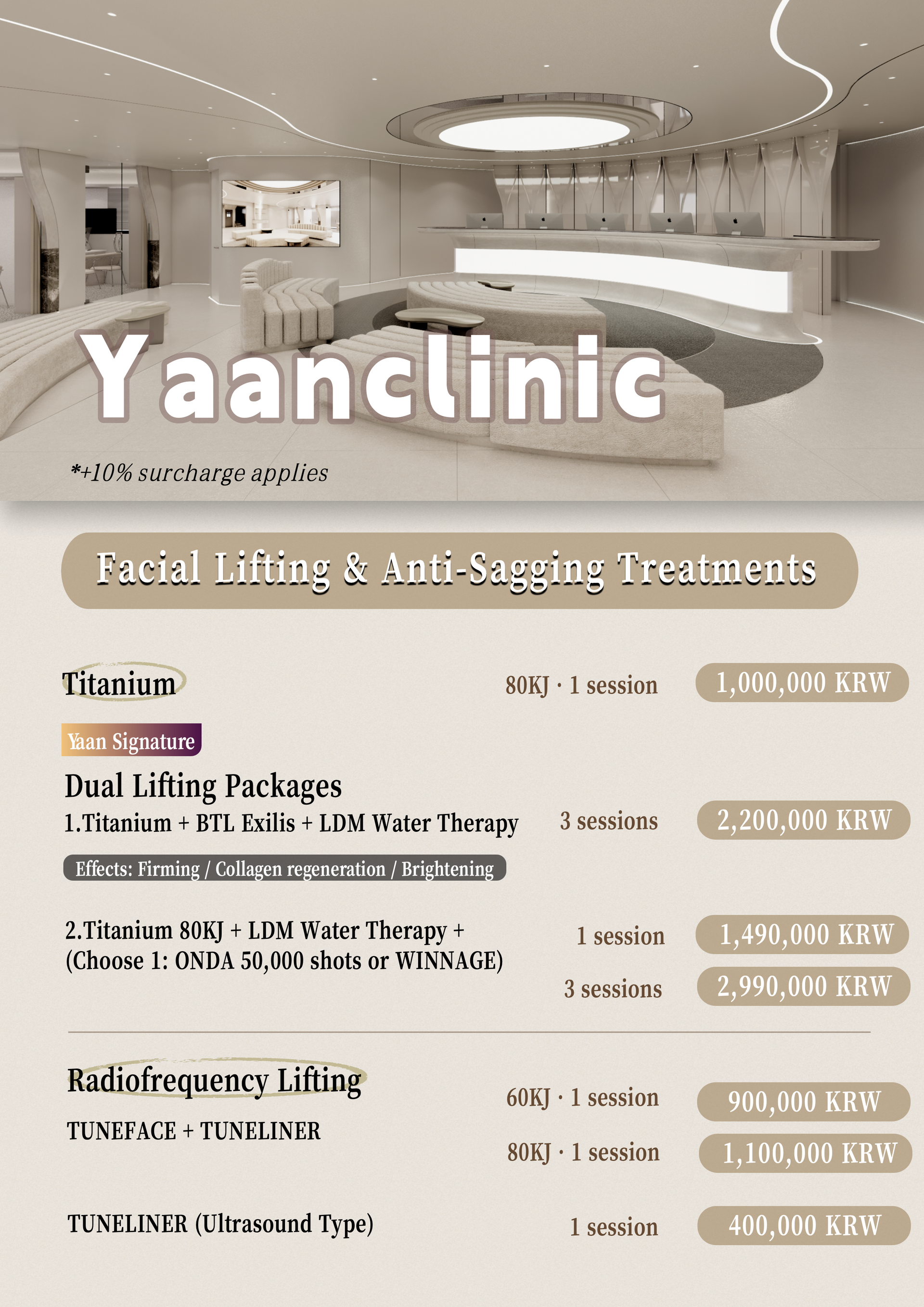
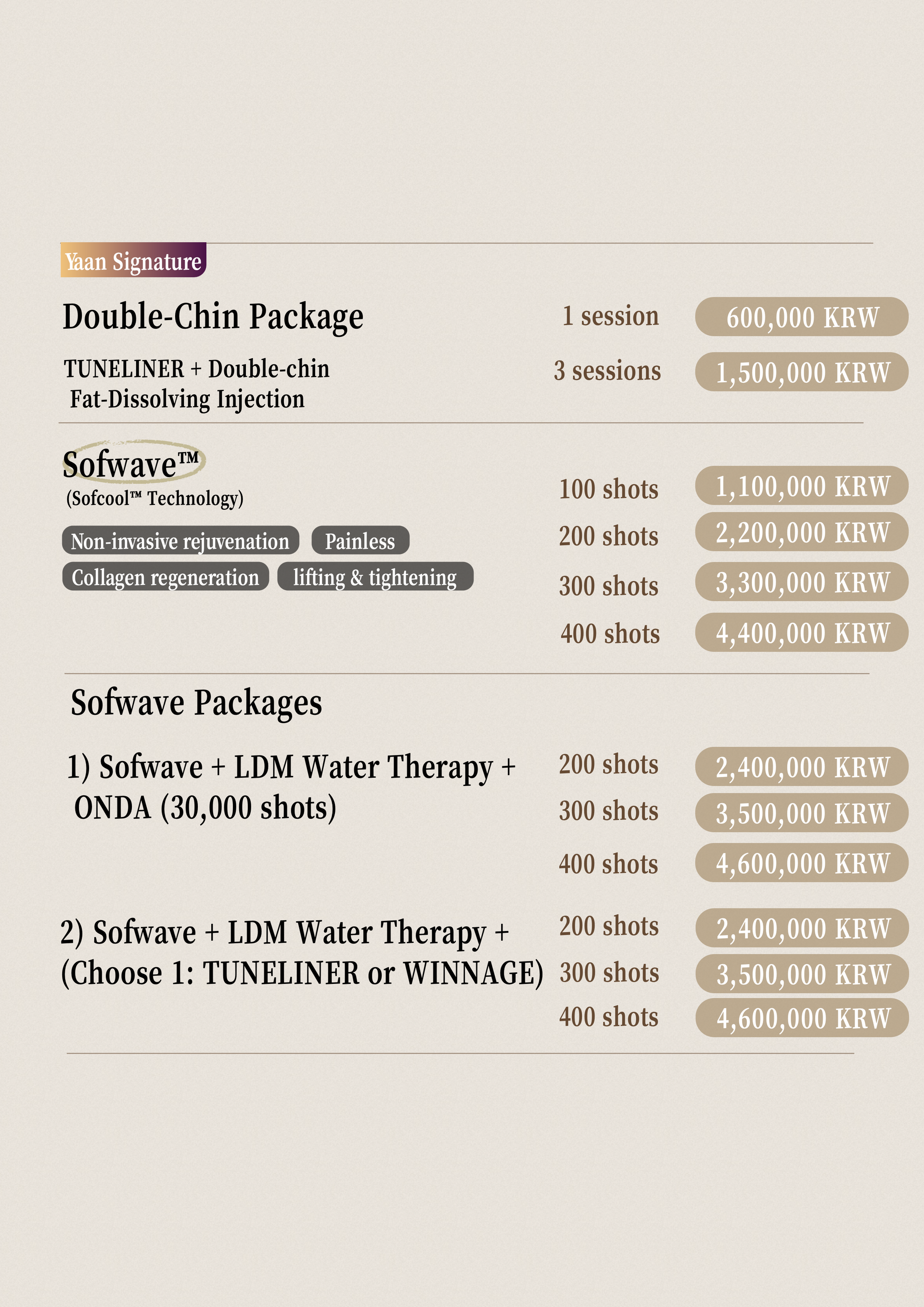
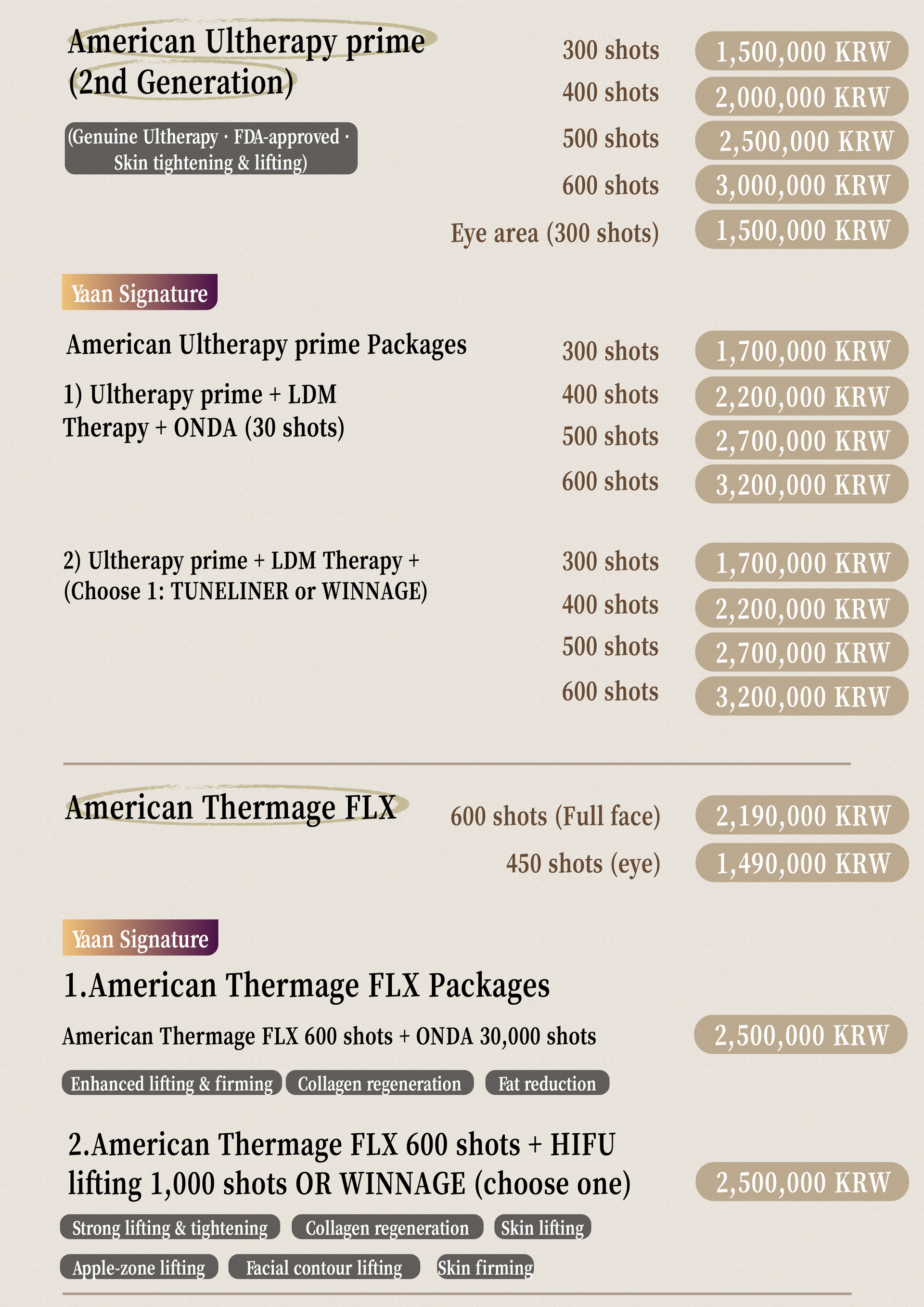
3. How Much Do Thermage and Ultherapy Cost in Korea?
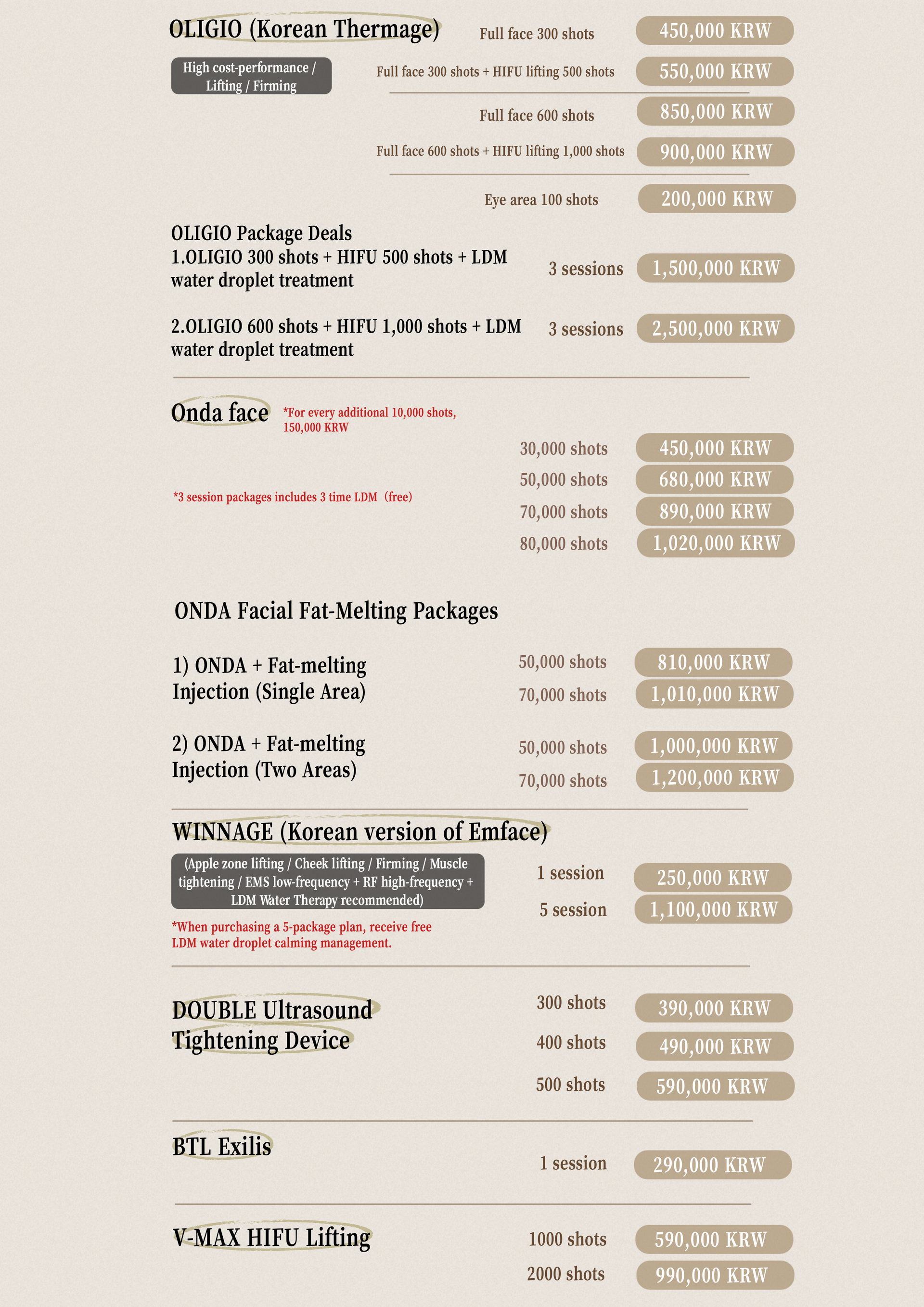
Prices vary significantly depending on shot count, treatment area, clinic, and promotional conditions.
Typical 2026 planning ranges in Korea are approximately:
Thermage FLX
- 300 shots: ₩400,000–₩700,000+
- 600 shots: ₩700,000–₩1,200,000+
- 900 shots: ₩1,000,000–₩1,600,000+
- Premium or major Gangnam clinics may charge more.
Ultherapy / Ultherapy PRIME
- 300 shots: ₩1,000,000–₩1,800,000+
- 600 shots: ₩1,700,000–₩2,500,000+
- Higher shot counts or premium programs: ₩2,500,000–₩4,000,000+
Promotional prices can fall below these ranges, while highly customized programs may cost considerably more.
When comparing prices in Korea, do not compare only the treatment name. Check:
- Number of shots
- Exact device model
- Whether the device is genuine
- Treatment area
- Doctor involvement
- VAT status
- Anesthesia or numbing fees
- Aftercare
- Whether the price is a first-visit promotion
A 300-shot Thermage treatment and a 600-shot Ultherapy treatment are not directly comparable simply because both are advertised as “lifting.”
4. What Is the Treatment Process and Recovery Like?
Both procedures are non-surgical and generally require little or no downtime, but the treatment sensation can differ.
Thermage treatment
A typical Thermage session involves:
- Consultation and facial assessment
- Cleansing and skin preparation
- Treatment mapping
- RF energy delivery with the Thermage handpiece
- Cooling and vibration during treatment
- Post-treatment skincare
A full-face treatment commonly takes around 30–60 minutes, depending on the treatment area. Most patients can return to normal activities shortly afterward. Temporary redness or swelling may occur.
Ultherapy treatment
The typical process includes:
- Facial and skin assessment
- Treatment planning
- Application of the ultrasound handpiece
- Real-time visualization of tissue layers
- Delivery of focused ultrasound energy
- Post-treatment care
Ultherapy PRIME treatment time is generally around 30–90 minutes, depending on the area treated. There is no required recovery period, although temporary redness, swelling, tenderness, or pain can occur.
For international patients with limited time in Seoul, both treatments can be convenient because they generally do not require an extended recovery period.
5. Which Treatment Is Better for Different Aging Concerns?
Instead of asking which technology is better overall, it can be more useful to match the treatment to the specific concern.
Choose Thermage when your priorities include:
- Overall skin tightening
- Fine lines and wrinkles
- Loss of firmness
- Skin texture
- Eye-area wrinkles
- A broad full-face rejuvenation approach
Consider Ultherapy when your priorities include:
- Brow lifting
- Under-chin laxity
- Neck tightening
- Deeper tissue lifting
- More defined lifting rather than primarily surface-level tightening
Some patients may also benefit from combining different technologies. For example, a clinic may recommend one treatment for deeper lifting and another for skin tightening or texture.
However, combining treatments is not automatically necessary. The appropriate plan should depend on your facial anatomy, degree of laxity, previous procedures, and treatment goals.
6. Which Should Foreign Patients Choose in Korea?
For international patients, the decision should start with the treatment goal rather than the brand name.
Before booking, ask the clinic:
- Which device will be used?
- Is it Thermage FLX or another RF device?
- Is it Ultherapy PRIME or another HIFU device?
- How many shots are included?
- Which facial areas will be treated?
- Who will perform the procedure?
- Is the price VAT included?
- Are there additional fees?
- How long should I stay in Korea after treatment?
- What results should I realistically expect?
It is also important to understand that neither procedure replaces a surgical facelift. Ultherapy's manufacturer specifically describes it as a non-invasive alternative for people who are not ready for surgery, rather than an equivalent replacement.
For foreigners, a consultation is particularly useful because treatment parameters can be adjusted according to facial structure and skin laxity rather than simply choosing the highest shot count.
Frequently Asked Questions
Is Thermage or Ultherapy better for lifting?
They work differently. Thermage uses RF for tightening and collagen remodeling, while Ultherapy uses focused ultrasound with real-time imaging for deeper tissue targeting. The more appropriate option depends on the patient's specific concerns.
Which lasts longer, Thermage or Ultherapy?
Results vary between individuals. Thermage's manufacturer reports results can last around 1–2 years, while Ultherapy reports results can last a year or more. Aging and skin condition can affect longevity.
Is Thermage more painful than Ultherapy?
Both can cause discomfort because they deliver energy into tissue. The sensation varies according to the treatment area, energy settings, and individual pain sensitivity. Temporary pain, redness, and swelling are possible with both treatments.
Can I get Thermage and Ultherapy together?
Some clinics offer combination programs, but whether they should be performed together depends on the individual's skin condition, facial anatomy, and treatment goals. A medical consultation should determine the appropriate sequence and settings.
Which is better for the jawline?
Both can be considered for facial tightening, but the appropriate treatment depends on whether the main issue is skin laxity, deeper tissue descent, or overall skin firmness. Under-chin and neck lifting are among Ultherapy's official indications.
Can I get Thermage or Ultherapy during a short trip to Seoul?
Often, yes. Both are non-surgical treatments with little or no required downtime, although temporary redness, swelling, tenderness, or discomfort can occur. International patients should schedule enough time for consultation and any necessary follow-up.
Final Thoughts
Thermage and Ultherapy are both established non-surgical options, but they are designed around different energy technologies and treatment approaches. Thermage may be more suitable for overall tightening and wrinkles, while Ultherapy may be considered when deeper lifting and laxity are the main concerns.
For foreign patients visiting Korea, the most useful comparison is not simply the price or brand, but the treatment area, shot count, device authenticity, and individualized treatment plan. A professional consultation can help determine which technology matches your facial structure and goals.