Ultherapy vs Oligio: HIFU or RF for Facial Lifting?
Ultherapy vs Oligio: HIFU or RF for Facial Lifting?
Ultherapy Prime and Oligio are popular non-surgical facial lifting treatments in Korea, but they use different technologies. Ultherapy uses microfocused ultrasound (HIFU), while Oligio uses monopolar radiofrequency (RF) to heat tissue and stimulate collagen remodeling. The choice depends on whether your main concern is deeper lifting, skin tightening, wrinkles, or overall firmness.
1. What Is the Difference Between Ultherapy and Oligio?
The most important difference is the type of energy and the tissue each treatment is designed to target.
Ultherapy Prime
- Uses microfocused ultrasound energy.
- Provides real-time ultrasound imaging during treatment.
- Can target selected depths, including deeper supporting tissue.
- Commonly used for the brow, jawline, under-chin area, and neck.
- Is generally positioned as a premium lifting treatment.
- Results develop gradually as collagen remodeling occurs.
Oligio
- Uses monopolar RF energy.
- Heats the dermal layers to stimulate collagen production.
- Commonly used for skin tightening, firmness, fine lines, and texture.
- Is a Korean RF treatment that is generally more affordable than premium ultrasound lifting.
- Can be used across the face and selected areas depending on the treatment plan.
In simple terms, Ultherapy is more focused on lifting deeper lax tissue, while Oligio is commonly used for overall tightening and skin firmness.
2. HIFU vs RF: How Do They Work?
HIFU and RF both use heat to stimulate collagen, but they deliver energy differently.
Ultherapy Prime: HIFU
Ultherapy Prime uses focused ultrasound energy at specific depths. Its real-time imaging system allows the practitioner to visualize tissue layers before and during treatment. The official platform describes treatment depths including 1.5 mm, 3.0 mm, and 4.5 mm, allowing energy to be delivered to selected tissue layers.
This approach is particularly relevant when the treatment goal involves:
- Brow lifting
- Jawline definition
- Under-chin laxity
- Neck tightening
- Deeper facial lifting
Oligio: RF
Oligio uses monopolar RF energy to heat the skin and underlying dermal tissue. RF treatments are commonly selected for:
- Overall skin tightening
- Loss of firmness
- Fine lines
- Skin texture
- Enlarged pores
- General collagen stimulation
Oligio is therefore less about creating a single lifting vector and more about improving overall firmness and skin quality through RF heating.
Neither technology should be considered a surgical facelift. Both are non-invasive approaches designed for patients seeking improvement without surgery.
3. How Much Do Ultherapy and Oligio Cost in Korea?
The price difference can be significant, although treatment specifications vary considerably between clinics.
Current 2026 reference prices include:
Ultherapy Prime
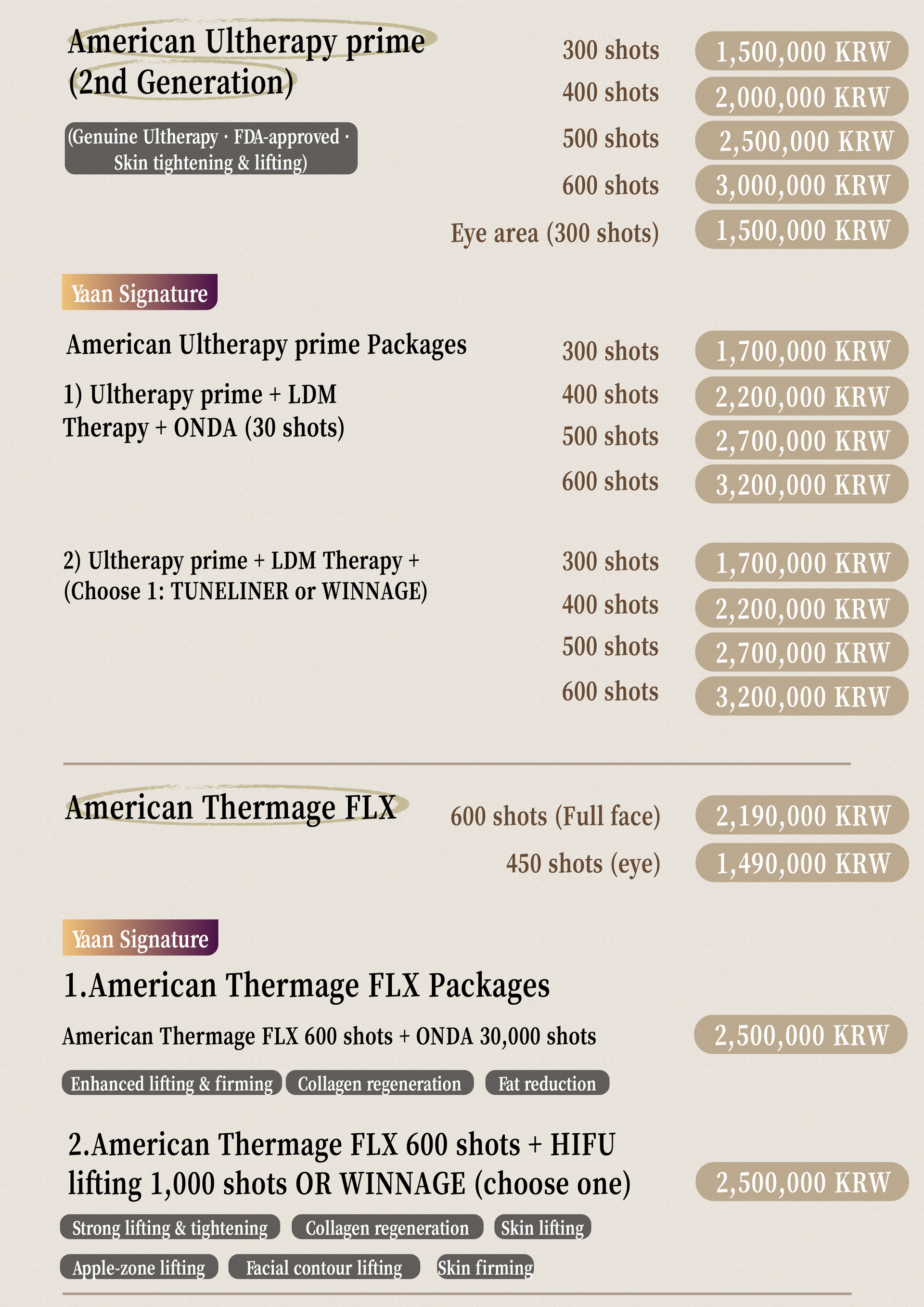
- 100 shots: approximately ₩418,000–₩660,000
- 300 shots: approximately ₩800,000–₩1,600,000
- Larger full-face or face-plus-neck plans: ₩1,500,000–₩3,000,000+
Oligio
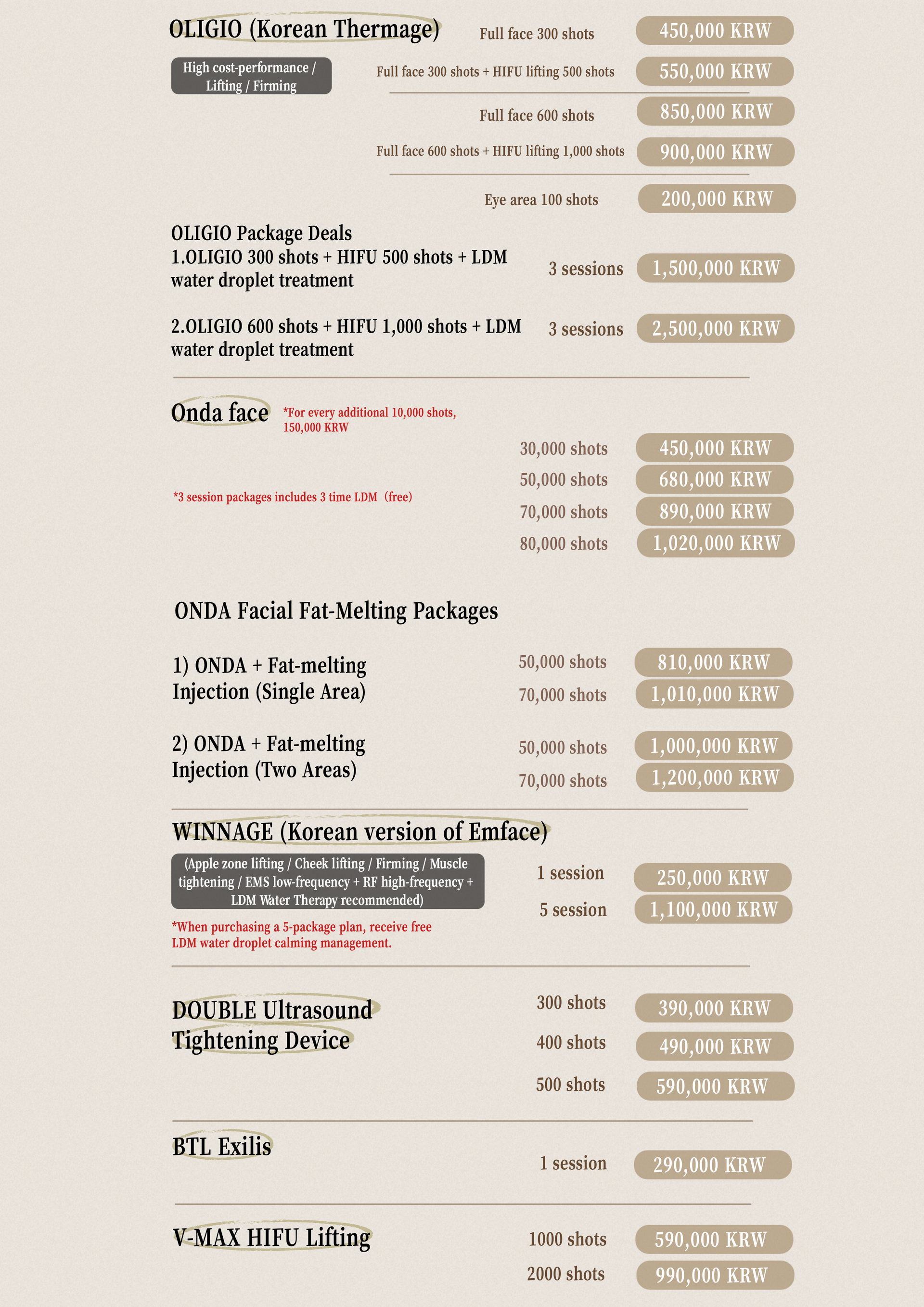
- 100 shots: approximately ₩129,000–₩200,000+
- 300 shots: approximately ₩400,000–₩500,000+
- 600 shots: approximately ₩700,000–₩900,000+
For example, a current 2026 Korean price index lists 300-shot Ultherapy at ₩800,000–₩1,600,000 and 300-shot Oligio X at approximately ₩502,000–₩790,000.
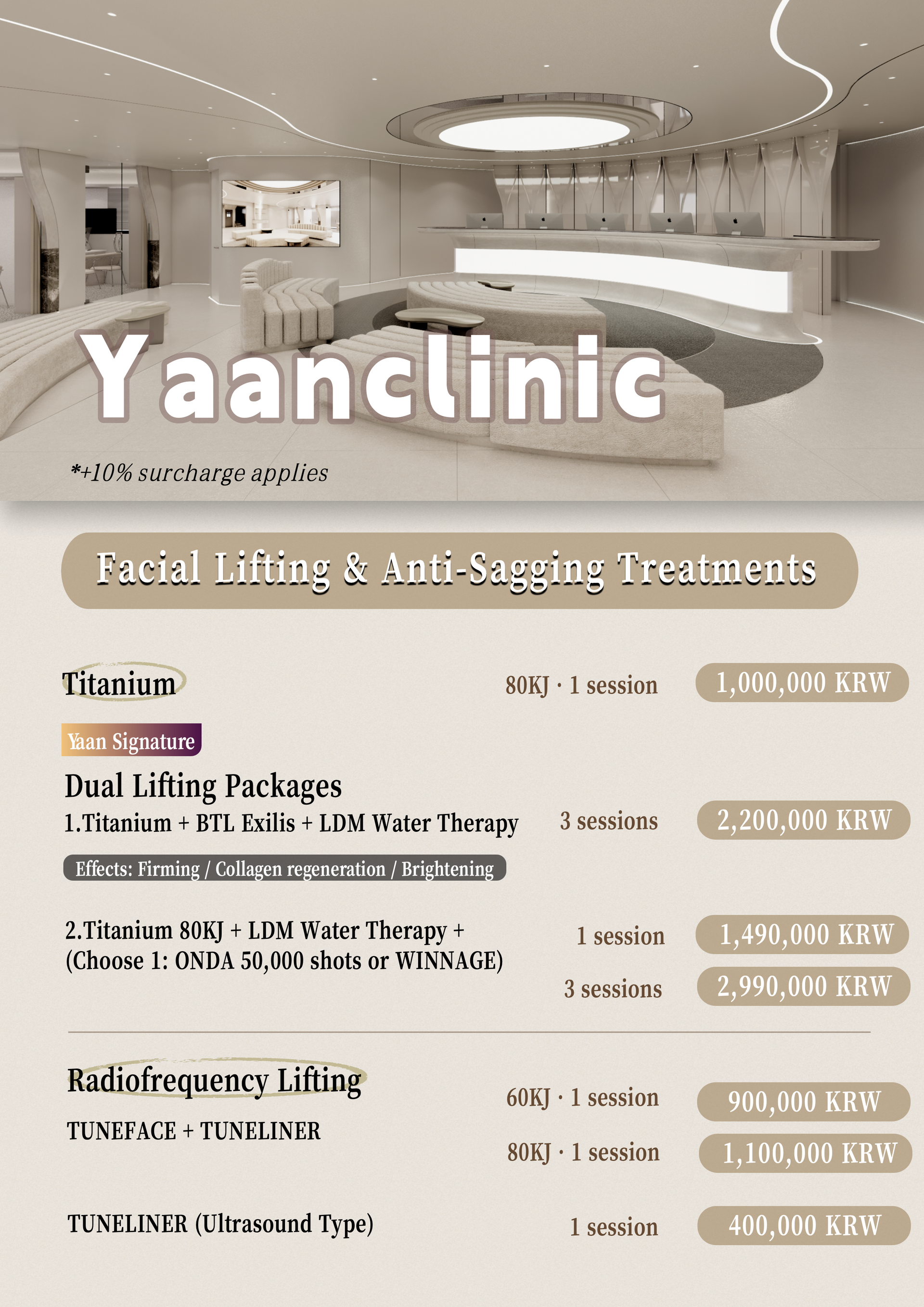
Individual clinics can advertise substantially different promotional prices. One current Seoul clinic lists Oligio at ₩420,000 for 300 shots and ₩720,000 for 600 shots, before VAT.
When comparing prices, check:
- Number of shots
- Exact device model
- Treatment area
- RF energy level or treatment protocol
- Whether VAT is included
- Whether consultation is included
- Any anesthesia or numbing fees
- Whether it is a promotional first-visit price
A 300-shot Ultherapy treatment is not directly equivalent to a 300-shot Oligio treatment. The two devices use different energy technologies and have different treatment objectives.
4. Which Treatment Is Better for Different Aging Concerns?
The most useful comparison is based on your primary concern.
Ultherapy Prime may be considered for:
- Noticeable facial laxity
- Jawline sagging
- Under-chin laxity
- Neck laxity
- Brow-area lifting
- Patients seeking deeper tissue lifting
Ultherapy's official indications include lifting the brow and lax skin on the neck and under the chin. Its imaging system is designed to help practitioners select appropriate treatment depths.
Oligio may be considered for:
- Mild to moderate skin laxity
- Reduced firmness
- Fine lines
- Enlarged pores
- Uneven skin texture
- General skin tightening
- Patients looking for a more affordable RF option
Current Korean clinic information describes Oligio as an RF treatment for decreased elasticity, fine lines, and enlarged pores.
If your main complaint is “my jawline is becoming less defined,” a physician may discuss HIFU such as Ultherapy. If your concern is “my skin feels thinner, looser, and less firm,” RF such as Oligio may be considered.
5. What Are the Results, Downtime, and Treatment Frequency?
Both treatments are non-surgical and generally allow patients to return to normal activities quickly.
Ultherapy Prime
Ultherapy Prime typically takes around 30–90 minutes, depending on the treatment area. Temporary redness, swelling, tenderness, or sensitivity can occur, but there is generally no required downtime. The manufacturer states that results can last a year or more, although individual outcomes vary.
Results develop gradually because the treatment stimulates the body's collagen-remodeling process rather than physically repositioning tissue.
Oligio
Oligio treatments are also generally performed without extended downtime. Patients may experience temporary warmth, redness, swelling, or sensitivity.
Korean clinics commonly position Oligio as a maintenance-oriented RF treatment, with treatment intervals varying according to skin condition and the specific protocol. One current Korean clinic lists a typical interval of 6–12 months for Oligio X, although individual recommendations can differ.
For foreign visitors, both treatments can fit relatively easily into a Seoul medical tourism itinerary, but allowing some flexibility after treatment is sensible in case temporary swelling or tenderness occurs.
6. Which Should Foreign Patients Choose in Korea?
There is no single treatment that is appropriate for every face. The decision should start with what you want to change.
Ultherapy Prime may be worth considering if:
- Deeper lifting is your primary goal.
- Your jawline, chin, or neck is becoming noticeably lax.
- You want brow or lower-face lifting.
- You value real-time ultrasound imaging.
- You are comfortable with a higher treatment cost.
Oligio may be worth considering if:
- Overall tightening is your main goal.
- You are concerned about fine lines or skin firmness.
- You want an RF-based treatment.
- You prefer a lower-cost option.
- You are interested in regular maintenance treatments.
Some Korean clinics also offer Oligio + HIFU combinations. The rationale is that RF and HIFU can address different tissue characteristics, but combining technologies is not automatically necessary. A physician should determine whether one treatment or a combination is appropriate for your skin condition and facial anatomy.
For international patients, ask the clinic:
- Which exact device will be used?
- How many shots are included?
- Which facial areas are treated?
- Is it Ultherapy Prime or another HIFU device?
- Is it Oligio or Oligio X?
- Is VAT included?
- Who performs the treatment?
- What downtime should I expect?
- When should I expect visible results?
Frequently Asked Questions
Is Ultherapy better than Oligio for lifting?
They use different technologies. Ultherapy Prime uses microfocused ultrasound with real-time imaging and is specifically used for non-surgical lifting, while Oligio uses RF for tightening and collagen stimulation. The appropriate option depends on the patient's laxity and treatment goals.
Is Oligio cheaper than Ultherapy in Korea?
Generally, published 2026 prices show Oligio costing less than Ultherapy for comparable facial treatment categories, although exact prices depend on shot count, clinic, and promotions.
Which is better for the jawline?
Ultherapy Prime may be considered when the main concern is deeper laxity around the jawline or under the chin. Oligio can also be used for facial tightening, particularly when overall skin firmness is the concern.
Which is better for fine lines and pores?
Oligio may be considered when fine lines, firmness, texture, and pores are important concerns because RF treatment is commonly used for overall skin tightening and quality. Individual suitability should still be assessed by a clinician.
Can I get Oligio and Ultherapy together?
Some Korean clinics offer both treatments in combination. However, whether combining them is appropriate depends on your skin condition, treatment goals, and previous procedures.
How long do Ultherapy and Oligio results last?
Ultherapy Prime's manufacturer states that results can last a year or more. Oligio treatment intervals are often shorter and vary by individual and protocol. Results for both treatments depend on age, skin condition, treatment settings, and the natural aging process.
Final Thoughts
Ultherapy Prime and Oligio are both non-surgical lifting options, but they are designed around different energy technologies. Ultherapy focuses on deeper, targeted ultrasound lifting, while Oligio uses RF to improve overall firmness, tightening, and skin quality.
For foreign patients visiting Korea, the most useful comparison is not simply the price. Look at the treatment goal, exact device, shot count, treatment area, VAT status, and physician's plan before deciding which technology fits your needs.