Under-Eye Filler Cost in Korea: Price, Results and Risks
Under-Eye Filler Cost in Korea: Price, Results and Risks
Under-eye filler, also called tear trough filler, is a popular non-surgical treatment in Korea for reducing under-eye hollowness and the shadows that can make the face look tired. Seoul clinics offer Korean and imported hyaluronic acid fillers, with prices varying according to the product, amount used, and injector's experience. Because the under-eye area is particularly delicate, safety and appropriate patient selection are just as important as price.
1. What Is Under-Eye Filler?
Under-eye filler uses a soft hyaluronic acid (HA) filler to restore volume beneath the lower eyelid and reduce the appearance of a hollow tear trough.
It may help with:
- Under-eye hollowness
- Shadowing caused by volume loss
- A tired or sunken appearance
- Mild contour irregularities
- The transition between the lower eyelid and cheek
The goal is generally subtle blending rather than adding obvious volume.
Under-eye filler is not suitable for every type of dark circle. It works best when the darkness is caused partly by a structural hollow.
It may be less suitable when the main concern is:
- Brown pigmentation
- Visible blood vessels
- Puffy eye bags
- Significant skin laxity
- Fluid retention
- Prominent lower-eyelid fat
If under-eye bags are primarily caused by protruding fat, a surgical or other non-filler approach may be more appropriate. A medical assessment should determine the cause before treatment.
2. How Much Does Under-Eye Filler Cost in Korea?
Under-eye filler is generally more expensive than standard facial filler because it requires precise treatment in a sensitive anatomical area.
Current 2026 Seoul pricing shows:
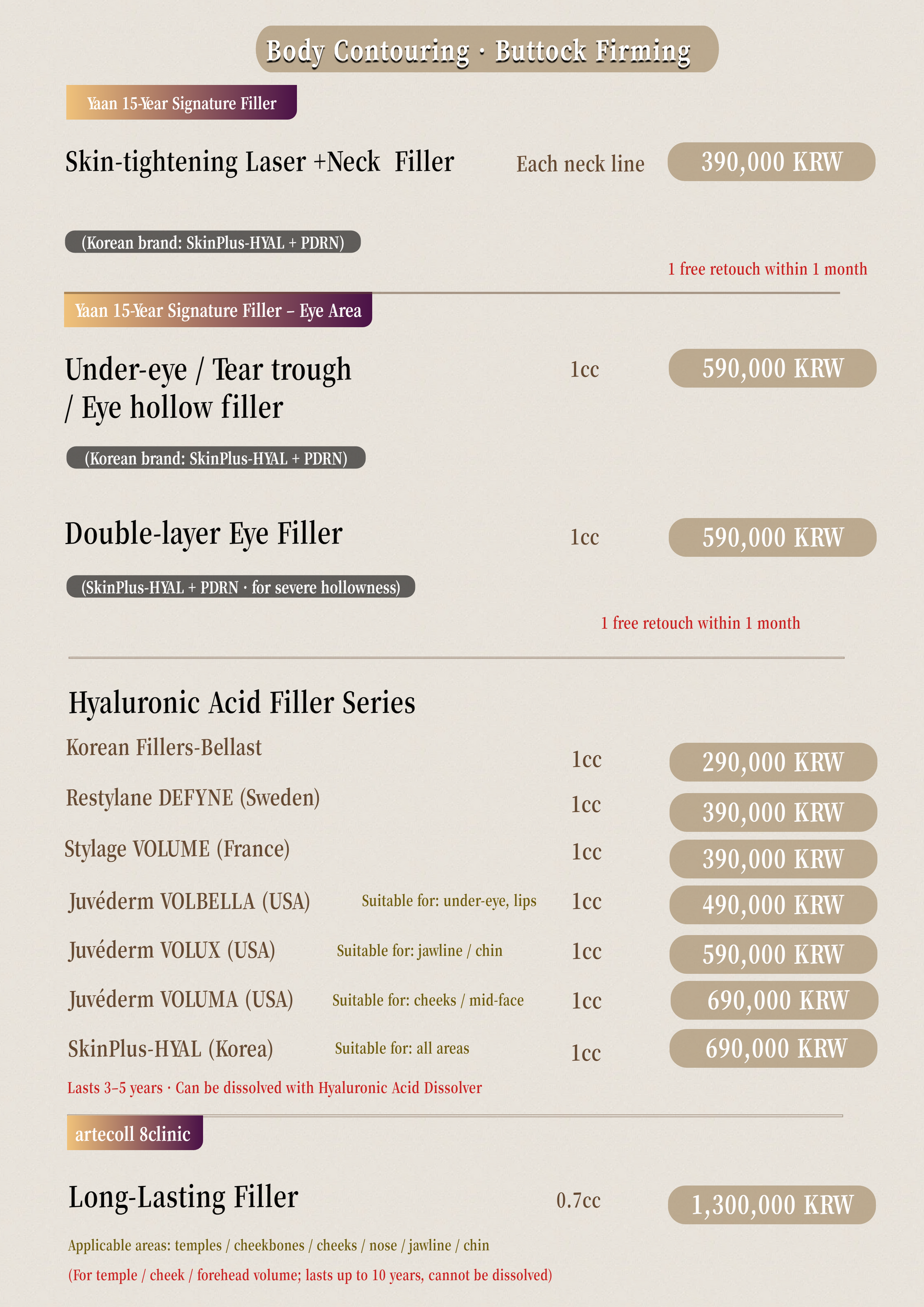
- Standard under-eye filler: approximately ₩250,000–₩600,000
- Korean HA filler: approximately ₩200,000–₩400,000 per 1cc
- Imported premium filler: approximately ₩350,000–₩800,000+
- Premium specialist treatment: can reach ₩700,000–₩1,000,000+
One current Korean treatment database reports a median paid price of approximately ₩264,000, while the broader listed price range is ₩99,000–₩550,000.
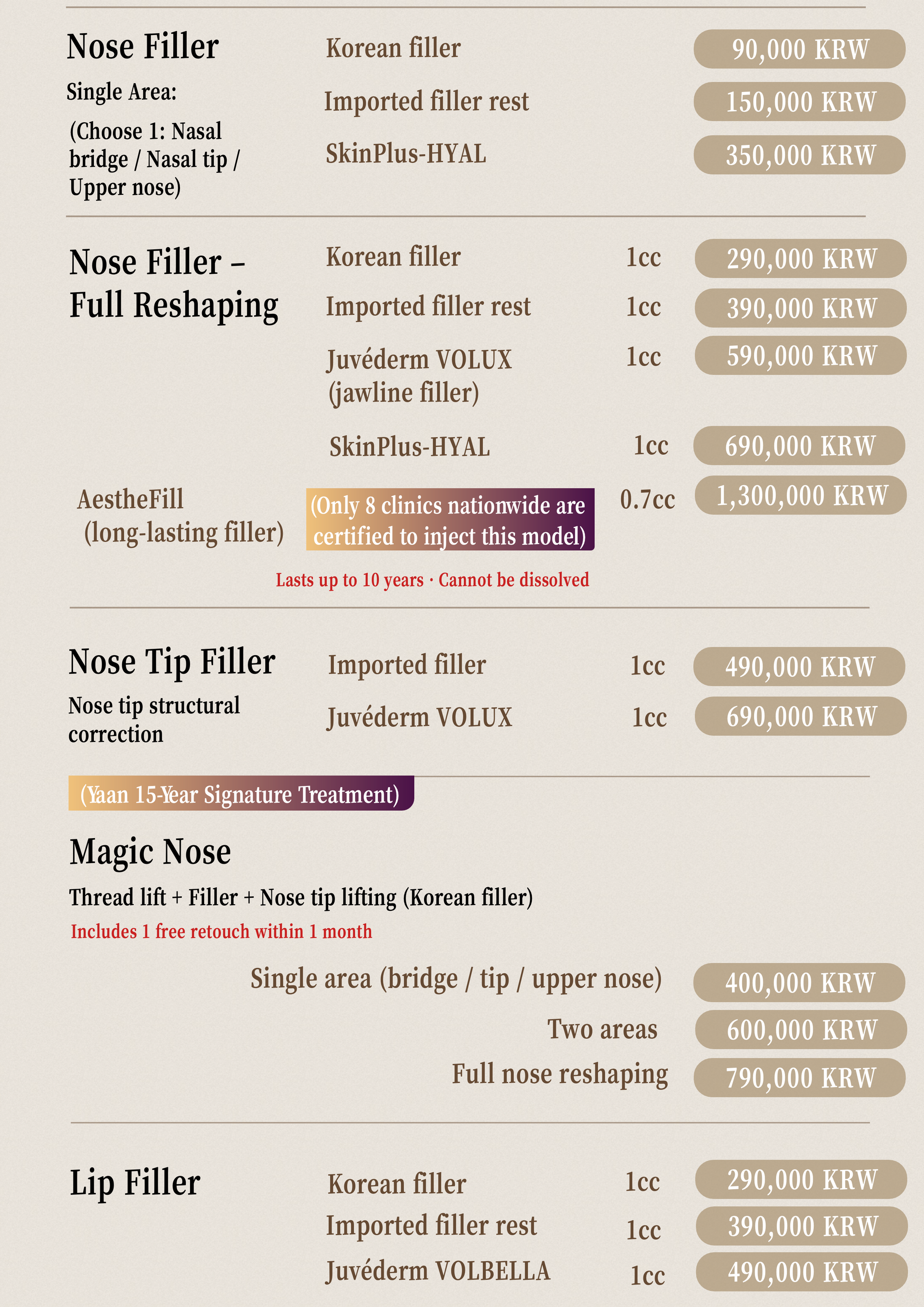
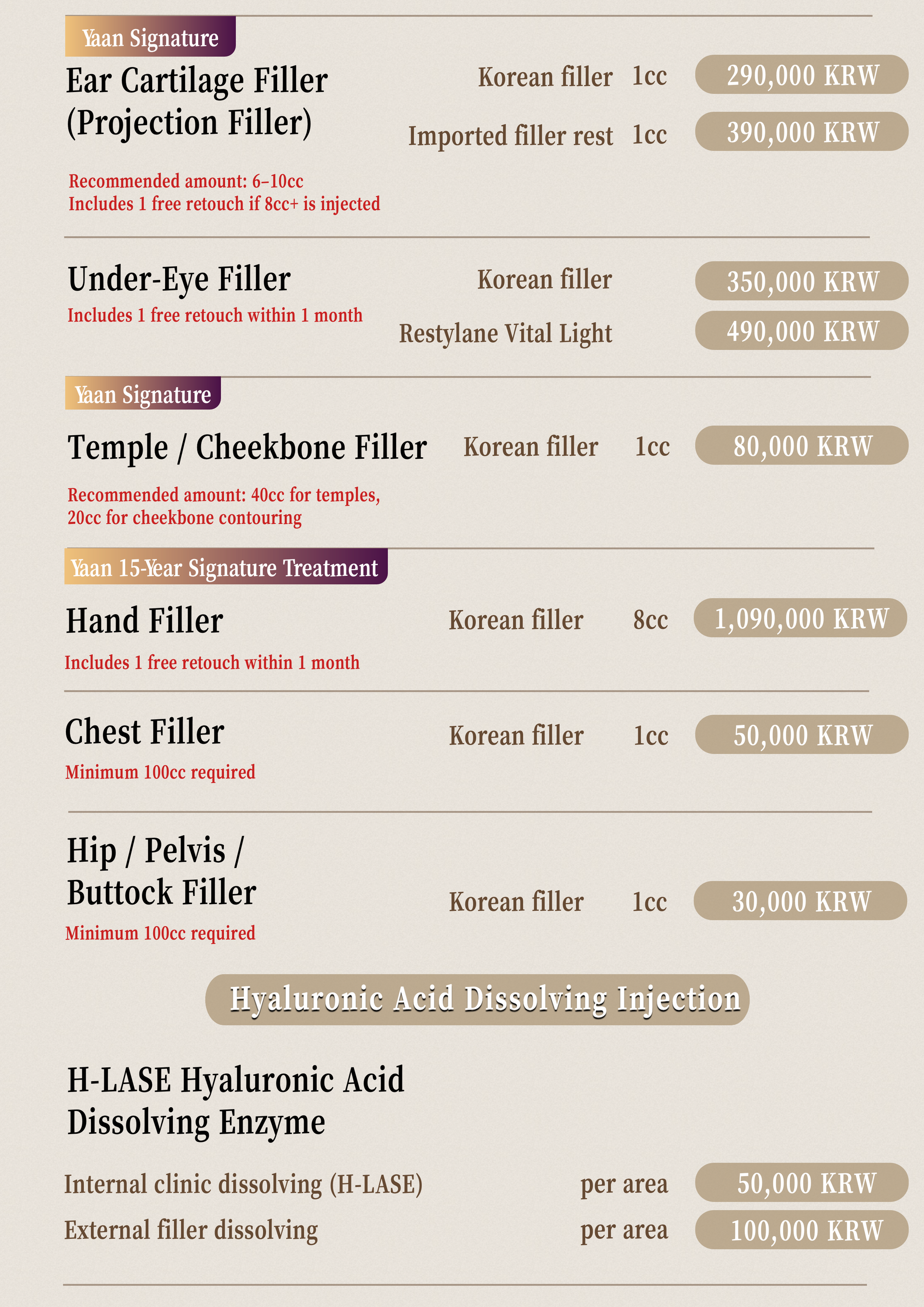
A Seoul clinic's current price list shows tear trough filler at:
- Restylane: ₩500,000 per 1cc
- Belotero: ₩350,000 per 1cc
The listed prices exclude VAT.
A practical planning range for international patients is therefore:
- Budget/basic: ₩200,000–₩350,000
- Standard: ₩350,000–₩600,000
- Premium imported: ₩500,000–₩800,000+
- Specialist or complex treatment: ₩800,000–₩1,000,000+
Always confirm whether VAT, consultation, numbing, and any touch-up are included.
3. How Much Filler Do You Need for Under-Eye Treatment?
Under-eye filler usually requires less product than areas such as the cheeks or jawline.
A general planning range is:
0.5–1cc Total
This may be considered for:
- Mild tear troughs
- Subtle correction
- First-time treatment
- Relatively small hollows
1–1.5cc Total
This may be considered when:
- Both eyes have moderate hollowness.
- More noticeable correction is required.
- There is some asymmetry between the two sides.
Up to 2cc Total
A larger amount may occasionally be considered for:
- More significant hollowness
- Greater asymmetry
- Broader volume deficiency
However, more filler is not necessarily better under the eyes. Excessive volume can create puffiness or an unnatural appearance.
Current Seoul guidance commonly places treatment around 0.5–1cc for many patients, while other clinics report approximately 0.5–1cc per side depending on the degree of hollowing.
For this reason, the price of “1cc” should not be the only factor you compare. A skilled injector may intentionally use a smaller amount to achieve a more natural result.
4. What Results Can You Expect?
Under-eye filler is intended to reduce the visual shadow created by a hollow rather than completely eliminate every type of dark circle.
Potential improvements include:
- Less visible tear troughs
- Softer under-eye shadows
- A smoother lower-eyelid-to-cheek transition
- A brighter-looking eye area
- A more rested appearance
- Improved facial balance
Some improvement can be visible immediately after treatment, but the area may initially look swollen or fuller than the final result.
As swelling settles, the filler generally blends more naturally.
A typical timeline is:
- Immediately: Initial volume improvement
- First few days: Swelling or bruising may be noticeable
- 1–2 weeks: Contour becomes more natural
- 2–4 weeks: Final result is easier to evaluate
Published Seoul treatment information commonly describes results lasting around 6–12 months, while some clinics report approximately 9–18 months depending on the product and individual response.
Factors affecting longevity include:
- Filler type
- Injection depth
- Individual metabolism
- Amount used
- Treatment technique
- Previous filler treatments
5. What Are the Risks of Under-Eye Filler?
The under-eye area requires particularly careful treatment because the skin is thin and important blood vessels are present.
Common Temporary Effects
You may experience:
- Swelling
- Bruising
- Redness
- Tenderness
- Mild asymmetry
- Temporary puffiness
A current Korean treatment database estimates approximately 1–7 days of downtime, with full recovery potentially taking longer depending on the patient.
Potential Aesthetic Complications
Possible issues include:
- Overfilling
- Persistent puffiness
- Uneven contour
- Visible or palpable filler
- Tyndall effect, which can create a bluish appearance when filler is too superficial
- Filler migration
The Tyndall effect is particularly relevant beneath thin under-eye skin, which is why appropriate product selection and injection depth matter.
Rare but Serious Risks
Like other dermal filler procedures, under-eye filler can rarely cause vascular complications. These can include vascular occlusion and, in very rare circumstances, serious vision-related complications.
Seek urgent medical attention if you experience:
- Severe or unusual pain
- Sudden vision changes
- Significant skin discoloration
- Blanching or unusual color changes
- Rapidly increasing swelling
Because of these risks, injector experience should be prioritized over finding the lowest advertised price.
6. What Should Foreigners Check Before Booking?
International patients should evaluate more than the price when choosing an under-eye filler clinic in Korea.
Before booking, ask:
- What is the exact filler brand?
- Is it Korean or imported?
- How many cc are recommended?
- Is the amount for both eyes?
- Is the price per syringe or per treatment?
- Is VAT included?
- Who performs the injection?
- Is numbing included?
- Is a follow-up or touch-up included?
- Does the clinic provide English aftercare?
- Is hyaluronidase available if medically necessary?
A current Seoul clinic menu illustrates why brand comparison matters: Restylane is listed at ₩500,000 per 1cc and Belotero at ₩350,000 per 1cc for tear trough treatment, before VAT.
For international patients, also consider your travel schedule:
- Leave enough time for swelling and bruising to settle.
- Avoid scheduling treatment immediately before an important event.
- If possible, leave several days before flying.
- Keep the clinic's contact information after treatment.
- Ask what to do if swelling or another concern develops after returning home.
Most importantly, make sure your concern is actually caused by under-eye volume loss. Filler may not be the best treatment for pigmentation, prominent fat pads, or significant skin laxity.
Frequently Asked Questions
How much does under-eye filler cost in Korea?
In 2026, standard under-eye filler commonly costs around ₩250,000–₩600,000, while premium imported or specialist treatments can reach ₩800,000 or more.
How much filler is usually needed under the eyes?
Many patients require approximately 0.5–1cc total for subtle correction, while moderate cases may require around 1–1.5cc. The exact amount depends on anatomy and the degree of hollowing.
Does under-eye filler remove dark circles?
It can improve dark circles caused by hollowness and shadowing, but it may not significantly improve pigmentation or visible blood vessels.
How long does under-eye filler last?
Results commonly last around 6–12 months, although some patients may experience effects for 9–18 months depending on the filler and individual response.
Is under-eye filler risky?
The under-eye area is technically sensitive, and filler carries risks ranging from swelling and overfilling to rare vascular complications. Choosing an experienced medical injector is particularly important.
Can foreigners get under-eye filler in Korea?
Yes. Many Seoul clinics offer tear trough filler to international patients. Before booking, confirm the product, amount, total price, injector, VAT, and English-language aftercare.
Final Thoughts
Under-eye filler can provide a subtle improvement in tear trough hollowness and tired-looking shadows, but it is not the right solution for every type of dark circle or under-eye concern. In Seoul, 2026 prices commonly fall around ₩250,000–₩600,000, with premium imported and specialist treatments costing more.
Because the under-eye area is delicate, safety and injector experience should take priority over the lowest price. A conservative amount is often preferred, and the treatment should be based on the actual cause of the hollow or shadow.
For international patients, compare the filler brand, amount, injector, VAT, aftercare, and total treatment cost before booking. If your concern is mainly pigmentation or eye bags rather than hollowness, ask about alternative treatments during consultation.