Which Skin Booster Has the Least Swelling?
If you are planning a skin booster treatment in Seoul but want to minimize swelling, bruising, and visible injection marks, the best choice depends on your skin concerns and how much downtime you can accept. Hyaluronic acid (HA) skin boosters and polynucleotide (PN) treatments may cause temporary swelling or injection bumps. PDLLA-based treatments such as Juvelook can also cause swelling and, less commonly, persistent nodules.
There is no reliable universal ranking proving that one skin booster always causes less swelling than the others. In many cases, the injection technique and treatment area may be just as important as the product itself.
If you have an event or flight coming up, tell your dermatologist before choosing a treatment. The lowest-downtime option may be a different procedure—or postponing injections until after the event.
Why Do Skin Boosters Cause Swelling?
Skin boosters are injectable treatments used to improve skin hydration, texture, elasticity, or other signs of aging. They are placed at different depths in the skin or underlying tissue, depending on the product and treatment goal.
Swelling can happen for several reasons:
- Needle trauma: Multiple injections can cause redness, bruising, and local inflammation.
- Fluid retention: HA attracts water, which can contribute to temporary puffiness.
- Injection depth: Superficial injections can leave visible raised bumps.
- Product characteristics: Different formulations behave differently in tissue.
- Treatment area: The under-eye region is particularly prone to visible swelling because its skin is thin.
- Individual response: Some people bruise or swell more easily than others.
Temporary swelling usually improves as the tissue settles, but the duration varies. Persistent lumps, increasing pain, significant redness, or worsening swelling should not automatically be treated as normal downtime.
Which Skin Boosters May Have Less Visible Downtime?
1. Hyaluronic acid skin boosters
HA skin boosters are used to improve hydration and skin quality. They are different from many conventional HA fillers because their formulations and intended injection patterns may be designed for more diffuse skin-quality improvement.
Potential advantages include their hydration-focused role and the availability of different formulations. However, the injection technique can leave small bumps, redness, or bruising.
HA attracts water, so temporary puffiness may be noticeable in some patients, particularly around the eyes. The risk depends on the specific formulation, amount injected, injection depth, and anatomy.
If minimizing downtime is your priority, ask whether the proposed HA product is appropriate for your treatment area and whether the injection plan is likely to produce visible bumps.
2. Polynucleotide treatments such as Rejuran
Polynucleotide (PN) treatments are commonly used in Korea for concerns such as fine lines, uneven texture, and dry-looking skin.
They are often administered through multiple small injections into or near the dermis. These injections can produce small raised bumps, redness, tenderness, or bruising.
A survey of 235 Korean dermatologists found that intradermal injection using a fine needle and serial puncture technique was commonly used for PN treatments. The authors also discussed cannula-based approaches for selected areas and patients where visible bumps or downtime are concerns. This survey describes clinical practice rather than proving that one method always produces less swelling.
Rejuran may be worth discussing if your goal is skin quality rather than facial volume restoration. However, do not assume it is the best choice simply because you have heard that it causes less swelling. The technique and injection area matter.
3. Juvelook
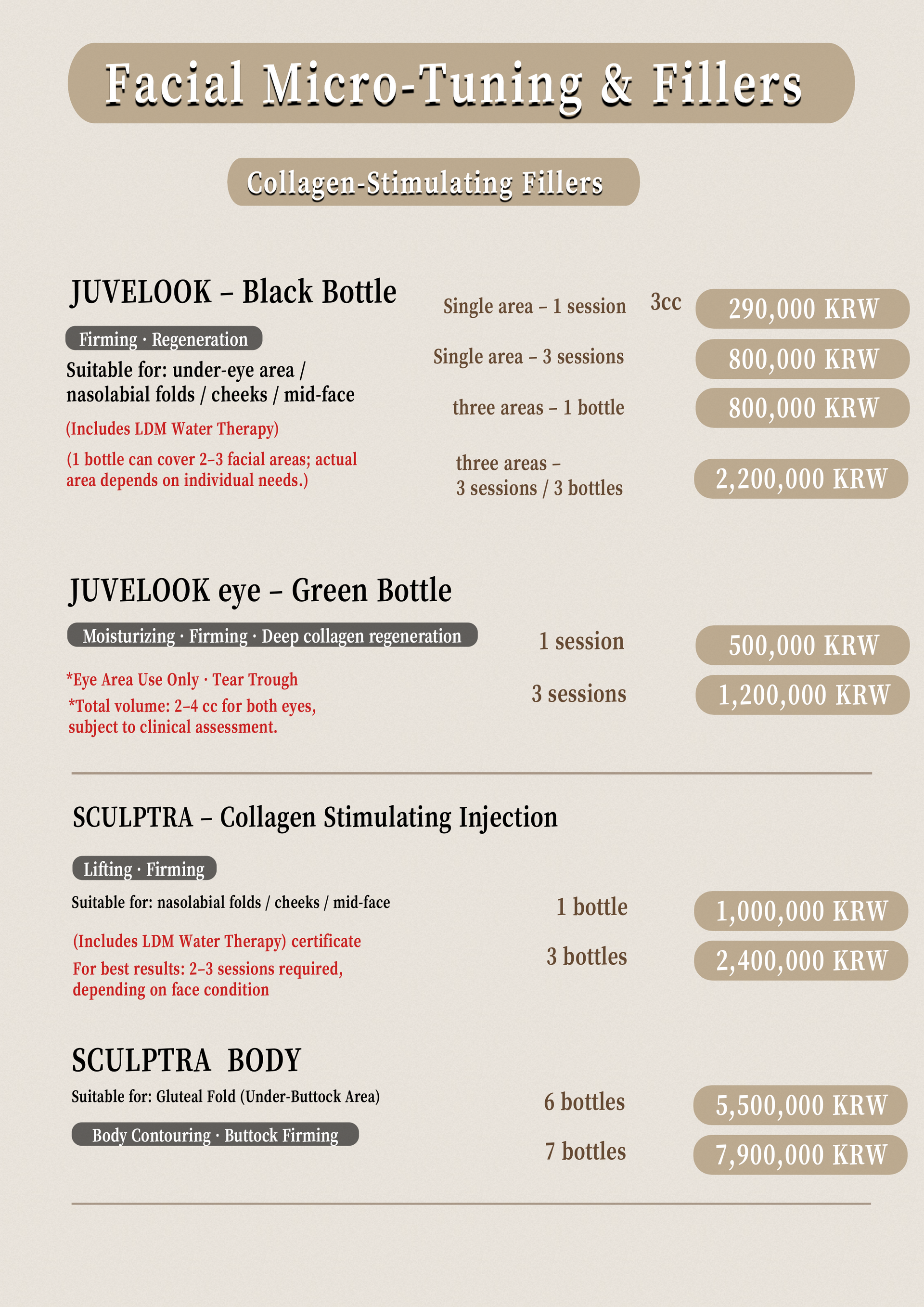
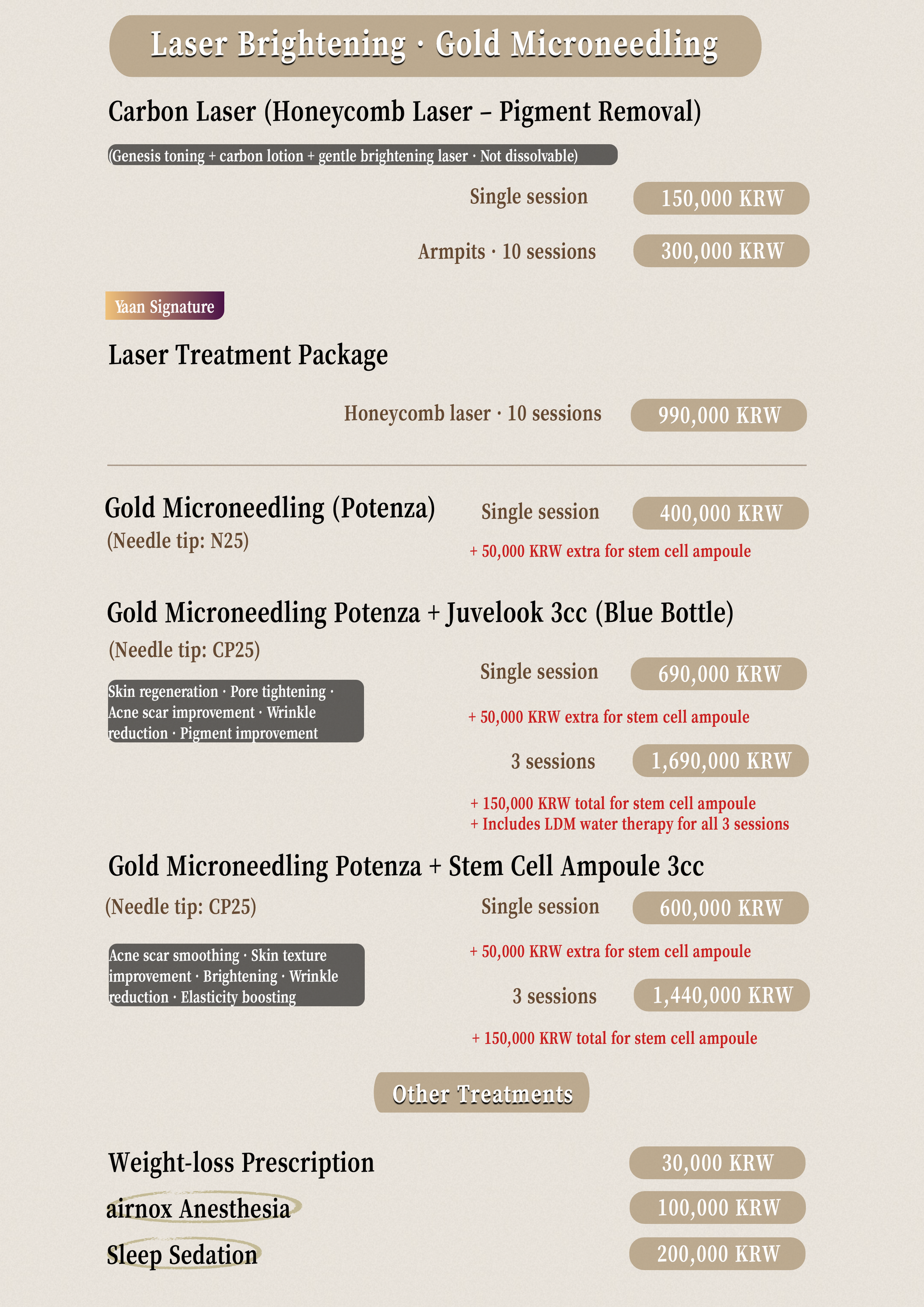
Juvelook combines PDLLA with hyaluronic acid and is used in skin-rejuvenation treatment plans that may target fine lines, texture, and selected signs of aging.
A preliminary study involving 16 patients reported improvements in several skin-aging measures after two or three treatment sessions. No severe adverse events were reported in that small study, but the sample size was too limited to establish how frequently swelling occurs in everyday practice.
Juvelook can cause temporary swelling, bruising, and visible injection marks. Because it contains a collagen-stimulating polymer, persistent nodules are also a consideration. The risk depends on factors such as formulation, placement, preparation, and injection technique.
It is therefore not appropriate to describe Juvelook as a guaranteed low-swelling treatment, particularly if you are considering a sensitive area such as the under-eyes.
4. Juvelook Volume and other volume-oriented biostimulators
Juvelook Volume is generally used for selected volume-related concerns rather than simply improving skin hydration. It contains a higher total amount of PDLLA and HA per vial than standard Juvelook.
It may be considered for certain facial hollows or deeper contours, but it is not necessarily the best option when your main concern is minimal downtime.
A published case report documented visible nodules after Juvelook Volume was injected into the tear-trough area. A single case cannot tell us how common this complication is, but it reinforces the importance of choosing an appropriate product and injection area.
If you are prone to swelling or need to return to work quickly, discuss whether a volume-oriented biostimulator is necessary for your actual concern.
Can the Injection Technique Reduce Swelling?
Yes, technique can influence the amount and appearance of post-treatment swelling, although it cannot eliminate the risk.
Your clinician may consider the following factors.
Injection depth and placement
Superficial injections can leave small raised bumps that are especially noticeable after intradermal skin boosters. Different products are intended for different tissue planes, so injections should follow an appropriate product-specific technique rather than simply being placed deeper to avoid bumps.
Needle versus cannula
A needle is useful for precise placement and small-volume injections. A cannula may be appropriate for certain areas and treatment plans, but it is not automatically safer or less likely to cause bruising in every situation.
The best instrument depends on the product, anatomical area, and clinician's experience.
Amount and treatment area
The amount injected and the number of injection points can influence local tissue reactions. Treating the under-eye area, for example, requires different considerations from treating the cheeks.
Ask your clinician whether a conservative treatment plan is appropriate for your goals rather than assuming that a larger session will deliver better results.
Which Skin Booster Is Best Before an Event?
If you have a wedding, business meeting, photoshoot, or other important event approaching, timing may matter more than the product name.
Do not schedule an unfamiliar injectable immediately before an event. Even a treatment that is usually well tolerated can cause unexpected bruising, swelling, redness, or visible bumps.
Tell your dermatologist the exact event date and ask for a realistic downtime estimate based on the specific product and technique. If looking presentable on a particular date is essential, postponing injections may be the most predictable choice.
Also remember that a treatment with minimal visible downtime may not provide the degree of improvement you want. Skin-quality changes can take time, and multiple sessions may be recommended.
How to Reduce the Risk of Post-Treatment Swelling
You cannot guarantee that swelling will not occur, but you can discuss risk-reduction measures with your clinician.
- Tell your clinician about previous swelling, bruising, allergic reactions, and injectable complications.
- Disclose medications and supplements, especially anything that may affect bleeding.
- Follow the clinic's pre-treatment and aftercare instructions.
- Avoid adding other procedures to the same session without discussing whether the combination is appropriate.
- Do not stop prescribed medication unless the prescribing clinician advises you to do so.
- Contact your provider if swelling is persistent, worsening, or accompanied by unusual pain or skin changes.
After an injectable procedure, severe or increasing pain, unusual skin discoloration, or any visual symptoms require urgent medical assessment because they may indicate a serious complication.
Conclusion: Which Skin Booster Has the Least Swelling?
There is no single skin booster that reliably causes the least swelling for every patient. HA skin boosters, PN treatments such as Rejuran, and PDLLA-based treatments such as Juvelook each have different formulations, indications, and potential adverse effects.
If your priority is minimal downtime, choose based on the treatment area, your medical history, the specific formulation, and the injection technique—not just the product name. Ask your dermatologist for a realistic estimate of swelling and visible marks, especially if you are travelling to Seoul or have an event approaching.
Frequently Asked Questions
1. Does Rejuran cause less swelling than Juvelook?
There is insufficient direct comparative evidence to say that Rejuran consistently causes less swelling than Juvelook. Both can cause temporary swelling, bruising, and visible injection marks. Your treatment area and injection technique can make a meaningful difference.
2. Which skin booster is best if I cannot take time off work?
There is no guaranteed downtime-free injectable. Ask your clinician to estimate the likely recovery period for the exact product and technique. If even mild swelling would be a problem, consider postponing treatment until you have more flexibility.
3. Does a cannula prevent swelling and bruising?
No. A cannula may be useful for selected injection approaches, but it does not eliminate swelling, bruising, or other complications. Its suitability depends on the product, treatment area, and clinician's expertise.
4. How long do skin booster injection bumps last?
The duration varies by product, injection depth, and individual response. Some superficial bumps settle relatively quickly, while other reactions may last longer. Persistent or worsening lumps should be assessed by a qualified medical professional.
5. Should I get a skin booster one day before a wedding?
That is generally not a prudent time to try an unfamiliar injectable. Even a well-tolerated procedure can cause visible swelling or bruising. Discuss a suitable schedule with your dermatologist well in advance.
6. Can I combine Rejuran and Juvelook to get better results?
Combination treatments may be considered in selected cases, but combining injectables does not guarantee better results and may increase the overall treatment burden. Your clinician should explain the rationale, risks, timing, and whether a staged approach is more appropriate.