Botox vs Skin Botox: Which One Should You Get in Korea?
Botox vs Skin Botox: Which One Should You Get in Korea?
Botox and Skin Botox both use botulinum toxin, but they are injected at different depths and are intended to address different concerns. Traditional Botox primarily relaxes targeted muscles, while Skin Botox uses small, diluted injections closer to the skin surface to improve pores, sebum, fine lines, and skin texture. For foreign patients visiting Korea, understanding the difference can help you choose a treatment based on your actual skin or facial-contouring goals rather than the name of the injection alone.
1. What Is the Difference Between Botox and Skin Botox?
The biggest difference is where the botulinum toxin is injected and what it is intended to affect.
Traditional Botox
Traditional Botox is injected into specific muscles to temporarily reduce muscle activity. It is commonly used for expression lines and enlarged muscles.
Common treatment areas include:
- Forehead lines
- Frown lines between the eyebrows
- Crow's feet
- Masseter muscles for jaw slimming
- Chin muscles
- Certain neck muscles
- Calf muscles
The goal is generally to reduce excessive muscle movement or muscle volume.
Skin Botox
Skin Botox, also called Microbotox or Mesobotox, uses multiple small injections of diluted botulinum toxin into the superficial skin layer.
It may be used for:
- Enlarged-looking pores
- Excess facial oil
- Fine surface lines
- Uneven skin texture
- Mild skin laxity
- A smoother-looking complexion
Clinical studies of intradermal botulinum toxin have reported potential improvements in pore size, sebum production, skin texture, and some facial wrinkles, although the available evidence is still limited and treatment protocols vary.
In simple terms:
- Botox → targets muscle activity
- Skin Botox → targets superficial skin quality
2. Botox vs Skin Botox for Different Concerns
Your main concern is usually the easiest way to determine which treatment is relevant.
Traditional Botox may be considered for:
- Dynamic forehead wrinkles
- Frown lines
- Crow's feet
- Masseter hypertrophy
- Jawline slimming
- Certain facial muscle-related concerns
When wrinkles become more visible during facial expressions, relaxing the underlying muscle can reduce their appearance.
Skin Botox may be considered for:
- Enlarged-looking pores
- Excess sebum
- Fine surface lines
- Rough texture
- Mild skin laxity
- Overall skin smoothness
Intradermal botulinum toxin has been studied for sebum control and enlarged pores, with one split-face study reporting improvements that remained at four months.
Skin Botox can also create a smoother-looking finish without intentionally immobilizing the larger facial muscles to the same degree as conventional Botox.
If you have both wrinkles and pores
Some patients have both dynamic wrinkles and skin-quality concerns. In these cases, a dermatologist may recommend different injection techniques or treatment areas rather than treating the entire face with one approach.
3. Which Is Better for Pores, Fine Lines and Oily Skin?
Skin Botox is generally more relevant when the goal is improving the appearance of pores and controlling facial oil.
Research on intradermal botulinum toxin has reported potential improvements in:
- Sebum production
- Pore appearance
- Skin texture
- Fine wrinkles
- Skin elasticity
However, results are not identical for every patient. A randomized split-face study found improvements in some facial wrinkles and skin texture, while effects on sebum and certain eye-area wrinkles were not significant.
For oily or pore-prone skin, Skin Botox may therefore be considered when:
- Makeup tends to separate because of excess oil
- Pores are especially visible
- Fine surface lines are becoming noticeable
- You want smoother-looking skin without significant facial movement reduction
Traditional Botox is generally not selected primarily to reduce pores or oil.
It is more appropriate when the underlying issue is muscle movement.
4. Treatment Process, Downtime and Results
Traditional Botox
A typical Botox treatment may include:
- Facial assessment
- Identification of the muscles to be treated
- Marking of injection points
- Small injections into the selected muscles
- Brief post-treatment instructions
Treatment is usually relatively quick, and most patients can return to normal activities shortly afterward.
Results are not immediate. Muscle activity generally begins to decrease over several days, with the effect becoming more apparent over the following couple of weeks.
Skin Botox
A typical Skin Botox treatment may involve:
- Skin cleansing
- Skin and pore assessment
- Application of numbing cream if necessary
- Multiple superficial micro-injections
- Soothing or cooling care
- Post-treatment instructions
Because Skin Botox involves many small injections close to the skin surface, patients may experience:
- Small injection bumps
- Temporary redness
- Mild swelling
- Bruising
- Short-term sensitivity
These reactions generally improve relatively quickly, although individual recovery varies.
Clinical studies suggest that Skin Botox effects can last for several weeks to a few months depending on the outcome being measured and the treatment protocol.
5. Botox vs Skin Botox Cost in Korea in 2026
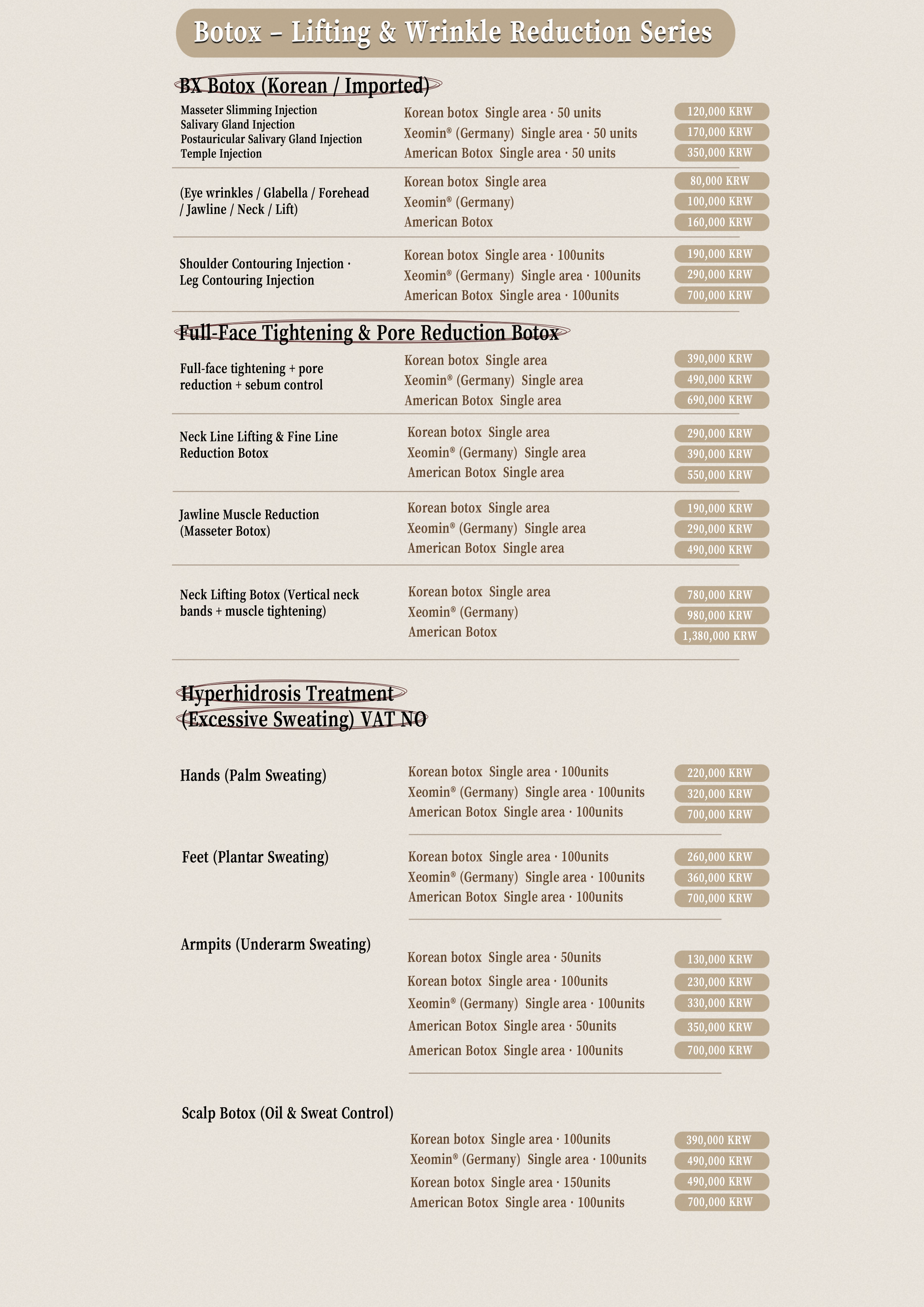
Prices vary according to the botulinum toxin brand, treatment area, number of units or volume used, injection technique, and clinic.
As a general 2026 Seoul guide:
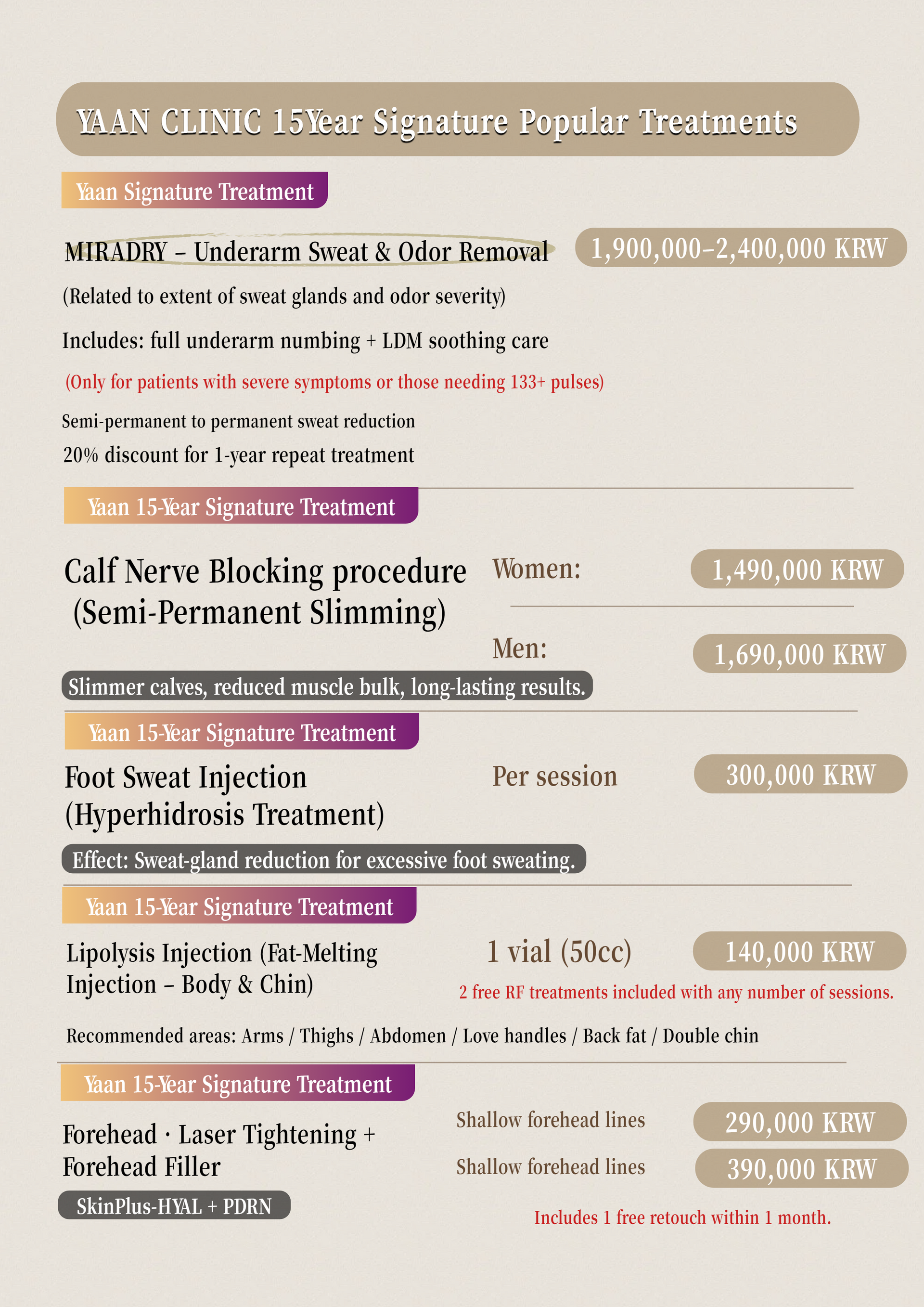
- Traditional Botox: approximately ₩50,000–₩300,000 per treatment area
- Masseter Botox: approximately ₩100,000–₩300,000+
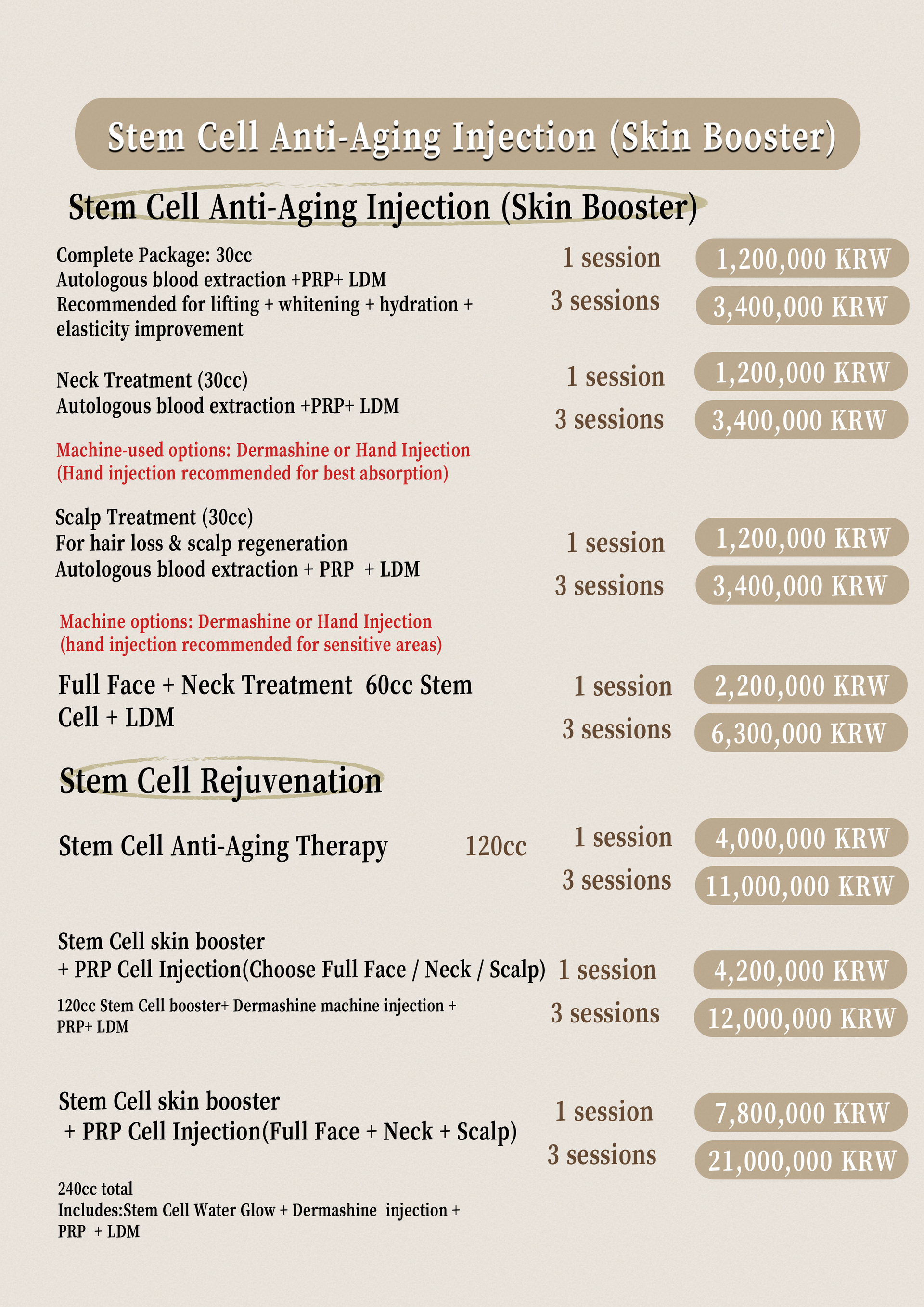
- Skin Botox: approximately ₩100,000–₩500,000+
- Full-face Skin Botox: approximately ₩200,000–₩500,000+
- Premium imported Skin Botox: approximately ₩250,000–₩600,000+
Current Seoul clinic menus show Skin Botox prices varying substantially according to brand and volume. Some clinics list domestic products from around ₩100,000 per cc, while imported Xeomin or Allergan options can be considerably higher. Full-face treatments can reach approximately ₩500,000 or more depending on the product and amount used.
Traditional Botox can also vary widely. Small treatment areas may start at relatively low prices, while premium brands and larger treatment areas cost more.
Foreign patients should confirm:
- Exact botulinum toxin brand
- Domestic or imported product
- Number of units or amount used
- Treatment area
- Full-face or partial treatment
- Whether numbing is included
- Whether VAT is included
- Whether the advertised price is promotional
Comparing only the price is not enough, because two clinics may use different products or different quantities.
6. Which Should Foreign Patients Choose in Korea?
The choice depends mainly on whether your concern is related to muscle movement or overall skin quality.
Traditional Botox may be considered if:
- Your forehead wrinkles appear when you raise your eyebrows
- You have prominent frown lines
- Crow's feet are caused by facial movement
- You want to reduce masseter muscle volume
- Your main concern is muscle-related facial contouring
Skin Botox may be considered if:
- Your pores look enlarged
- Your skin produces excess oil
- You have fine surface lines
- You want smoother-looking skin texture
- You want a subtle skin-refining treatment
- You prefer to preserve normal facial expression
For international patients visiting Seoul, it is useful to ask the clinic:
- Is the injection going into the muscle or superficial skin?
- Which botulinum toxin brand will be used?
- How many units or cc will be used?
- Which areas will be treated?
- What result is the treatment designed to achieve?
- How long should the effect last?
- What temporary side effects should I expect?
- Is VAT included in the quoted price?
If your primary concern is a deep expression wrinkle, Skin Botox may not provide the same effect as appropriately placed conventional Botox. Conversely, if your main concern is pores and oily skin, injecting conventional Botox deeply into a muscle does not address the same target.
Frequently Asked Questions
Is Skin Botox the same product as regular Botox?
Both can use botulinum toxin, but the injection technique, dilution, injection depth, and treatment purpose are different. The term “Skin Botox” generally refers to superficial micro-injection rather than conventional intramuscular Botox.
Is Skin Botox better for pores?
Skin Botox may help reduce the appearance of pores and facial oil in some patients. Clinical studies have reported improvements in pore size and sebum production, although results vary.
Is regular Botox better for wrinkles?
For dynamic wrinkles caused by muscle movement, conventional Botox is generally designed to target the underlying muscles. Skin Botox is more focused on superficial skin quality and fine lines.
Does Skin Botox make your face look frozen?
The technique uses small, superficial doses rather than the deeper muscle injections used for conventional Botox. The intended effect is generally skin refinement while preserving facial movement, although technique and dosing still matter.
How long does Skin Botox last?
The duration varies by individual and treatment protocol. Published studies have reported improvements lasting several weeks to a few months, so Skin Botox is generally considered a temporary treatment.
Can foreigners get Botox and Skin Botox in Korea?
Yes, international patients commonly seek both treatments in Korean aesthetic clinics. Before treatment, confirm the product brand, amount, treatment area, total price, and aftercare instructions with the clinic.
Final Thoughts
Traditional Botox and Skin Botox are designed for different targets. Botox is primarily used to reduce muscle activity, while Skin Botox focuses on superficial skin concerns such as pores, sebum, fine lines, and texture.
For foreign patients visiting Korea, the most useful approach is to identify whether your main concern is muscle movement, facial contour, or overall skin quality before choosing the treatment. The injection depth, product, dosage, and technique can be just as important as the name of the procedure.