HIFU vs RF Lifting: Which Is Better for Your Age and Skin Type?
HIFU vs RF Lifting: Which Is Better for Your Age and Skin Type?
HIFU and RF lifting are two of the most popular non-surgical lifting treatments in Korea. Both stimulate collagen and improve skin firmness, but HIFU uses focused ultrasound for more targeted lifting, while RF uses radiofrequency heat for broader tightening and skin-quality improvement. Age can be a useful reference, but skin thickness, facial fat, degree of laxity, and treatment goals are often more important when choosing between them.
1. What Is the Difference Between HIFU and RF Lifting?
Although both treatments use heat to stimulate collagen remodeling, they deliver energy differently.
HIFU
- Uses high-intensity focused ultrasound.
- Delivers concentrated energy to selected tissue depths.
- Often targets deeper layers associated with facial lifting.
- Commonly used for jawline definition, under-chin laxity, and sagging cheeks.
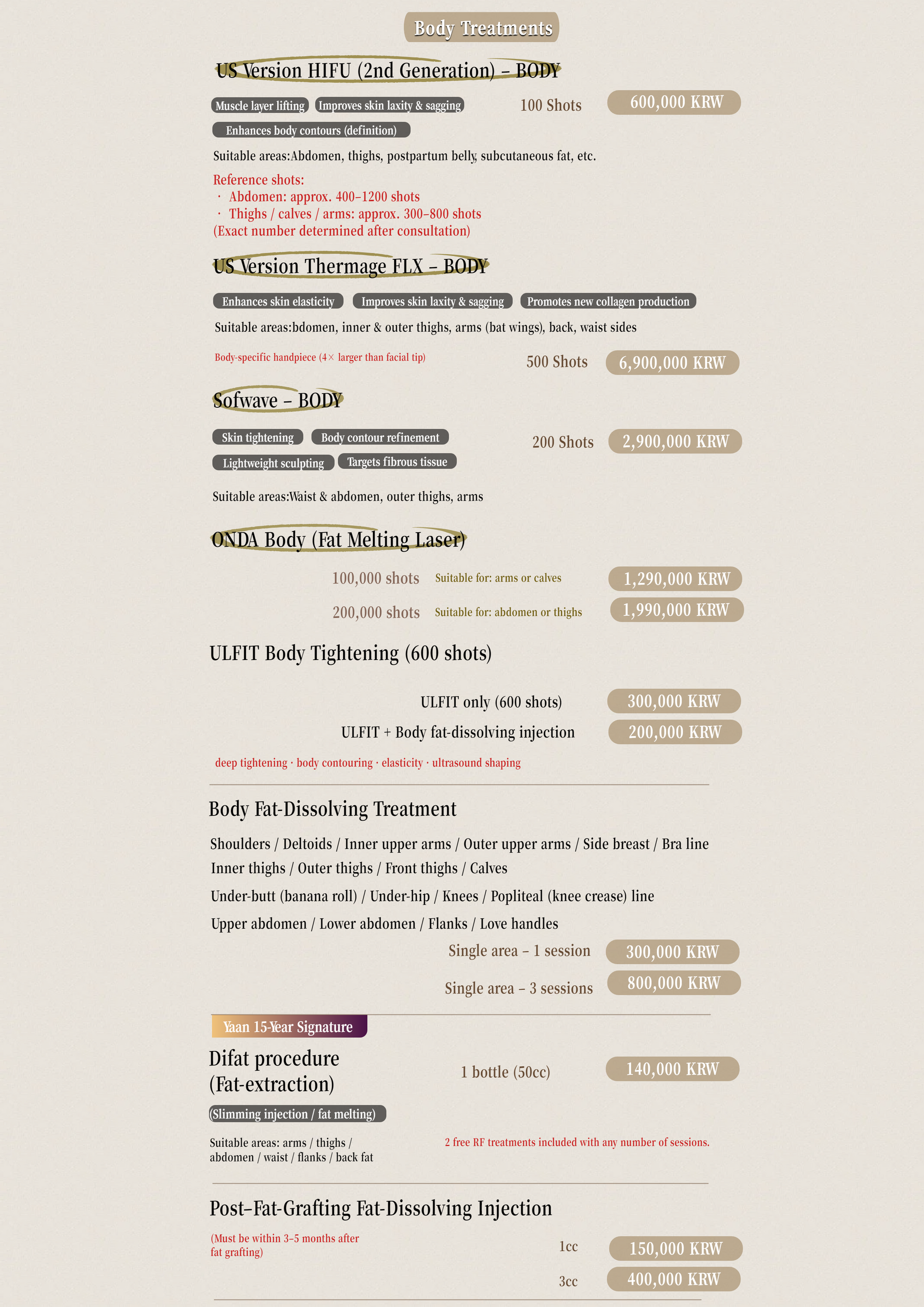
- Popular Korean HIFU devices include Ultherapy Prime and Shurink Universe.
- Results develop gradually as collagen remodeling occurs.
RF lifting
- Uses radiofrequency energy to heat tissue.
- Produces broader heating through the dermal and surrounding tissue layers.
- Commonly used for tightening, firmness, fine lines, and skin texture.
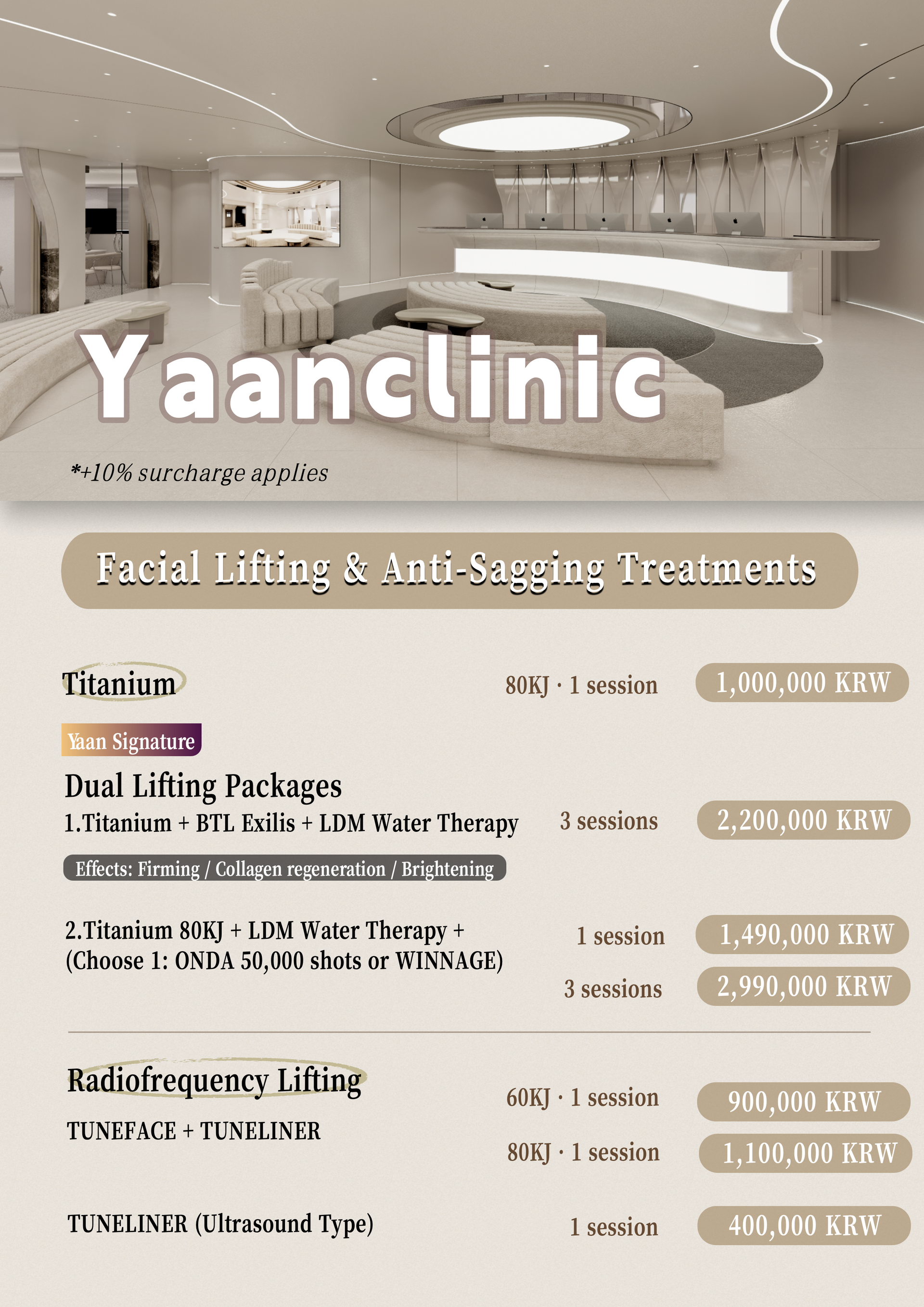
- Popular Korean RF treatments include Thermage FLX and Oligio.
- Can be useful when the skin looks loose, thin, or crepey rather than significantly sagging.
In simple terms, HIFU is generally associated with lifting, while RF is generally associated with tightening and smoothing. However, the actual treatment depth varies by device, and the two categories can overlap.
2. HIFU vs RF: Which Is Better for Different Ages?
Age can provide a starting point, but it should not determine the treatment by itself.
In your 20s
Many people in their 20s have relatively good skin elasticity and do not need aggressive lifting.
RF may be considered for:
- Early loss of firmness
- Fine lines
- Skin texture
- Preventive collagen stimulation
- Mild pore or elasticity concerns
HIFU may occasionally be considered when there is a specific contour concern, but stronger lifting treatment is not necessarily appropriate simply because it is available.
In your 30s
This is often when early signs of laxity become more noticeable.
Depending on the individual, either treatment may be considered for:
- Early jawline softening
- Mild cheek laxity
- Fine lines
- Reduced elasticity
- Early lower-face aging
If the primary issue is skin quality and firmness, RF may be discussed. If the concern is early sagging and loss of facial definition, HIFU may be considered.
In your 40s
Both technologies may become relevant as multiple signs of aging appear.
Possible concerns include:
- Jowling
- Jawline laxity
- Deeper wrinkles
- Reduced skin elasticity
- Under-chin sagging
- Thinner or less firm skin
A customized plan may use HIFU for lifting and RF for overall tightening and skin quality.
In your 50s and beyond
More noticeable laxity and volume changes can make treatment selection more complex.
HIFU may be considered for:
- Lower-face laxity
- Jawline definition
- Under-chin tightening
- Deeper tissue lifting
RF may be considered for:
- Thin or crepey skin
- Fine lines
- Overall firmness
- Skin-quality improvement
However, age alone should never determine whether HIFU or RF is appropriate. Two people of the same age can have completely different skin thickness, facial volume, and degrees of laxity.
3. Which Treatment Is Better for Different Skin Types?
Your skin characteristics can be more useful than your age when choosing between the two.
Thin or crepey skin
RF may be considered when the primary concern is:
- Fine lines
- Crepey texture
- Reduced firmness
- Thin-looking skin
- Mild laxity
RF provides broader heating and is commonly used to improve firmness and skin texture.
Thicker skin with noticeable laxity
HIFU may be considered when:
- The lower face is beginning to sag.
- The jawline is becoming less defined.
- There is noticeable under-chin laxity.
- The main goal is lifting rather than surface smoothing.
Focused ultrasound can target selected deeper tissue planes, making it particularly relevant when structural lifting is the primary objective.
Sensitive skin
RF may be discussed when a patient wants a more gradual tightening approach, but sensitivity alone does not automatically make RF the correct choice. Treatment settings, device type, and individual skin condition all matter.
Slim face with little facial fat
This is an important consideration. Aggressive contour-focused treatment may not be appropriate for someone who already has a very slim face.
A consultation should consider:
- Existing facial volume
- Hollow areas
- Skin thickness
- Bone structure
- Degree of laxity
- Desired degree of lifting
The goal should be to improve laxity without creating an unnecessarily hollow appearance.
4. Which Treatment Is Better for Specific Aging Concerns?
Instead of choosing according to age alone, match the technology to the problem you want to improve.
For jawline sagging:
- HIFU may be considered when laxity and tissue descent are the main concerns.
- RF may complement the treatment when overall skin firmness is also reduced.
For a double chin:
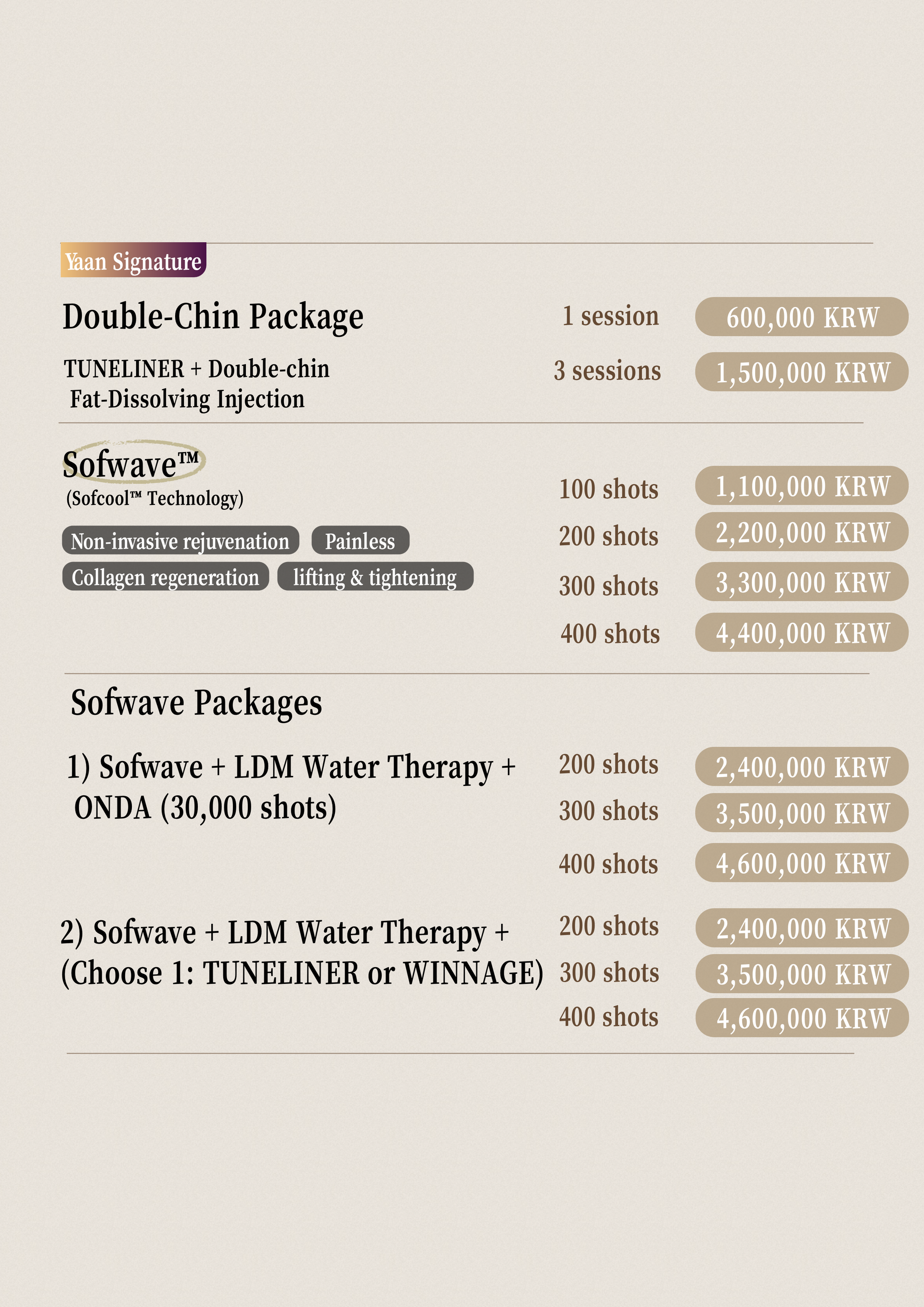
- HIFU may be considered when loose skin contributes to the appearance.
- If excess fat is the main cause, a different contouring approach may be more appropriate.
For fine lines:
- RF is commonly considered for broader skin tightening and wrinkle improvement.
- HIFU may also improve certain wrinkles when laxity contributes to them.
For crepey skin:
- RF may be more relevant because it focuses on broader dermal tightening and skin quality.
For early jowls:
- HIFU may be considered for lifting.
- RF may be considered when the skin also lacks firmness.
For overall anti-aging:
- Either treatment may be appropriate depending on the dominant concern.
- Some patients may benefit from a combination approach rather than choosing only one technology.
A clinical study in Korean adults found that HIFU improved several skin-aging parameters, while combining HIFU with bipolar RF produced additional improvements in some measures. This supports the idea that the technologies can sometimes complement each other, although it does not mean every patient needs both.
5. How Much Do HIFU and RF Lifting Cost in Korea?
Prices vary widely according to the device, shot count, treatment area, clinic, and promotional conditions.
Typical 2026 planning ranges in Korea are approximately:
HIFU
- Shurink Universe: ₩80,000–₩300,000+ per session
- 300-shot HIFU: approximately ₩100,000–₩300,000
- 600-shot HIFU: approximately ₩200,000–₩500,000+
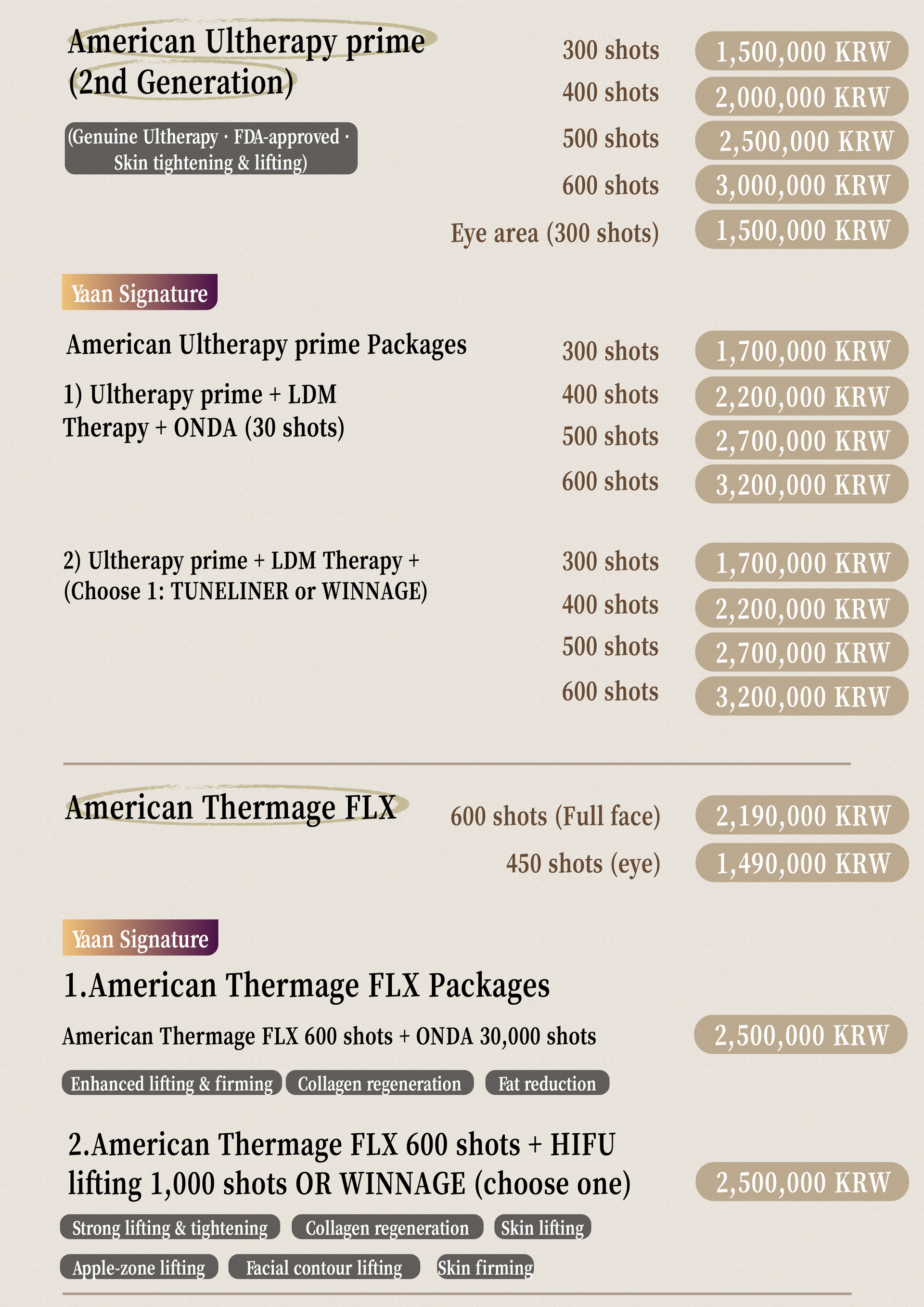
- Ultherapy Prime: approximately ₩800,000–₩1,600,000 for 300 shots
- Larger premium Ultherapy programs: ₩1,500,000–₩3,000,000+
RF
- InMode: approximately ₩70,000–₩250,000+
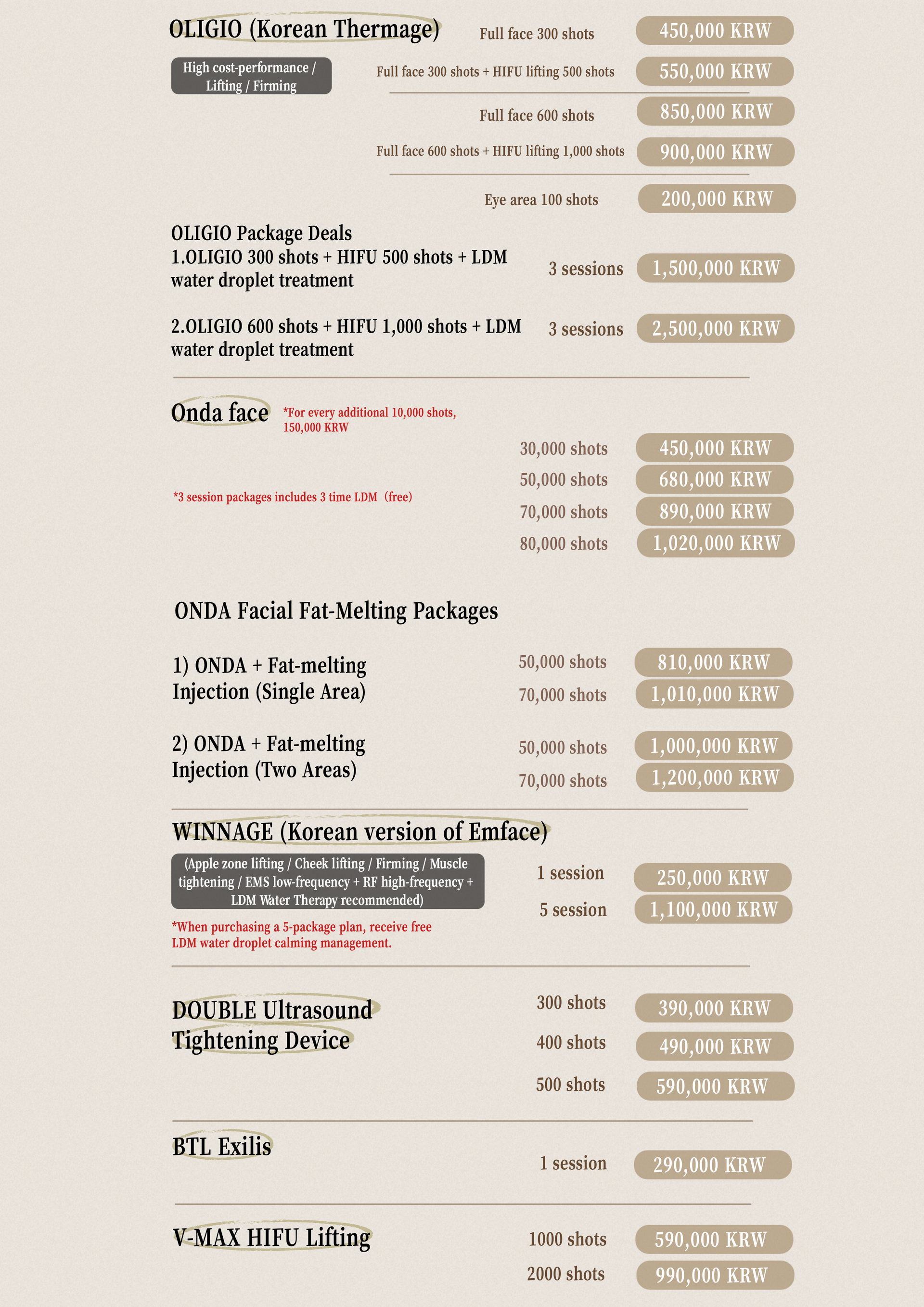
- Oligio: approximately ₩300,000–₩900,000+
- Thermage FLX: approximately ₩1,500,000–₩3,000,000+ depending on shot count
- Premium RF combination programs can cost more.
The price difference within each category can be substantial. For example, premium Ultherapy and Thermage can cost several times more than Korean HIFU or RF treatments such as Shurink and Oligio.
When comparing prices, check:
- Exact device name
- Number of shots or lines
- Treatment area
- Device generation
- VAT inclusion
- Doctor involvement
- Numbing or anesthesia fees
- Whether the price is promotional
A higher price does not automatically mean a better result. The treatment should be selected according to your facial anatomy and the problem being treated.
6. Which Should Foreign Patients Choose in Korea?
For international patients, the simplest way to compare HIFU and RF is to start with your main concern.
HIFU may be considered if:
- Your main concern is facial sagging.
- You want stronger jawline definition.
- You have under-chin laxity.
- You want a more targeted lifting approach.
- Your skin has enough tissue volume for the planned treatment.
RF may be considered if:
- Your skin feels loose rather than heavily sagging.
- Fine lines are a major concern.
- Your skin looks thin or crepey.
- You want overall firmness and texture improvement.
- You prefer broader tightening.
A combination may be considered if:
- You have both laxity and poor skin firmness.
- You want lifting and texture improvement.
- Your doctor identifies different treatment needs at different tissue levels.
For foreigners visiting Seoul, ask the clinic:
- Which exact device will be used?
- Is it HIFU or RF?
- What is the treatment depth?
- How many shots or lines are included?
- Which facial areas will be treated?
- Is VAT included?
- Who performs the procedure?
- How long will temporary swelling or redness last?
- How soon should results appear?
- Is the treatment suitable for a slim face?
Most importantly, do not choose a treatment based only on your age. A 35-year-old with significant jawline laxity may have different needs from a 50-year-old with relatively firm skin but severe volume loss.
For advanced aging with substantial excess skin, neither HIFU nor RF should be expected to reproduce the result of a surgical facelift. Non-surgical treatments are generally more predictable for mild to moderate laxity.
Frequently Asked Questions
Is HIFU or RF better for skin lifting?
HIFU is generally associated with deeper, more targeted lifting, while RF is commonly used for broader tightening and skin-quality improvement. The appropriate option depends on the type of laxity and treatment goal.
Is HIFU better for older skin?
Not necessarily. Age alone does not determine treatment suitability. Older patients may benefit from HIFU when deeper laxity is present, while RF may be useful when thin, crepey, or less firm skin is the main concern.
Is RF better for younger patients?
RF may be considered for younger patients who have early firmness or texture concerns, but age should not be the only deciding factor. The actual skin condition and treatment goal are more important.
Which is better for a double chin?
HIFU may be considered when loose skin is contributing to the double chin. If excess fat is the main cause, a separate contouring treatment may be more appropriate.
Can HIFU and RF be combined?
Yes, selected patients may receive both. HIFU can focus on deeper lifting while RF can provide broader dermal tightening. However, combination treatment should have a specific clinical reason rather than being used automatically.
How long do HIFU and RF results last?
Results vary by device, treatment intensity, age, skin condition, and individual collagen response. Current Korean treatment guidance commonly describes gradual improvement over several weeks to months, with longevity varying substantially between patients.
Final Thoughts
HIFU and RF are both useful non-surgical lifting technologies, but they are designed to address different aspects of facial aging. HIFU is generally more focused on deeper lifting and contour definition, while RF is commonly used for skin tightening, firmness, and texture.
For foreign patients in Korea, age should be treated as a reference rather than a rule. Your skin thickness, facial volume, degree of laxity, and primary concern are more important when deciding between HIFU and RF. A personalized assessment can also determine whether one technology or a combination approach is more appropriate.