Rejuran vs Juvelook: Which Skin Booster Is Better?
Rejuran vs Juvelook: Which Skin Booster Is Better?
Rejuran and Juvelook are two of the most popular injectable skin boosters in Korea, but they are not interchangeable treatments. Rejuran uses polynucleotides (PN) to focus on skin repair and quality, while Juvelook combines PDLLA with hyaluronic acid to encourage gradual collagen production. For foreign patients visiting Seoul, the better option depends on whether the main concern is damaged or thin skin, fine lines, texture, elasticity, or early volume loss.
1. What Is the Difference Between Rejuran and Juvelook?
Although both are commonly called “skin boosters,” their formulations and treatment approaches are different.
Rejuran
- Uses polynucleotides (PN) derived from purified salmon DNA.
- Primarily targets skin quality, regeneration, elasticity, and barrier support.
- Often chosen for thin, tired, dehydrated, or damaged-looking skin.
- Rejuran Healer, Rejuran I, and Rejuran S are designed for somewhat different treatment areas and concerns.
Juvelook
- Uses PDLLA (poly-D,L-lactic acid) combined with hyaluronic acid.
- Works as a collagen-stimulating injectable rather than simply providing surface hydration.
- Often used to improve fine lines, texture, firmness, and overall skin density.
- Juvelook Volume is a related formulation used when more structural or volumizing effects are desired.
The key difference is simple: Rejuran is generally associated with skin repair and regeneration, while Juvelook focuses more strongly on gradual collagen stimulation.
2. Rejuran vs Juvelook for Different Skin Concerns
The most useful way to compare the two is to match the treatment with your primary skin concern.
Rejuran may be considered for:
- Thin or fragile-looking skin
- Dehydrated and dull skin
- Reduced elasticity
- Fine lines
- Compromised skin barrier
- Rough or uneven skin texture
- Under-eye skin concerns with an appropriate Rejuran formulation
- Skin that looks tired or less resilient
Rejuran is particularly associated with improving overall skin quality rather than adding noticeable facial volume.
Juvelook may be considered for:
- Fine lines and early wrinkles
- Uneven texture
- Enlarged-looking pores
- Reduced firmness
- Early signs of skin laxity
- Mild loss of skin density
- Gradual collagen regeneration
Because Juvelook contains a collagen-stimulating component, its effects generally develop progressively rather than appearing immediately after injection.
3. Which Skin Booster Is Better for Your Age?
Age can provide a general reference, but skin condition and treatment goals are more important than age alone.
In your 20s
If your main concern is dehydration, texture, or maintaining healthy-looking skin, Rejuran may be considered. Juvelook can also be an option when early texture or fine-line concerns are present.
In your 30s
This is often the stage when both treatments become relevant.
- Rejuran: skin quality, hydration, elasticity, and early fine lines
- Juvelook: collagen support, texture, firmness, and early signs of aging
In your 40s
Juvelook may be considered when collagen loss and declining firmness become more noticeable, while Rejuran can be useful when the skin itself has become thin, dry, or less resilient.
In your 50s and beyond
Treatment planning becomes more individualized. Rejuran may support skin quality, while Juvelook may be considered for gradual collagen stimulation. More significant sagging or volume loss may require additional treatments rather than relying on either skin booster alone.
There is no age at which one automatically becomes the better treatment. A Korean dermatologist may consider skin thickness, elasticity, facial structure, fat distribution, and the degree of aging before recommending a protocol.
4. Treatment Process, Results and Downtime
Both treatments are injectable procedures, but the exact technique can vary according to the product, area, and clinic.
Rejuran treatment
A typical session may involve:
- Skin cleansing and preparation
- Topical or local numbing
- Rejuran injection into targeted areas
- Cooling or soothing care afterward
Small raised bumps, redness, or mild swelling can occur after injection. These commonly settle relatively quickly, although recovery differs between patients.
Results are generally gradual. Patients may notice improvements in hydration, elasticity, texture, and overall skin quality over a series of treatments rather than immediately after one session.
Juvelook treatment
The process generally includes:
- Consultation and skin assessment
- Cleansing and numbing
- Preparation of the Juvelook product
- Injection into selected areas
- Post-treatment soothing care
Juvelook is designed to stimulate collagen progressively. Visible changes may therefore become more apparent over several weeks, with some clinical guides describing noticeable development over roughly 8–12 weeks.
For either treatment, patients should avoid excessive heat, intense exercise, alcohol, and unnecessary skin irritation immediately afterward according to their clinic's instructions.
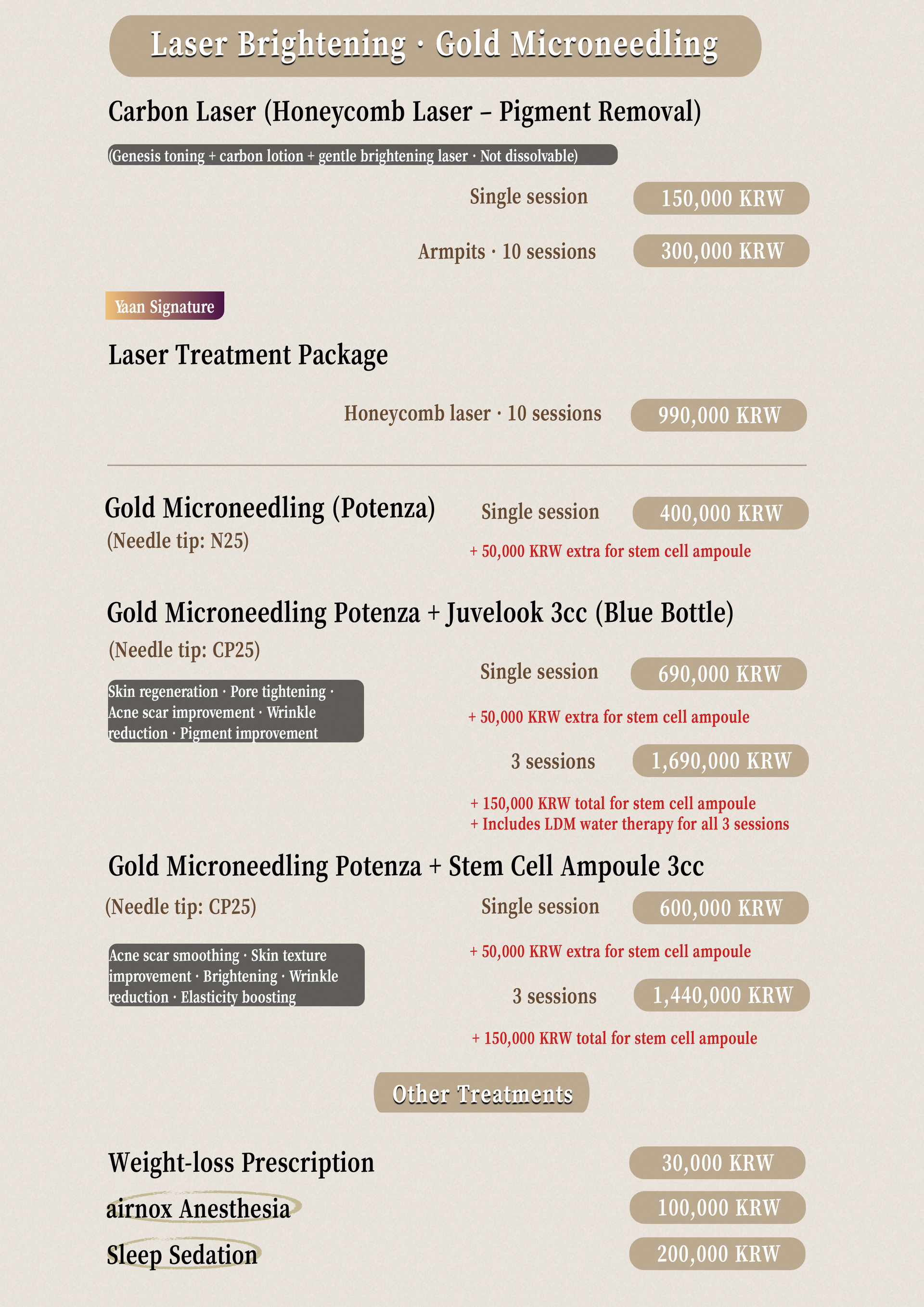
5. How Much Do Rejuran and Juvelook Cost in Korea?
Prices vary significantly depending on the product version, amount used, injection technique, treatment area, and whether the clinic is offering a promotional package.
As a general 2026 Seoul price guide:
Rejuran
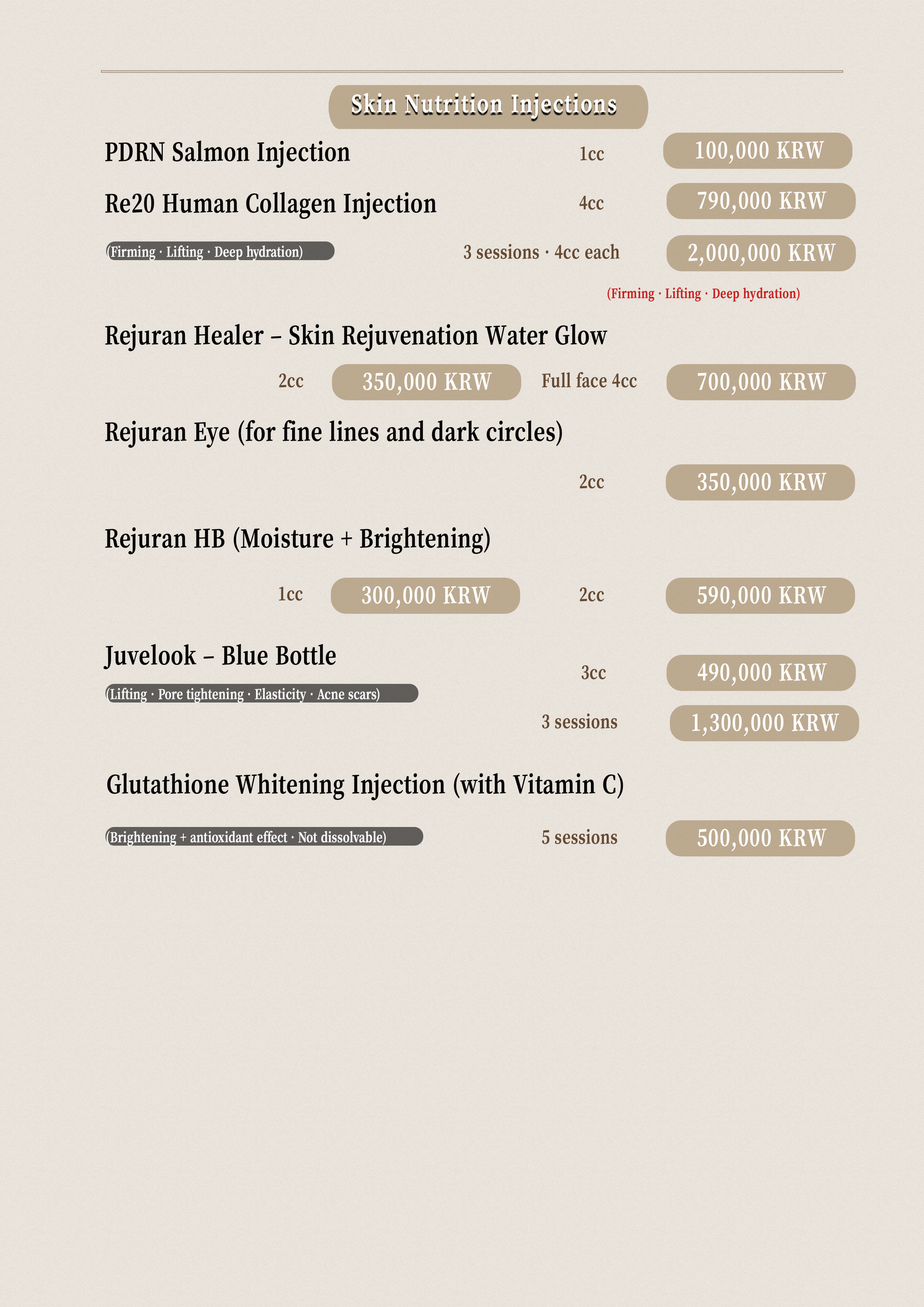
- Rejuran 1cc: approximately ₩150,000–₩300,000
- Rejuran 2cc: approximately ₩200,000–₩500,000
- Rejuran 4cc: approximately ₩400,000–₩800,000+
- Eye or small-area Rejuran: approximately ₩100,000–₩300,000+
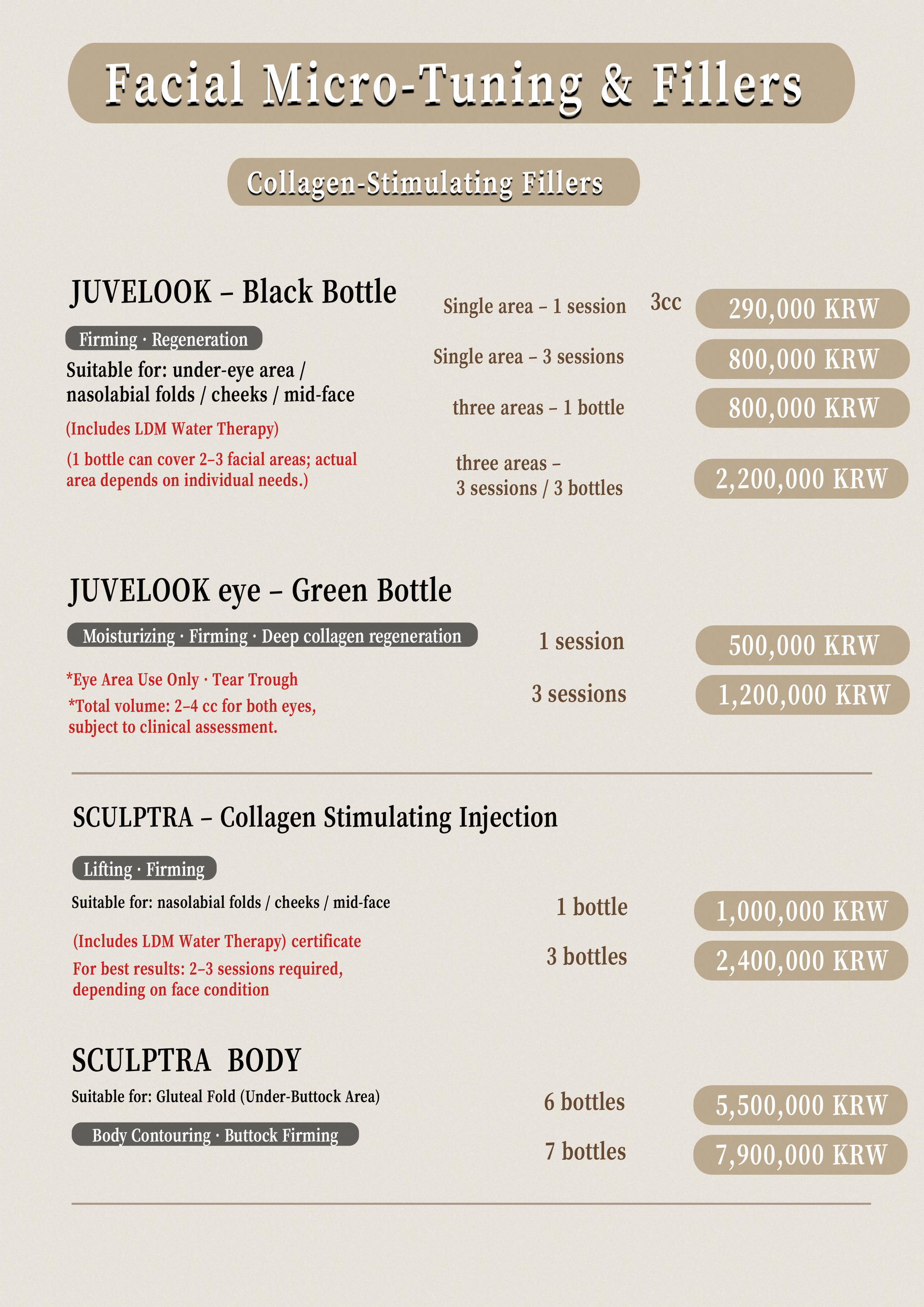
Juvelook
- Smaller-area treatment: approximately ₩200,000–₩400,000
- Juvelook 4cc: approximately ₩340,000–₩600,000
- Full-face or larger-volume treatment: approximately ₩500,000–₩800,000+
Current Korean price references show considerable variation, particularly because Rejuran is often quoted by cc while Juvelook may be priced according to vial or prepared treatment volume.
Before booking, foreign patients should confirm:
- Exact product name and version
- Number of cc or vials
- Injection method
- Treatment area
- Whether consultation and numbing are included
- Whether VAT is included
- Whether the quoted price is a promotional price
Comparing only the headline price can be misleading if the treatment quantities are different.
6. Which Should Foreign Patients Choose in Korea?
For international patients, the decision should be based on the specific skin problem rather than simply choosing the more popular treatment.
Consider Rejuran if your priority is:
- Skin repair and resilience
- Thin or dehydrated skin
- Fine lines
- Elasticity
- Overall skin quality
Consider Juvelook if your priority is:
- Gradual collagen stimulation
- Skin firmness
- Texture improvement
- Fine lines and pores
- Early loss of skin density
Some patients may also receive both treatments as part of a broader skin-rejuvenation plan, but they do not necessarily need to be performed together. A dermatologist can determine whether combining them is appropriate based on the patient's skin condition and treatment goals.
For foreigners visiting Seoul, it is also useful to ask for an English explanation of the exact product, dosage, injection technique, expected downtime, and total treatment cost before proceeding. This makes it easier to compare Korean skin clinics accurately.
Frequently Asked Questions
1. Is Rejuran or Juvelook better for fine lines?
Both may be considered. Rejuran is often selected for skin quality and fine lines, while Juvelook may be preferred when collagen stimulation and firmness are also important.
2. Which lasts longer, Rejuran or Juvelook?
Their treatment mechanisms are different, so duration should not be compared simply by months. Juvelook's collagen-stimulating effects develop gradually, while Rejuran focuses more on ongoing skin-quality improvement.
3. Is Juvelook more painful than Rejuran?
Both involve multiple injections, so discomfort depends on the treatment area, injection technique, numbing method, and individual sensitivity.
4. How many sessions do I need?
Many Korean clinics recommend a series rather than relying on a single session. The number and interval depend on the product, skin condition, and treatment objective.
5. Can I get Rejuran and Juvelook during the same trip to Korea?
Yes, they can be part of the same overall treatment plan, but whether they should be combined or separated depends on your dermatologist's assessment.
6. Can foreigners receive Rejuran or Juvelook in Seoul?
Yes. Both treatments are widely offered at Korean aesthetic and dermatology clinics, including clinics that routinely treat international patients. Always confirm the exact product and treatment protocol before booking.
Final Thoughts
Rejuran and Juvelook are designed around different approaches to skin rejuvenation. Rejuran is commonly associated with skin repair, resilience, and overall skin quality, while Juvelook emphasizes gradual collagen stimulation, firmness, and texture.
For foreign patients visiting Korea, the most useful comparison is not simply which product is more popular or expensive. Match the treatment to your skin condition, treatment goals, dosage, and expected recovery, then compare clinics using the same treatment volume and product specifications.