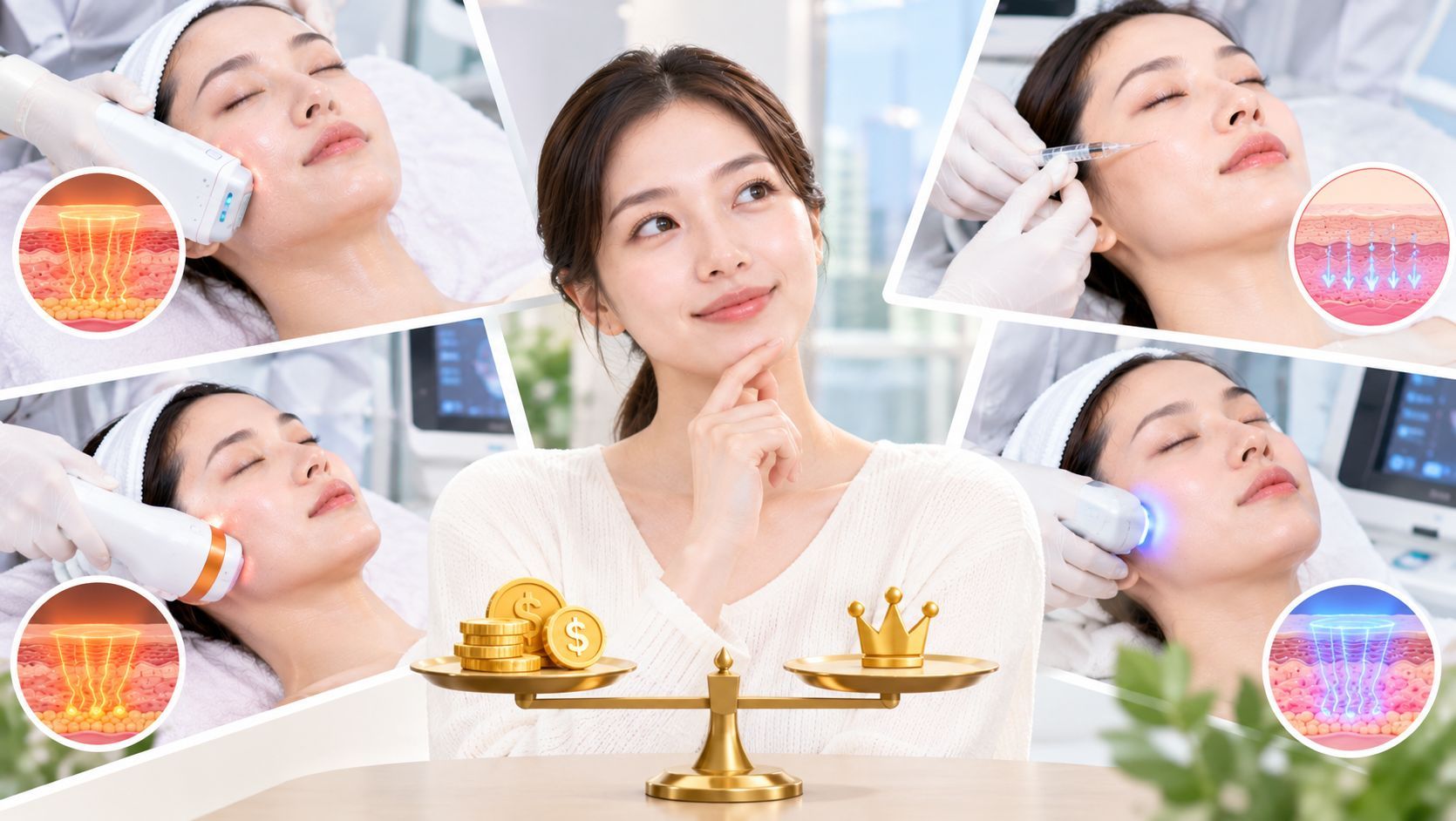
I'm 42 and My Jawline Is Disappearing. Should I Get Thermage or Ultherapy?
If you are 42 and your jawline is becoming less defined, you may be wondering whether Thermage or Ultherapy is the better non-surgical lifting treatment. Both stimulate collagen remodeling, but they use different types of energy and may suit different facial concerns.
Ultherapy may be worth considering when deeper tissue laxity is the main concern, while Thermage may suit people seeking broader skin tightening and improved firmness. However, neither treatment can reliably eliminate pronounced jowls, remove substantial excess skin, or restore lost facial volume on its own.
If you are considering treatment at a dermatology clinic in Seoul, the first step is to identify why your jawline is changing. The right choice depends on your skin quality, facial structure, degree of sagging, and desired result—not simply your age.
Why Is Your Jawline Becoming Less Defined at 42?
A disappearing jawline does not necessarily mean that your skin has become significantly looser. Several changes can contribute to a softer lower-face contour.
- Skin laxity: As collagen and elastin change with age, skin may become less firm.
- Early jowls: Tissue around the lower cheeks may descend, creating small bulges beside the chin.
- Volume loss: Changes in cheek fat and facial support can make the jawline appear less defined.
- Submental fullness: Fat beneath the chin can blur the separation between the chin and neck.
- Muscle and bone structure: Natural facial anatomy influences the shape of the lower face and how aging becomes visible.
These concerns can overlap, but they do not all respond to the same treatment. An energy-based lifting procedure may help selected cases of skin laxity, for example, but it will not necessarily correct fullness caused by fat or restore volume lost from the cheeks.
Thermage vs. Ultherapy: What Is the Difference?
1. Thermage: For Skin Firmness and Tightening
Thermage uses monopolar radiofrequency energy to heat tissue and stimulate collagen remodeling. It is a non-invasive treatment intended to improve the appearance of wrinkles and skin laxity.
For someone in their early 40s, Thermage may be considered when the skin feels less firm, the lower face looks slightly lax, or early aging changes affect the overall contour.
Potential benefits include:
- Gradual improvement in skin firmness.
- Treatment across broader areas of the face, depending on the device and treatment plan.
- Little or no significant downtime for many patients.
- No surgical incisions.
Results develop gradually and vary between individuals. Thermage is not designed to reposition significantly descended facial tissues, and the improvement in jawline definition may be subtle when jowls are pronounced.
Temporary redness, swelling, tenderness, and discomfort are possible. Burns, contour irregularities, and unwanted changes in facial fat are less common but important risks to discuss.
Thermage may be worth discussing if your main concern is reduced skin firmness rather than substantial tissue descent.
2. Ultherapy: For Selected Areas of Deeper Tissue Laxity
Ultherapy uses microfocused ultrasound, with real-time imaging in the Ultherapy system, to deliver focused energy at selected depths beneath the skin. This stimulates a tissue-remodeling response that may improve the appearance of laxity.
For a 42-year-old whose jawline is gradually losing definition, Ultherapy may be appropriate when the clinician identifies mild to moderate laxity in the lower face or beneath the chin.
Potential advantages include:
- Treatment targeted at selected tissue depths.
- Gradual improvement in the appearance of a sagging jawline.
- No surgical incisions.
- Generally limited surface disruption compared with invasive procedures.
Results are not immediate. Improvements may become more apparent over several weeks to months, and the degree of lifting varies.
Treatment can be uncomfortable, and temporary tenderness, swelling, bruising, or altered sensation may occur. Rare complications can include burns, nerve injury, and unwanted fat loss. Proper assessment and treatment technique are particularly important in patients with a naturally lean face.
A small 2025 pilot case series involving 30 Asian patients reported improvements in jawline and neck laxity after Ultherapy Prime, assessed at 90 days. However, this was a small study of a specific device, not a direct comparison with Thermage, so it does not establish that Ultherapy is better for everyone. <Cite refs={["turn605996search3"]}/>
Ultherapy may be worth discussing if your main concern is tissue laxity affecting the jawline or the area beneath your chin.
Which Is Better for a Disappearing Jawline?
There is no universal winner. Your treatment choice should reflect the cause of the changing contour.
Consider Ultherapy if:
- Your jawline appears to be losing definition because of tissue laxity.
- You have early jowls or mild sagging beneath the chin.
- Your clinician identifies deeper tissue laxity as an appropriate target.
- You want a non-surgical option and understand that improvement may be modest.
Consider Thermage if:
- Your skin feels less firm overall.
- You have mild laxity across the lower face.
- Your concerns include general skin firmness and wrinkles.
- You prefer a treatment that uses radiofrequency rather than focused ultrasound.
These are general considerations, not strict rules. The technologies overlap in their potential effects, and evidence from direct comparisons is limited. A recent review of non-surgical jawline and neck rejuvenation also emphasizes that treatment selection should reflect individual anatomy, the specific concern being treated, and realistic expectations. <Cite refs={["turn605996search1","turn605996search8"]}/>
What If Your Jawline Is Disappearing Because of Facial Volume Loss?
This is an important distinction, especially in your 40s.
If the cheeks have lost volume or the face is naturally thin, additional tightening may not address the underlying problem. In some patients, excessive or poorly targeted energy treatment can contribute to unwanted facial hollowing.
A clinician may instead discuss whether restoring selected areas of facial support could improve the overall contour. Dermal fillers may have a role in carefully chosen cases, but they introduce their own risks and are not a universal solution. Adding volume directly to the lower face can sometimes make it appear heavier.
If the main issue is fat beneath the chin, a skin-tightening device may have limited effects on that fullness. Different options may be appropriate depending on the amount of fat, skin elasticity, and neck anatomy.
The goal should be to identify the cause before choosing a procedure, rather than assuming every loss of jawline definition needs lifting.
Can You Combine Thermage and Ultherapy?
Some clinics offer combination treatments because radiofrequency and focused ultrasound deliver energy differently. However, using both treatments does not automatically produce a better result.
A combination may be considered in selected cases when the clinician identifies separate concerns that each device can reasonably address. The decision should account for your facial fat distribution, skin thickness, previous treatments, treatment settings, and potential risks.
Ask your clinician:
- What specific concern will each treatment address?
- Is one treatment likely to be sufficient?
- Could the combination increase discomfort or unwanted fat loss?
- Should treatments be staged rather than performed together?
- How will the clinician assess the result before recommending another procedure?
There is no single combination protocol or timing that is right for every patient. A conservative plan may be more appropriate than treating every area at once.
What Should You Expect When Getting Treatment in Seoul?
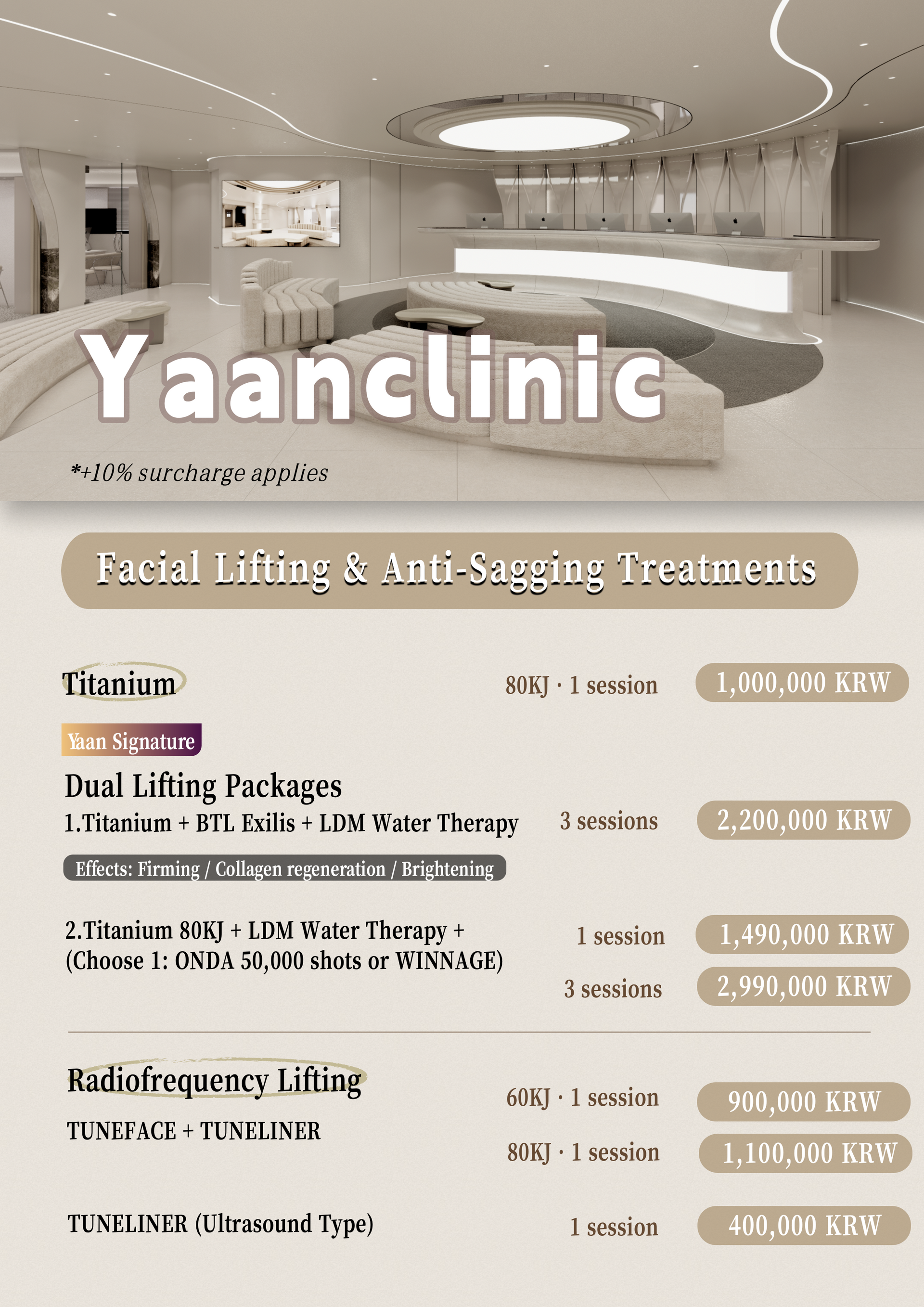
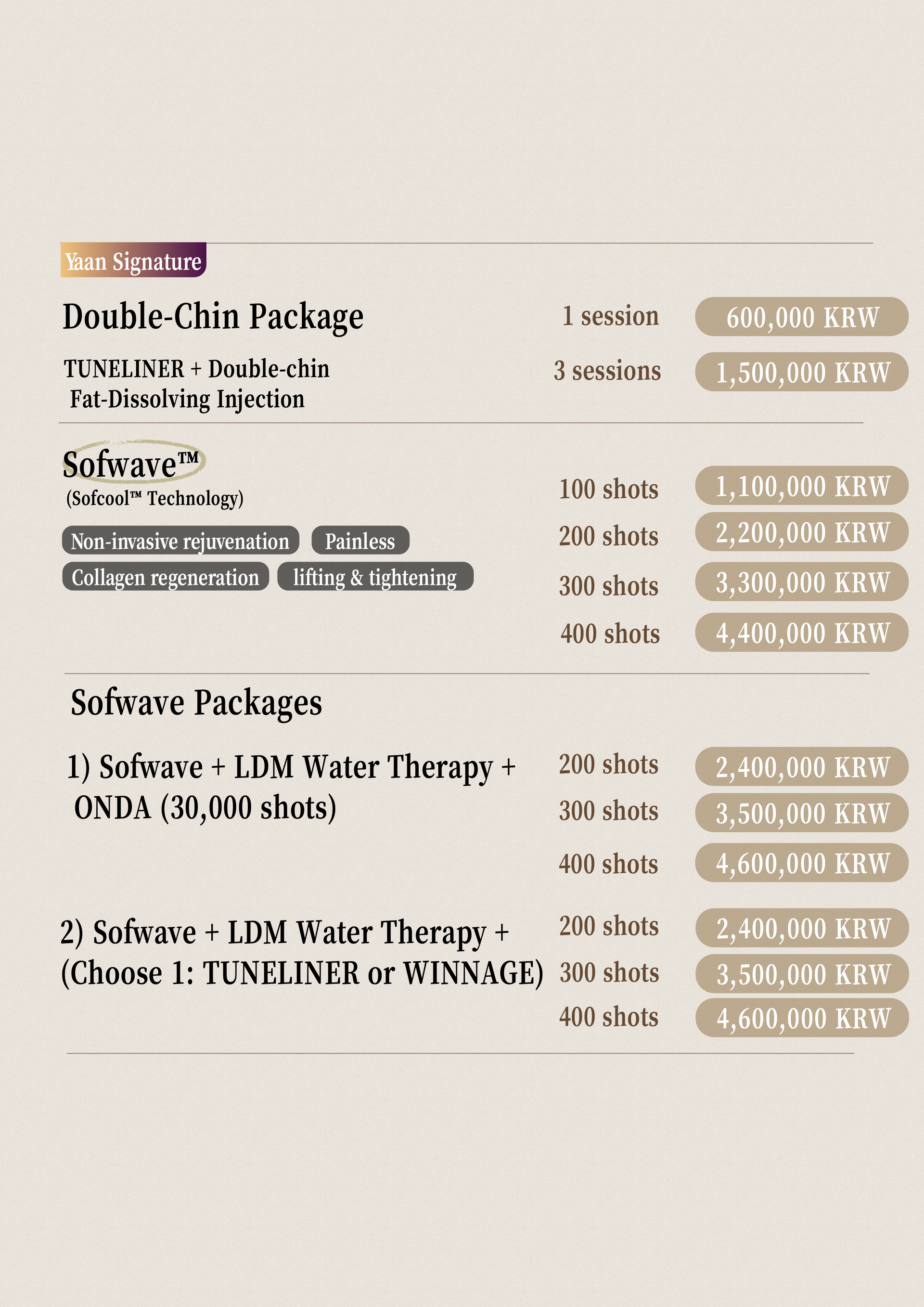
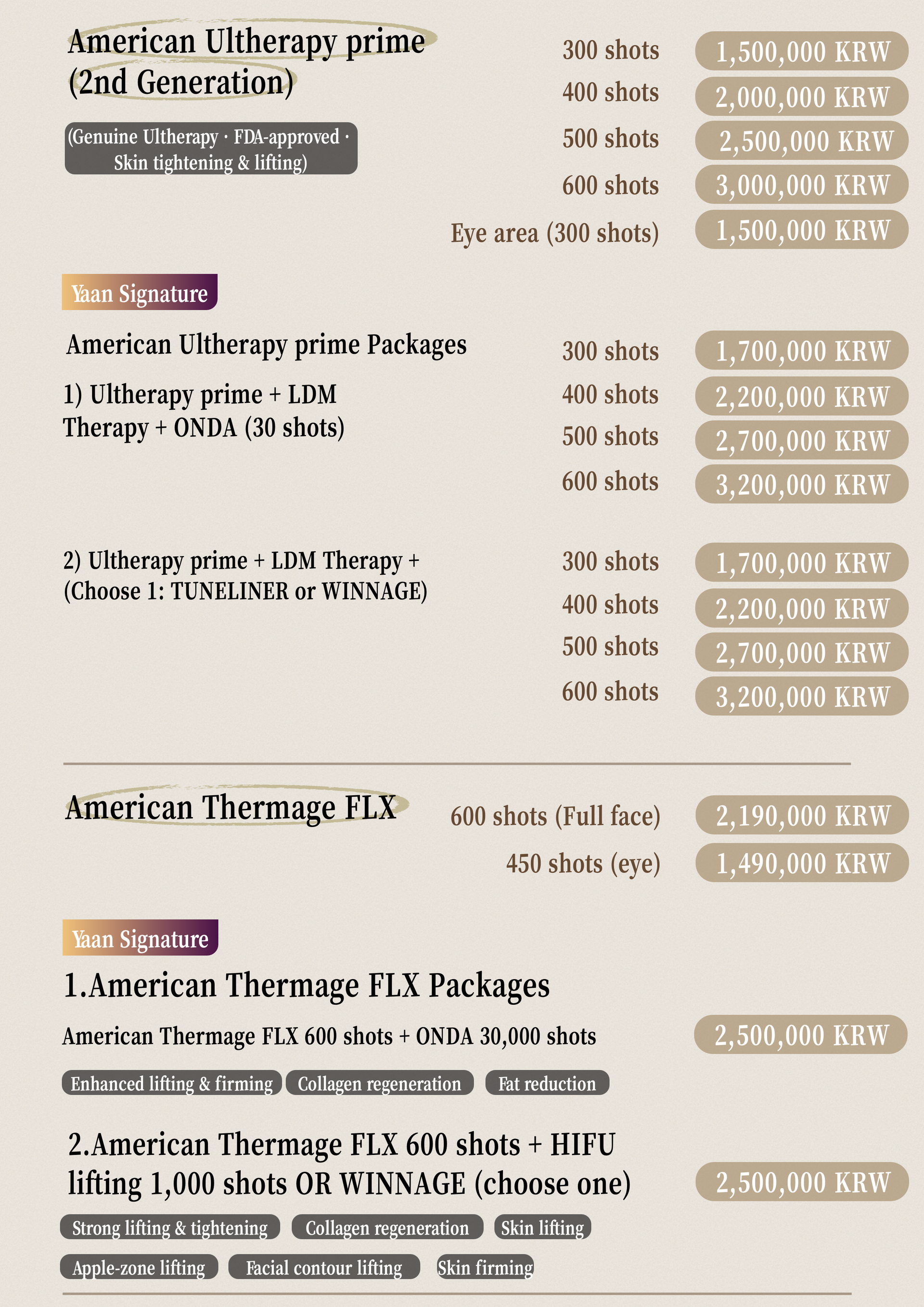
Seoul offers a wide range of aesthetic treatments, but the name of a device alone does not determine the quality of care. If you are comparing dermatology clinics in Gangnam or elsewhere in Seoul, focus on the clinician's assessment and the specific treatment plan.
Before proceeding, confirm the following:
Your treatment target: Ask whether the concern is primarily skin laxity, jowling, facial volume loss, or submental fullness.
The exact device: Confirm whether the clinic uses Thermage, Ultherapy, or another device with a similar marketing description. Different technologies are not necessarily interchangeable.
The expected result: Ask what degree of jawline improvement is realistic for your anatomy and whether the change is likely to be subtle.
Recovery and follow-up: Although these treatments generally require less recovery than surgery, temporary discomfort, swelling, or tenderness can still occur. Arrange treatment with enough time before important events or international travel.
Potential risks: Ask about burns, nerve-related symptoms, unwanted fat loss, and the clinic's plan for managing complications.
A responsible clinician should explain when a treatment is unlikely to provide enough improvement, rather than promising a sharply defined jawline after one session.
Conclusion: Thermage or Ultherapy at Age 42?
If your jawline is disappearing at 42, Ultherapy may be worth considering when deeper tissue laxity is the main issue, while Thermage may be appropriate for broader skin tightening and reduced firmness.
Neither treatment is universally better, and neither can guarantee a sharply defined jawline. If your concern is mainly fat beneath the chin, volume loss, or pronounced jowls, another approach may be more suitable.
Before choosing a treatment in Seoul, seek an individualized assessment of your facial anatomy and ask for a realistic explanation of the likely benefits, limitations, recovery, and risks. The best treatment is the one that addresses the actual cause of your changing jawline while preserving your natural facial proportions.
Frequently Asked Questions
1. Is Thermage or Ultherapy better for jowls at age 42?
Ultherapy may be considered for selected cases of deeper tissue laxity, while Thermage may suit broader skin firmness concerns. The better option depends on your anatomy and the cause of the jowls.
2. How long does it take to see results?
Both treatments stimulate gradual tissue remodeling. Visible changes may develop over weeks to months, but the timeline and degree of improvement vary by device and individual response.
3. Is there downtime after Thermage or Ultherapy?
Both are non-invasive treatments and generally involve less downtime than surgery. However, temporary redness, swelling, tenderness, or bruising can occur, and some patients need more recovery time than others.
4. Can either treatment completely restore my jawline?
Not reliably. Both may improve selected cases of mild to moderate laxity, but neither can guarantee a sharp jawline or remove substantial excess skin.
5. Can I get Thermage or Ultherapy if I have a thin face?
Possibly, but facial fat distribution is an important part of the assessment. A clinician should consider the risk of unwanted hollowing and determine whether either treatment is appropriate for your anatomy.
6. Should I get both treatments in one visit?
Not necessarily. Combination treatment should be based on a clear clinical rationale, not simply the assumption that two procedures are better than one. Ask whether one treatment could reasonably address your main concern first.