Can Ultherapy Be Used Around the Eyes?
If you are considering non-surgical eye rejuvenation in Seoul, you may wonder whether Ultherapy can lift the eyebrows, tighten skin around the eyes, or soften crow's feet without surgery.
Ultherapy may be an option for selected patients seeking a modest eyebrow lift or improvement in certain signs of skin laxity around the eyes. However, treatment directly around the eyes requires careful anatomical assessment, appropriate device selection, and an experienced medical professional. It is not suitable for every under-eye concern, and it should not be assumed that every area near the eye can safely be treated.
The best approach depends on whether your main concern is a drooping brow, loose skin, fine wrinkles, under-eye bags, or hollowing. These problems have different causes and may need different treatments.
What Is Ultherapy?
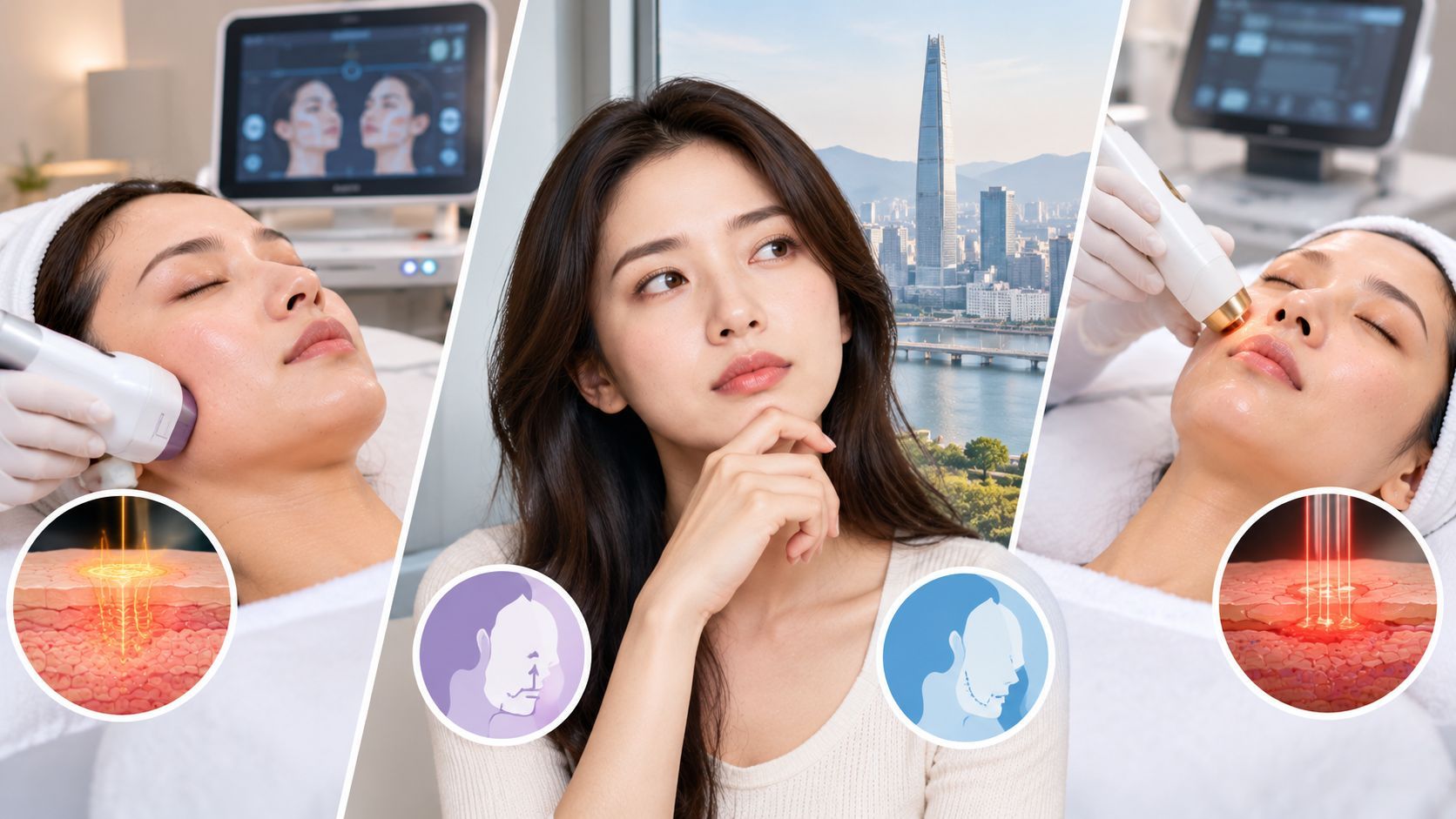
Ultherapy is a non-surgical treatment that uses microfocused ultrasound energy to create controlled thermal points in targeted tissue. This process is intended to stimulate the body's wound-healing response and collagen remodeling.
Unlike laser resurfacing, which acts through optical energy, Ultherapy delivers focused ultrasound energy beneath the skin. Some systems use real-time ultrasound imaging to help the clinician visualize tissue layers during treatment.
Depending on the device, treatment area, and patient anatomy, microfocused ultrasound may be used to address selected concerns such as:
- Mild to moderate skin laxity.
- A slightly drooping eyebrow.
- Certain facial lifting and tightening concerns.
- Selected wrinkles and skin-texture changes.
Results develop gradually as the tissue responds to treatment. Ultherapy does not remove excess skin, restore lost volume in the way filler does, or guarantee a surgical-level lift.
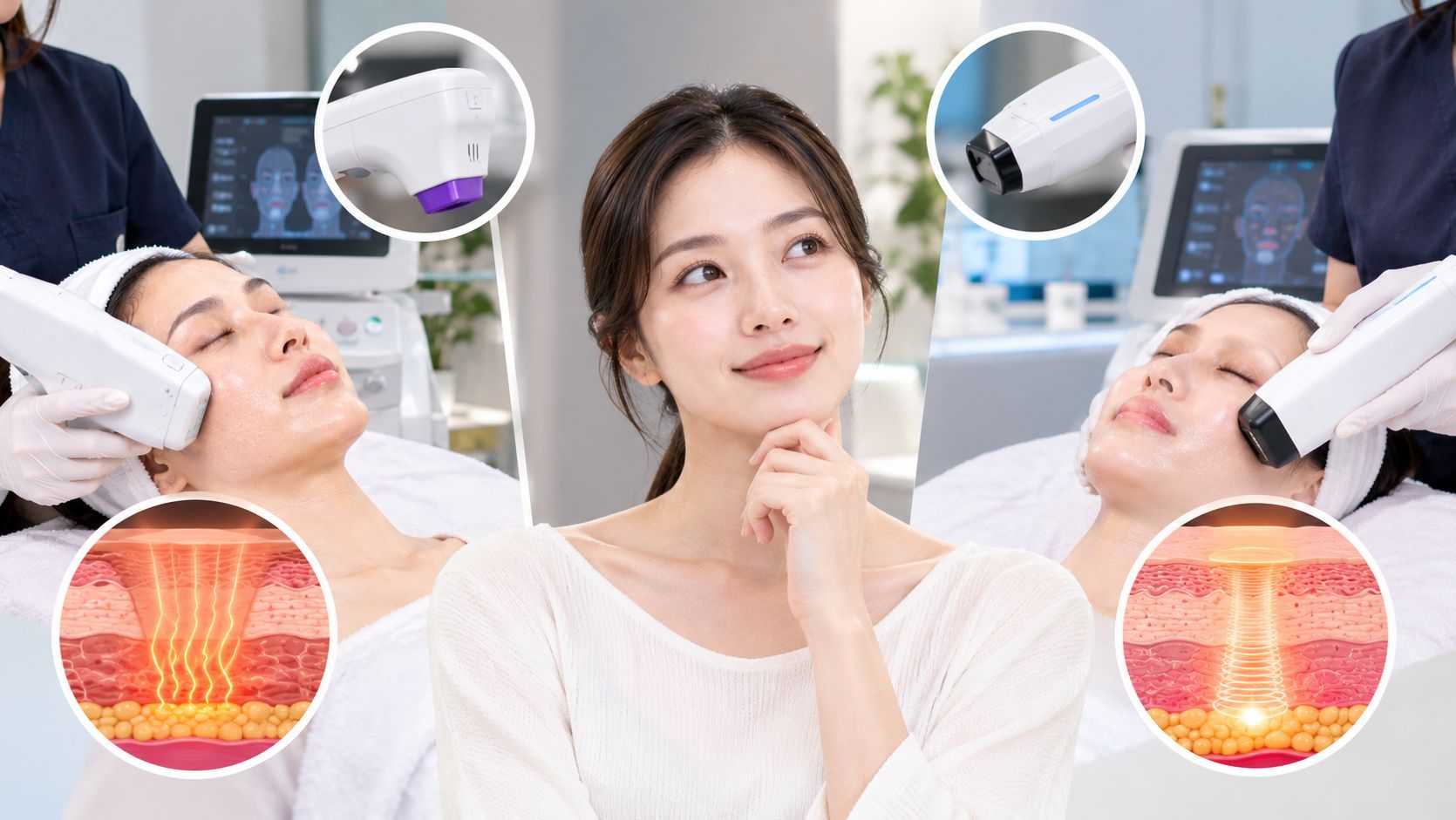
It is also important to distinguish the Ultherapy brand from other high-intensity focused ultrasound (HIFU) devices. They may use related technology, but their indications, imaging capabilities, treatment protocols, and regulatory status can differ.
Can Ultherapy Treat the Eye Area?
The answer depends on which part of the eye area you want to treat.
1. Eyebrow Lifting
One of the more established uses of microfocused ultrasound is non-surgical eyebrow lifting in appropriately selected patients.
If the outer eyebrow has descended slightly and contributes to a tired appearance, a clinician may assess whether ultrasound treatment around the forehead or brow region could provide a modest lift.
A 2025 clinical study involving 38 participants reported measurable eyebrow-height changes after microfocused ultrasound treatment, with some effects still observed at 16 weeks. However, the study was small and did not include a sham-treated control group, so the results should not be interpreted as a guarantee of benefit for every patient.
A small 2026 study in Korean adults also reported eyebrow-height changes after focused ultrasound treatment, but larger controlled studies are needed to clarify the size and durability of the effect.
Ultherapy is more likely to be considered when the concern is mild brow descent rather than substantial excess eyelid skin. If heavy upper eyelids are caused by significant skin redundancy or another anatomical issue, a non-surgical procedure may not provide enough improvement.
2. Skin Laxity Around the Eyes
Some studies have evaluated focused ultrasound for selected periocular skin-laxity and wrinkle concerns. A 2026 systematic review of 10 studies found reported improvements in measures of skin texture, elasticity, wrinkles, and eyebrow or eyelid contour.
However, the review also highlighted very low certainty of evidence because the studies were heterogeneous and many lacked robust randomized comparisons. The findings are promising, but they do not establish that Ultherapy is the best treatment for every eye-area concern.
For an individual patient, the potential benefit depends on skin thickness, the degree of laxity, the exact treatment area, and the device and protocol used.
3. Crow's Feet
Crow's feet are the lines that form at the outer corners of the eyes, often becoming more visible when smiling or squinting.
Microfocused ultrasound may be considered in selected cases where skin laxity contributes to the appearance of these lines. However, it is not interchangeable with treatments that target the muscles responsible for expression lines.
If the wrinkles are mainly caused by repeated muscle movement, a clinician may discuss other options. If the concern is loose skin or texture, a different treatment may be more appropriate.
Ultherapy should not be chosen solely because crow's feet are present. The clinician should identify whether the lines are dynamic, static, or associated with skin laxity.
4. Under-Eye Bags and Tear Trough Hollows
Ultherapy is not a universal solution for under-eye bags or hollowing.
Under-eye bags may result from prominent fat compartments, fluid retention, skin laxity, or a combination of factors. Tear trough hollows are associated with the underlying anatomy and volume distribution.
Ultrasound skin tightening may offer limited benefit in selected cases of mild laxity, but it does not remove prominent fat pads or reliably restore lost volume.
If you have pronounced under-eye bags, significant hollowing, or excess lower-eyelid skin, ask a qualified dermatologist or oculoplastic specialist whether another approach would be more suitable.
Is Ultherapy Safe Around the Eyes?
The area around the eyes contains delicate skin, muscles, nerves, blood vessels, and structures involved in vision. Treatment therefore requires more than simply selecting a device setting intended for skin tightening.
Potential temporary side effects include:
- Pain or tenderness during treatment.
- Redness and swelling.
- Bruising or localized sensitivity.
- Temporary changes in sensation.
Less common complications may occur, and risks depend on the device, treatment location, energy settings, and operator technique. Energy delivered to an inappropriate depth or location can injure surrounding tissues.
A clinician should determine whether the proposed device is appropriate for the exact area being treated and follow the manufacturer's instructions for periocular use. Do not assume that a device suitable for the cheeks or jawline can safely be used directly on the eyelids.
Before treatment, ask about the clinician's experience with the specific device and eye-area anatomy. If you have an eye condition, previous eye surgery, unusual eyelid anatomy, or a history of complications from cosmetic procedures, disclose this during the consultation.
Seek prompt medical assessment if you develop significant eye pain, visual changes, marked swelling, or other unexpected symptoms after a procedure.
Ultherapy vs Other Eye-Area Treatments
The right treatment depends on the problem being addressed.
Main concernOptions to discuss with a clinicianMild eyebrow descentUltherapy or another appropriate brow-lifting optionCrow's feet caused mainly by expressionA clinician may discuss treatments that target muscle activityFine, crepey under-eye skinSuitable skincare, selected resurfacing treatments, or skin-quality proceduresTear trough hollowsAssessment of volume-related options, including whether filler is appropriateProminent under-eye bagsEvaluation of the cause; specialist assessment may be neededSignificant excess eyelid skinAssessment by an appropriate specialist, including discussion of surgery when indicated
These options are not interchangeable. A treatment that helps one concern may do little for another, and some people may benefit more from skincare or observation than from a procedure.
What Results Can You Expect?
Ultherapy is intended to stimulate gradual tissue remodeling rather than create an immediate dramatic change.
If you are a suitable candidate, you may notice a modest improvement in brow position or skin firmness over time. The degree of change varies, and some people see little improvement.
It is not realistic to expect Ultherapy to remove all wrinkles, eliminate under-eye bags, or reproduce the results of surgery. Results may also change as the face continues to age.
Before booking, ask the clinic how it measures improvement, when results are usually assessed, and what alternatives are available if the treatment does not meet your expectations.
Be cautious of marketing that promises a dramatic eye lift without downtime or risk.
Should You Get Ultherapy During a Trip to Seoul?
Seoul has clinics offering a range of non-surgical skin-tightening procedures, but choosing a treatment should begin with a medical assessment rather than a package or promotional offer.
If you are travelling internationally, ask the clinic to confirm:
- The exact device and treatment area.
- Whether the device is appropriate for the planned periocular use.
- The expected side effects and recovery period.
- Whether follow-up is needed and how complications would be managed.
- Whether the treatment should be delayed because of a medical condition or previous procedure.
Do not schedule treatment immediately before a flight or an important event without understanding the potential for pain, swelling, or bruising. Leave time for recovery and make sure you know whom to contact if a problem develops after returning home.
Conclusion
Ultherapy may be considered for selected patients seeking a modest eyebrow lift or improvement in certain signs of skin laxity around the eyes. Evidence for focused ultrasound in the periocular region is encouraging, but research remains limited, and results depend on the device, treatment protocol, and individual anatomy.
It is not a universal treatment for crow's feet, under-eye bags, hollowing, or excess eyelid skin. Because the eye area is delicate, a qualified medical professional should assess your concerns and confirm whether the specific device and treatment location are appropriate.
The best treatment is the one that addresses your actual concern with realistic expectations and a clear safety plan.
Frequently Asked Questions
1. Can Ultherapy lift drooping eyebrows?
It may provide a modest lift in selected patients with mild eyebrow descent. The degree of improvement varies, and it is not a substitute for surgery when there is substantial excess skin or significant brow ptosis.
2. Can Ultherapy be performed directly on the eyelids?
Treatment depends on the device, its approved or cleared indications, and the specific area being considered. Do not assume that every Ultherapy or HIFU device is suitable for direct eyelid treatment. Ask a qualified clinician to confirm the appropriate treatment area and safety precautions.
3. Does Ultherapy improve crow's feet?
It may help selected cases in which skin laxity contributes to the lines, but it may be less suitable when the wrinkles are mainly caused by repeated muscle movement. A clinician should identify the primary cause before recommending treatment.
4. Can Ultherapy remove under-eye bags?
No. It does not remove prominent fat pads and cannot reliably correct every cause of under-eye bags. Mild laxity may respond differently from fat protrusion or fluid-related puffiness, so the underlying cause needs assessment.
5. How long does it take to see Ultherapy results around the eyes?
Changes develop gradually as tissue remodeling occurs. The timing and degree of improvement vary by person and protocol. A clinician can explain when to assess results and whether further treatment is appropriate.
6. Is Ultherapy better than surgery for eye-area aging?
Not necessarily. Ultherapy may suit selected people seeking a modest non-surgical improvement, while surgery may be more appropriate for substantial excess skin or prominent bags. The options differ in effectiveness, risks, downtime, and the type of concern they address.