Can Thermage and Ultherapy Be Combined for Someone Over 50?
s Ultherapy Work After Age 50?
Ultherapy uses microfocused ultrasound to deliver energy to selected tissue depths. The controlled thermal effects are intended to stimulate tissue responses that may gradually improve firmness and lifting in appropriate patients.
A clinician may consider it for selected areas, including the brow, lower face, jawline, or beneath the chin, depending on the device's authorized indications and the patient's anatomy.
For someone over 50, Ultherapy may be worth discussing when there is mild to moderate laxity and the goal is a modest, gradual improvement without surgery.
However, age is not the only factor that matters. Skin thickness, tissue position, facial volume, and the severity of sagging all affect the likely result.
Ultherapy cannot reliably reproduce a facelift when there is substantial excess skin or significant tissue descent. It can also cause adverse effects, so accurate treatment planning and appropriate technique are important.
Why Would a Clinic Combine Thermage and Ultherapy?
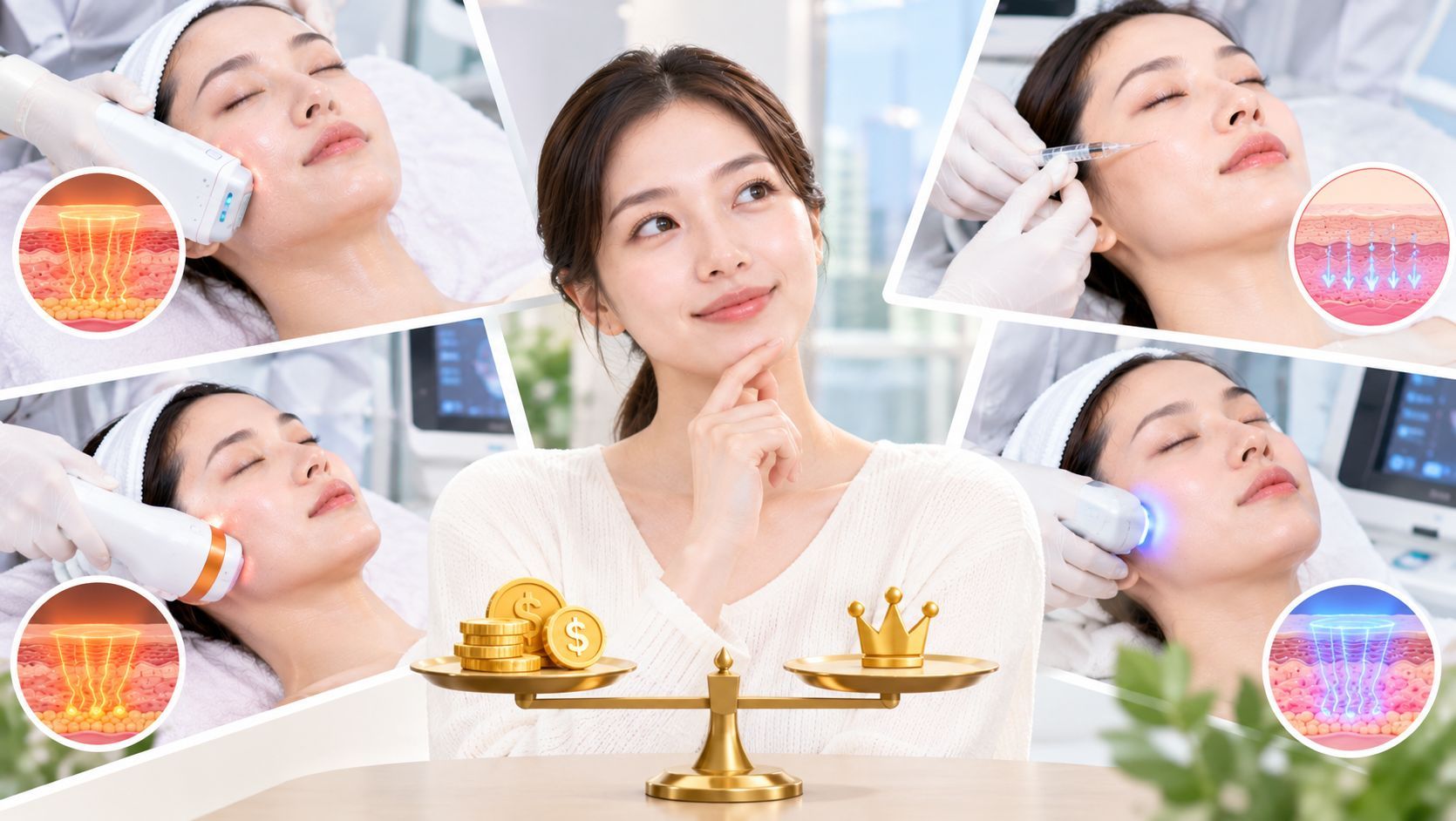
The rationale for combining the two treatments is that they deliver energy differently and may be selected to address different aspects of skin laxity.
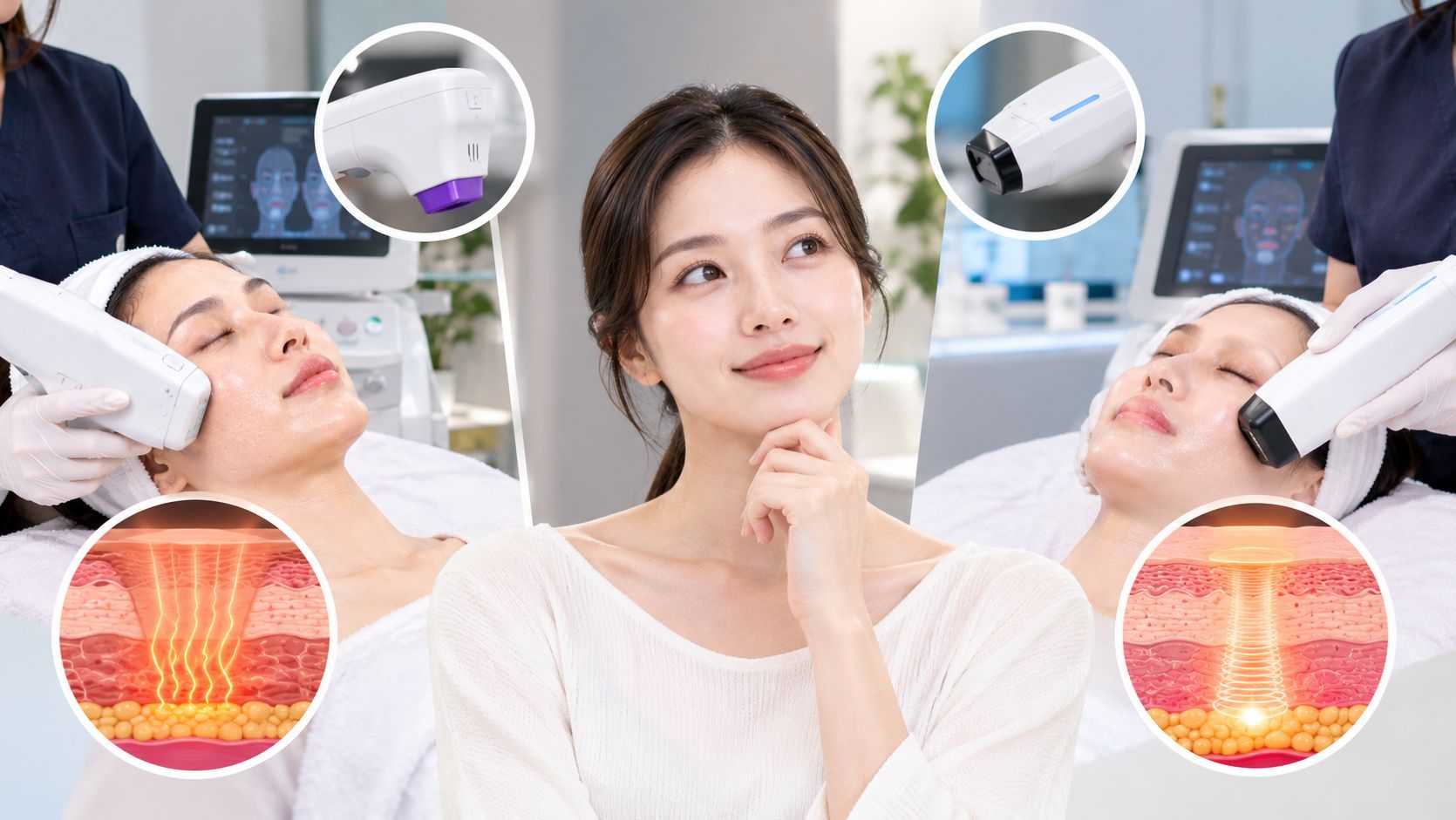
Thermage uses radiofrequency heating, while Ultherapy creates focused thermal effects at selected depths. In theory, a clinician may choose both when an individual's concerns involve more than one tissue level.
For example, a person may have mild laxity around the jawline and reduced firmness in the skin. After an assessment, a clinician might consider whether one device is sufficient or whether a combination could offer additional benefit.
But the biological effects of the two treatments can overlap. Both use heat to stimulate tissue responses, and combining them does not guarantee a stronger or longer-lasting result.
The evidence supporting particular combination protocols is limited compared with the broad marketing claims sometimes made about them. A small feasibility study comparing Ultherapy and Thermage on opposite sides of the face and neck is not, by itself, proof that everyone benefits from receiving both.
The decision should be based on your anatomy, treatment goals, the available evidence, and an individualized risk assessment—not simply the assumption that two devices are better than one.
Who Over 50 May Be a Candidate for Both Treatments?
A combined approach may be discussed when a qualified clinician identifies more than one concern that each device could reasonably address.
Potential candidates may have:
- Mild to moderate skin laxity.
- Early jowls or reduced jawline definition.
- Some loss of skin firmness.
- Realistic expectations about gradual, modest results.
- No relevant contraindications to either procedure.
A person does not automatically become a candidate because they have reached age 50, 55, or 60. Some people have mild laxity at an older age, while others develop pronounced sagging much earlier.
The clinician should also review your medical history, previous cosmetic procedures, implanted devices, skin condition, and any factors that could affect healing or treatment safety.
When Is Combining Thermage and Ultherapy Unnecessary?
Using both procedures may be unnecessary when one treatment adequately matches the main concern.
For example, if your primary issue is mild skin laxity and one device is considered appropriate, adding a second procedure may increase the cost without providing a meaningful additional benefit.
A combination may also be a poor fit if your main concern is something neither treatment addresses well.
Significant jowls or excess skin
If the lower face has substantial tissue descent or excess skin, neither device can reliably deliver the same structural change as a surgical facelift.
Facial volume loss
If the face looks hollow because of volume loss, tightening alone may not address the main problem. A clinician may discuss whether volume restoration is appropriate, while considering the risk of making a heavy lower face appear fuller.
Thin or fragile skin
Thin skin requires careful assessment. More energy does not necessarily produce better results, and inappropriate treatment may cause unwanted tissue changes.
Wrinkles and pigmentation
If your main concerns are surface wrinkles, uneven pigmentation, or sun damage, other treatments may be more suitable for those specific problems.
A good treatment plan does not attempt to solve every sign of aging with energy devices.
Is It Better to Have Both Treatments on the Same Day or Separately?
There is no universal schedule that is best for every patient.
Some clinics may offer both procedures during one visit, while others may recommend spacing them apart. The decision depends on the devices, treatment areas, energy settings, your medical history, and the clinician's assessment.
Receiving both treatments on the same day can make it more difficult to distinguish which procedure caused a side effect if one develops. It may also increase temporary tenderness, swelling, or tightness.
Spacing treatments can allow the clinician to assess your response before deciding whether another procedure is needed. However, there is no single evidence-based interval that applies to every device and patient.
Before treatment, ask your clinician to explain the proposed schedule, why it is appropriate for you, and whether a staged approach would be preferable.
Do not schedule additional energy-based treatments independently before your skin has been assessed following the initial procedure.
What Results Can You Expect From the Combination?
The main goal is usually a gradual improvement in selected aspects of firmness and contour. It is not realistic to expect a guaranteed dramatic lift.
The result depends on the severity of laxity, the areas treated, device settings, technique, individual tissue response, and ongoing aging.
Possible outcomes include:
- A modest improvement in skin firmness.
- Some improvement in the appearance of early jowls.
- Better definition in selected areas of the jawline.
- Little or no noticeable change in some individuals.
Temporary redness, swelling, tenderness, or discomfort may occur. Less common but more serious complications can include burns, unwanted fat loss, pigment changes, and nerve-related symptoms. Risks vary with the device and treatment technique.
Ask your clinician when your result should be assessed, what degree of change is reasonable, and what follow-up is available if you develop persistent pain, weakness, unusual swelling, or other concerning symptoms.
How to Choose a Clinic in Seoul for Combined Skin Tightening
If you are traveling to South Korea for treatment, evaluate the medical plan rather than choosing a clinic solely because it advertises a combined package.
Before booking, ask:
- Who will assess and perform the treatments? Verify the clinician's qualifications and experience with both devices.
- Which exact device models will be used? Confirm the equipment and ask about its intended use.
- Why do I need both treatments? Ask what each procedure is expected to improve.
- Could one treatment be enough? Request an explanation of the likely additional benefit of the combination.
- What are the risks for my face? Discuss skin thickness, facial volume, previous procedures, and other relevant factors.
- What is the follow-up plan? Understand when results will be assessed and whom to contact if a complication occurs.
If you are visiting Seoul for a short trip, allow for the possibility of temporary swelling or tenderness. Confirm your aftercare instructions before traveling home.
Conclusion: Should You Combine Thermage and Ultherapy After 50?
Thermage and Ultherapy can sometimes be combined for adults over 50 when a clinician identifies suitable concerns for both technologies. However, combining them does not guarantee a better result, and it may add cost, discomfort, and treatment-related risk.
For mild laxity, one well-selected procedure may be enough. For significant jowls or substantial loose skin, the benefit of both treatments may remain limited. If you want a more dramatic change, a surgical consultation can help you understand the alternatives, even if you ultimately decide against surgery.
The best decision is based on your anatomy, goals, and realistic expectations—not on age or the number of treatments in a package.
Frequently Asked Questions
1. Is it safe to combine Thermage and Ultherapy after age 50?
It may be appropriate for selected patients, but suitability depends on health history, skin condition, anatomy, treatment settings, and the devices used. A qualified clinician should assess whether combining them is justified and discuss the risks.
2. Does combining Thermage and Ultherapy give better results than using one?
Not necessarily. The treatments use different energy-delivery methods, but their effects may overlap. Evidence does not establish that every patient benefits from the combination, so the expected additional improvement should be discussed before treatment.
3. Should I have Thermage or Ultherapy first?
There is no universally correct order. The sequence and timing should be determined by the clinician based on your concerns, the devices, the treatment areas, and the planned settings.
4. Can the combination eliminate jowls after age 50?
It may provide modest improvement in selected cases of early jowling, but it cannot reliably eliminate pronounced jowls or remove substantial excess skin. Expectations should reflect the degree of tissue descent.
5. How long does it take to see results from combined treatment?
Results generally develop gradually over weeks to months, and the timing varies by procedure and individual response. Ask your clinician when to assess the result and whether additional treatment is genuinely necessary.
6. Is the combination better than a facelift?
No. Thermage and Ultherapy are non-surgical options with different benefits and limitations. A facelift can reposition selected tissues and remove excess skin, producing a more substantial structural change for suitable candidates, but it involves surgery, recovery, and additional risks.