Skin Booster vs Dermal Filler: Which Treatment Do You Need?
Skin Booster vs Dermal Filler: Which Treatment Do You Need?
Skin boosters and dermal fillers are both injectable aesthetic treatments, but they are designed to solve different problems. Skin boosters primarily improve hydration, texture, elasticity, and overall skin quality, while dermal fillers add volume and provide structural correction. For foreign patients visiting Seoul, understanding this difference can help you choose the right treatment for concerns such as dry skin, fine lines, facial hollows, wrinkles, or contour definition.
1. What Is the Difference Between Skin Boosters and Dermal Fillers?
The main difference is the intended purpose and how the product is placed in the skin.
Skin Boosters
Skin boosters are injectable treatments designed to improve the quality and condition of the skin rather than significantly change facial shape.
Common ingredients and treatments include:
- Hyaluronic acid (HA)
- Polynucleotides (PN), such as Rejuran
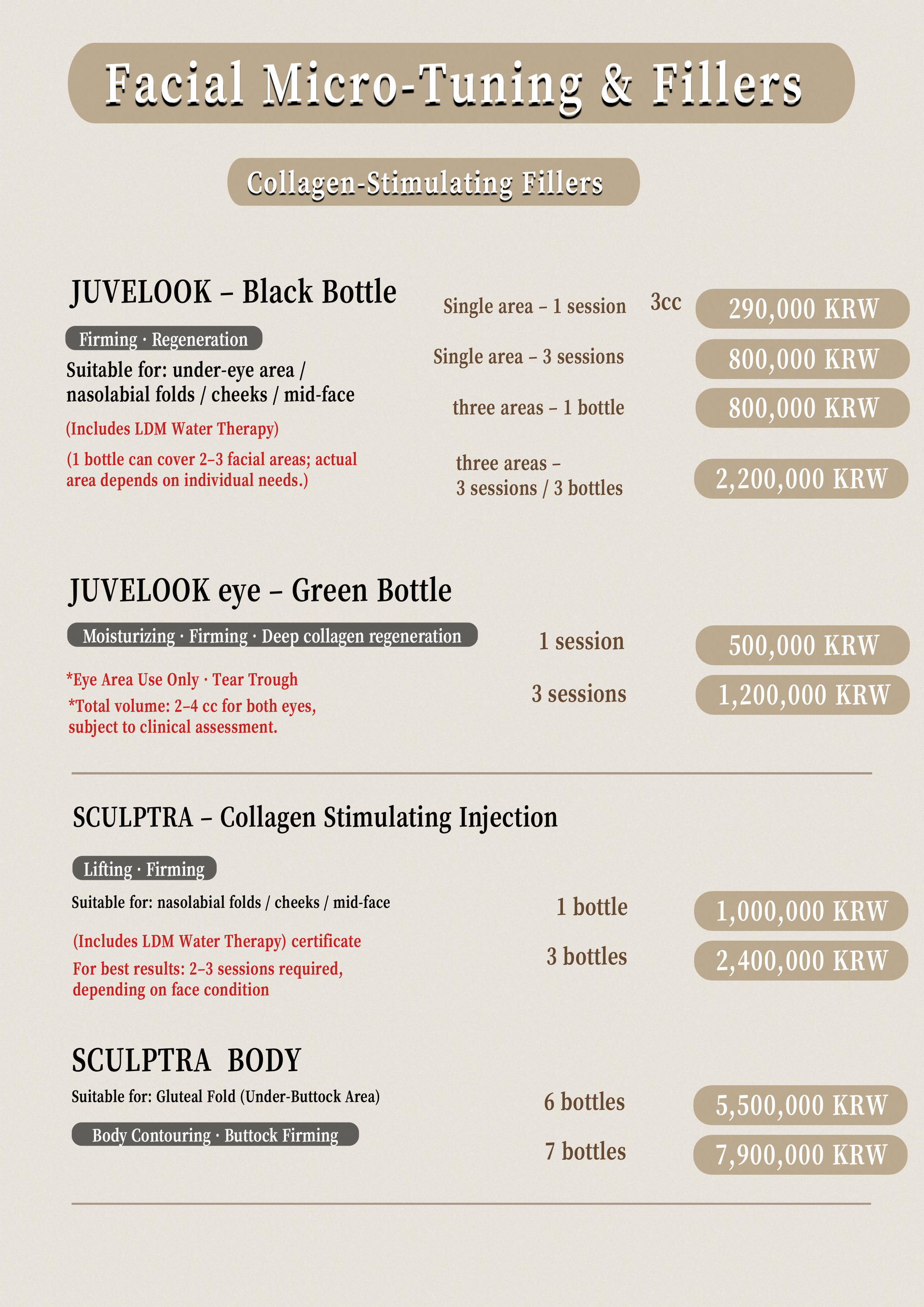
- PDLLA-based products, such as Juvelook
- Other regenerative or skin-quality formulations
They may be used for:
- Hydration
- Fine lines
- Rough texture
- Enlarged-looking pores
- Reduced elasticity
- Dullness
- Overall skin quality
Skin boosters are generally injected through multiple small deposits across the treatment area.
Dermal Fillers
Dermal fillers are designed primarily to restore or add volume and provide structural support.
Common filler materials include:
- Hyaluronic acid
- Calcium hydroxylapatite
- Poly-L-lactic acid and other collagen-stimulating materials, depending on the product
They may be used for:
- Cheek volume
- Lip enhancement
- Chin projection
- Jawline definition
- Nasolabial folds
- Marionette lines
- Facial volume loss
Unlike many skin boosters, conventional fillers are strategically placed at specific depths to reshape or support particular facial areas.
The simplest distinction is skin boosters improve the skin, while dermal fillers primarily change volume and contour.
2. Which Treatment Is Better for Different Skin Concerns?
Your specific concern is the most useful starting point when choosing between the two.
Skin boosters may be considered for:
- Dry or dehydrated skin
- Fine lines
- Uneven texture
- Enlarged pores
- Dull complexion
- Early elasticity loss
- Thin or tired-looking skin
- General skin rejuvenation
For example, a patient who has relatively good facial volume but wants smoother, more hydrated skin may be a better candidate for a skin booster than a conventional filler.
Dermal fillers may be considered for:
- Hollow cheeks
- Thin lips
- Weak chin projection
- Facial asymmetry
- Deep folds
- Localized volume loss
- Jawline contouring
- Certain areas of facial volume deficiency
A filler is generally more appropriate when the concern involves a specific area that lacks volume or structural support.
Some concerns overlap. Fine lines, for example, may sometimes be addressed with a skin booster, filler, Botox, laser, or another treatment depending on their cause and location.
3. Which One Is Better for Different Ages?
Age alone should not determine whether you receive a skin booster or dermal filler. Facial anatomy, skin condition, volume distribution, and treatment goals are more important.
In your 20s
Skin boosters may be considered for:
- Dehydration
- Texture
- Pores
- Early fine lines
- General skin quality
Dermal fillers may be considered for specific structural concerns, such as lip or chin proportions, when appropriate.
In your 30s
Both treatments can be relevant.
- Skin boosters: hydration, texture, elasticity, and early skin aging
- Dermal fillers: localized volume loss, facial contour, or deeper folds
In your 40s
Changes in both skin quality and facial volume may become more noticeable.
A skin booster can target hydration and texture, while filler may address areas where collagen and fat loss have created hollows or folds.
In your 50s and beyond
Volume loss may become more significant, making dermal fillers relevant for selected areas. Skin boosters can still be used when hydration, texture, and elasticity are concerns.
However, significant sagging or excess skin cannot necessarily be corrected with injectables alone.
The goal should be to treat the specific cause of the concern rather than choosing an injectable simply because of age.
4. Treatment Process, Results and Downtime
The treatment experience varies depending on the specific product and injection technique.
Skin booster treatment
A typical session may include:
- Consultation and skin assessment
- Cleansing and preparation
- Topical or local numbing
- Multiple small injections across the selected area
- Cooling or soothing care
Temporary redness, swelling, tenderness, bruising, or small injection bumps can occur.
Some skin boosters provide hydration relatively quickly, while collagen-stimulating products such as Juvelook or regenerative treatments such as Rejuran generally produce more gradual changes.
Dermal filler treatment
A typical filler procedure may involve:
- Facial analysis and treatment planning
- Identification of the target area
- Cleansing and preparation
- Numbing when appropriate
- Filler injection using a needle or cannula
- Assessment of symmetry and contour
Swelling, bruising, redness, tenderness, or temporary firmness can occur after treatment. The recovery period depends on the product, injection area, and amount used.
Because dermal fillers can alter facial volume and contour, precise placement and knowledge of facial anatomy are particularly important.
For both treatment categories, patients should follow the clinic's aftercare instructions and avoid unnecessary pressure, heat, alcohol, or strenuous exercise when advised.
5. How Much Do Skin Boosters and Dermal Fillers Cost in Korea?
Prices vary according to the product, amount used, treatment area, injection technique, clinic, physician, and promotional pricing.
As a general 2026 Seoul price guide:
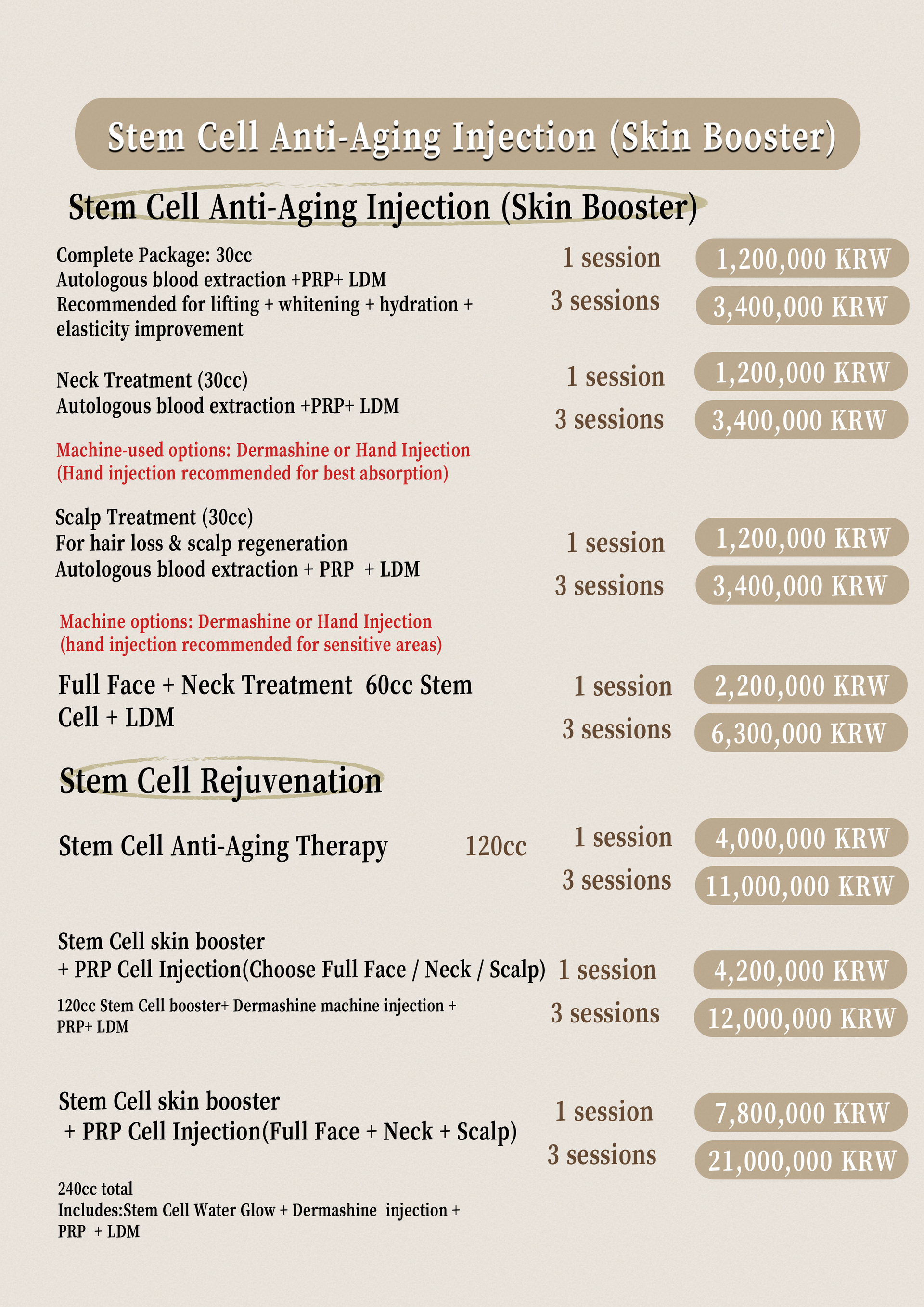
Skin Boosters
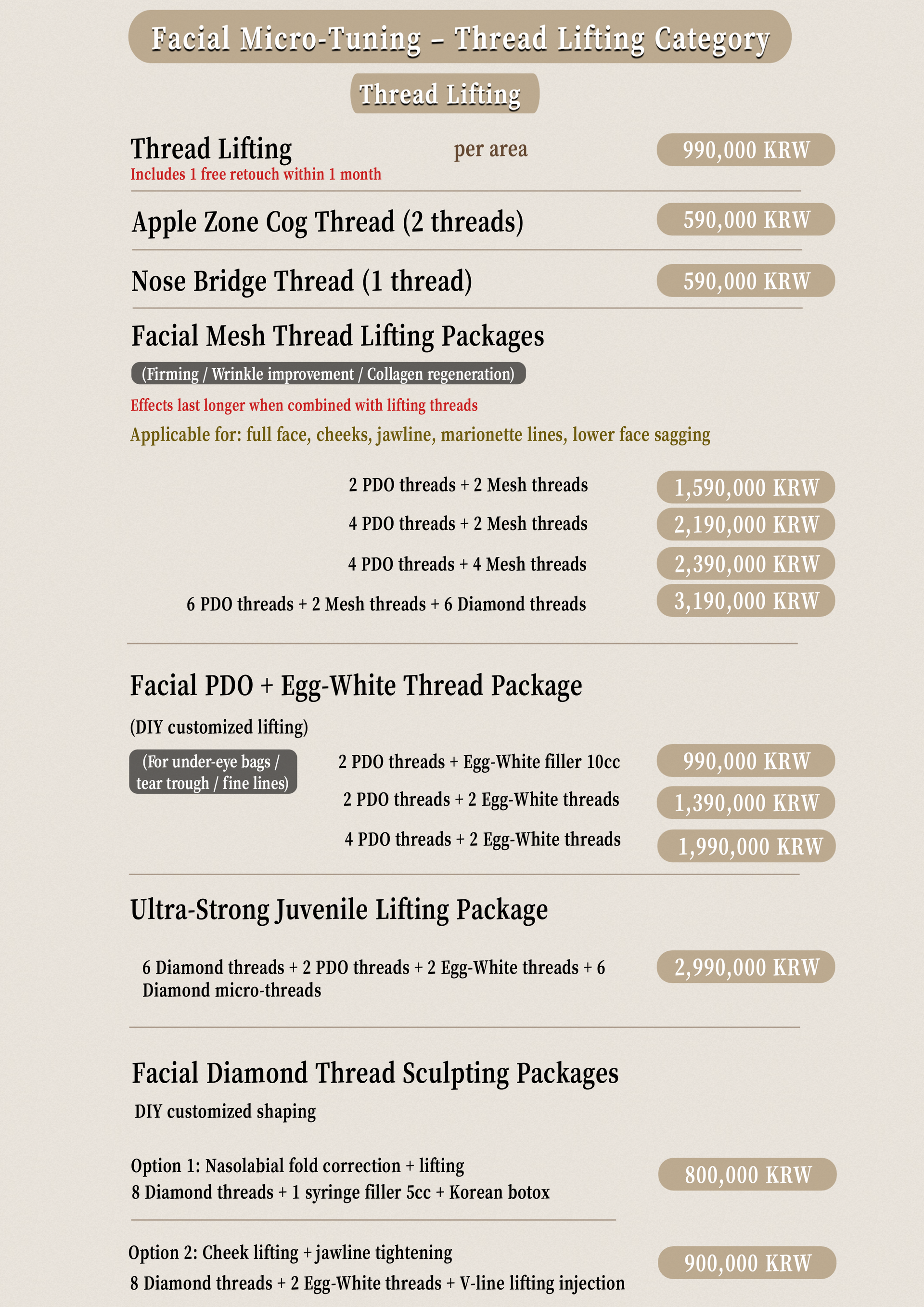
- Basic HA skin booster: approximately ₩150,000–₩400,000
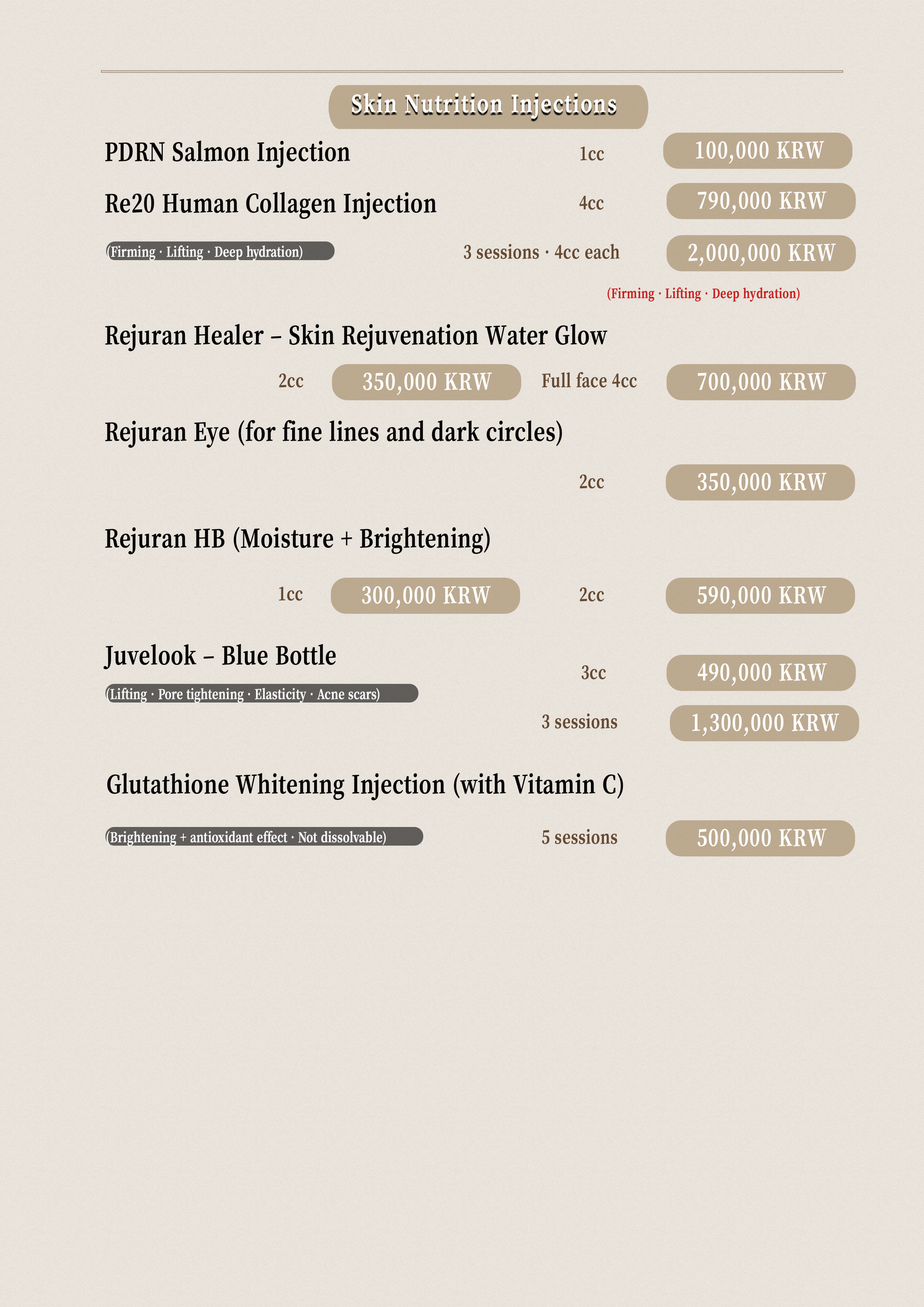
- Rejuran: approximately ₩150,000–₩800,000+
- Juvelook: approximately ₩250,000–₩600,000+
- SkinVive: approximately ₩300,000–₩800,000+
- Premium or combination skin boosters: approximately ₩500,000–₩1,500,000+
Dermal Fillers
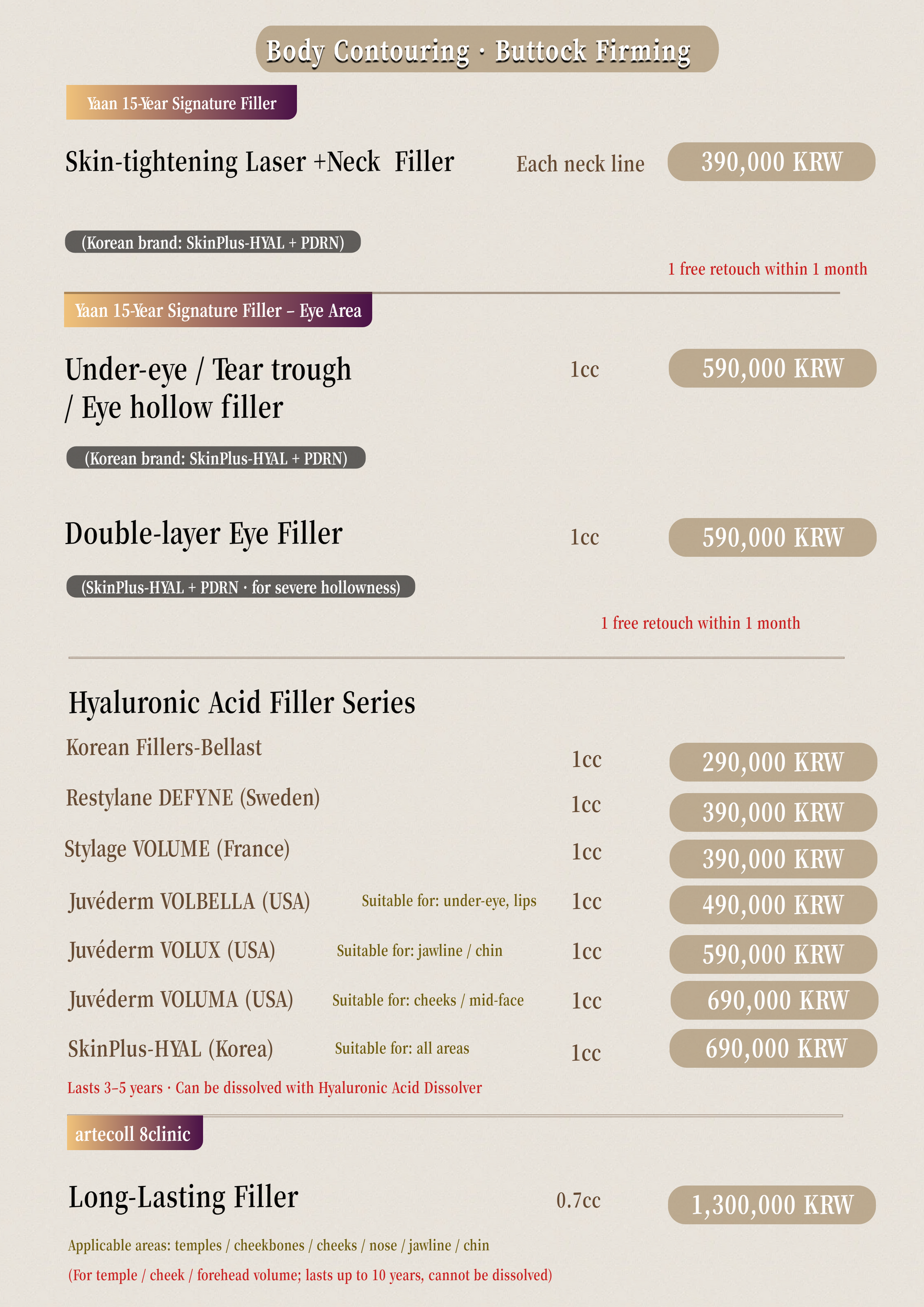
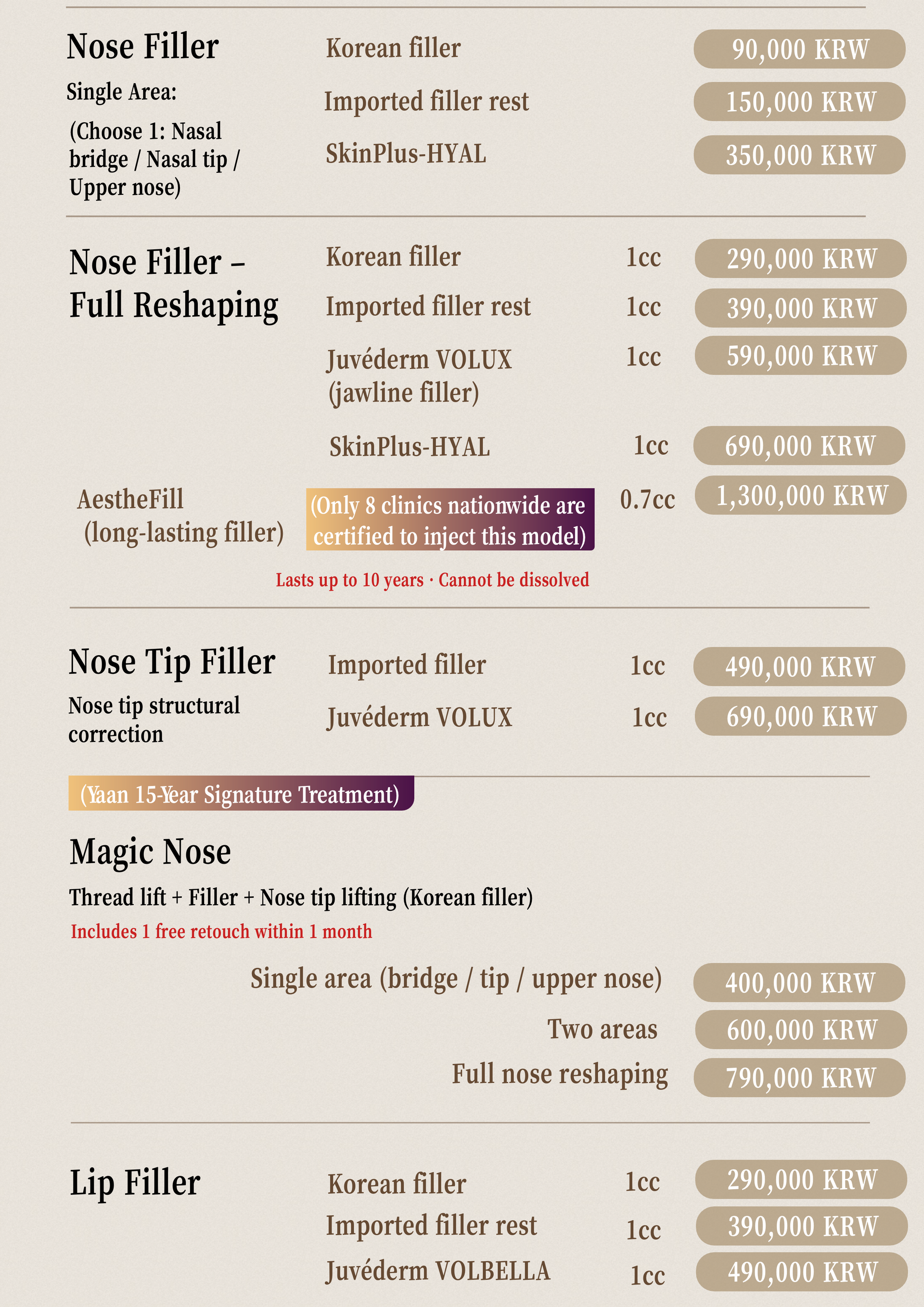
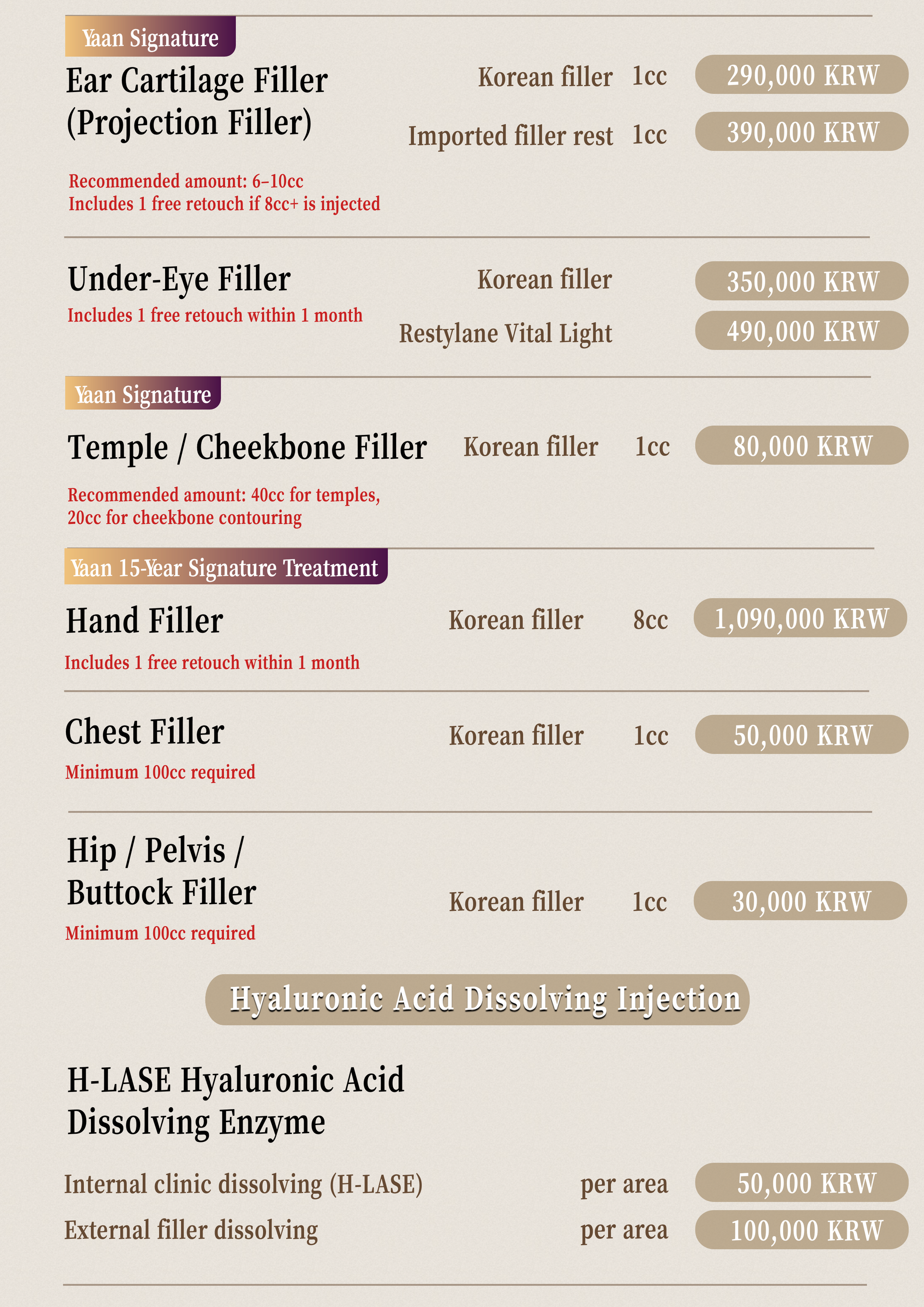
- Korean HA filler 1cc: approximately ₩100,000–₩300,000
- Imported HA filler 1cc: approximately ₩400,000–₩900,000+
- Premium filler brands: approximately ₩600,000–₩1,000,000+
- Multi-area filler treatments: approximately ₩800,000–₩2,000,000+
Actual prices vary considerably between clinics. Korean fillers can be significantly less expensive than imported brands, while premium international products generally command higher prices.
Foreign patients should confirm:
- Exact product and brand
- Amount of product used
- Treatment area
- Injection technique
- Whether numbing is included
- Whether VAT is included
- Whether the price is promotional
Price per cc does not tell the whole story. Different products are formulated for different purposes, and the appropriate amount depends on the treatment area and desired result.
6. Which Treatment Should Foreign Patients Choose in Korea?
The simplest way to compare the two is to ask whether you want to improve skin quality or facial structure.
Consider a skin booster if your priorities are:
- Hydration
- Fine lines
- Pores
- Texture
- Elasticity
- Dull or tired-looking skin
- Overall skin rejuvenation
Consider a dermal filler if your priorities are:
- Facial volume
- Cheek enhancement
- Lip enhancement
- Chin projection
- Jawline definition
- Hollow areas
- Deeper folds or localized volume loss
Some patients may need both because skin quality and facial volume are separate concerns. For example, a patient could use a skin booster to improve overall skin texture while using a small amount of filler to correct a specific hollow area.
For international patients visiting Seoul, ask the clinic to explain the exact product, amount, injection depth, treatment area, expected result, recovery period, and total price before treatment.
It is also important to disclose previous fillers or injectable treatments because existing products can affect treatment planning.
Frequently Asked Questions
Is a skin booster the same as a dermal filler?
No. Although some skin boosters and fillers contain hyaluronic acid, they are formulated and injected differently. Skin boosters primarily target skin quality, while conventional fillers focus on volume and structure.
Which is better for dry skin?
A skin booster is generally more appropriate when hydration is the main concern. HA-based skin boosters are specifically designed to improve moisture and skin smoothness.
Which is better for a hollow cheek?
A dermal filler may be considered when the primary concern is localized volume loss or a hollow area. The appropriate product and amount depend on facial anatomy.
Can skin boosters make my face look fuller?
Some products can create temporary swelling or subtle fullness, but most skin boosters are not intended to produce the structural volume associated with conventional dermal fillers.
Can I get a skin booster and filler during the same trip to Korea?
They can potentially be included in the same treatment plan, but the appropriate combination and timing depend on the products, treatment areas, and individual needs.
Can foreigners receive skin boosters and dermal fillers in Seoul?
Yes. Both are widely available at Korean aesthetic and dermatology clinics. International patients should confirm the exact product, dosage, treatment area, price, and aftercare instructions before treatment.
Final Thoughts
Skin boosters and dermal fillers may both involve injections, but their primary goals are different: skin boosters improve skin quality, while dermal fillers provide volume and structural correction.
For foreign patients visiting Korea, start by identifying whether your main concern is dryness and texture or volume and facial contour. From there, a medical consultation can help determine the appropriate product, dosage, and treatment approach.